
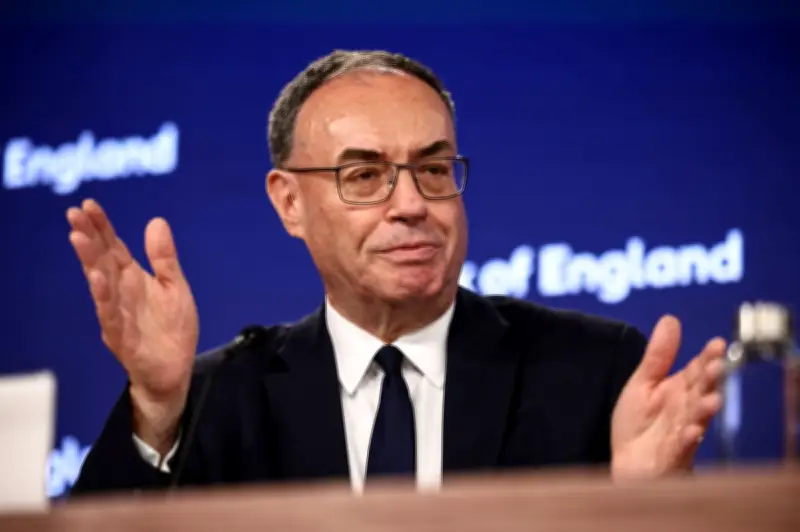
The Bank of England has held interest rates at 3.75% for the fifth successive time, but indicated it could raise them if the war in Iran continues. The Monetary Policy Committee (MPC) voted 6-3 to keep rates steady, with three members calling for an increase to 4%.
MPC Votes to Hold Rates at 3.75%
The majority of MPC members felt that holding rates at 3.75% was sufficient protection against the risk that increased global energy prices will drive inflation higher later this year. However, the committee “recognised the potential need for additional policy restraint” should further pressures on inflation materialise, and found that there “remains scope for the outlook to change materially as events in the Middle East unfold,” according to the minutes from the latest meeting.
Governor Andrew Bailey said: “If the conflict in the Middle East persists for an extended period, for an example, and we begin to see signs of emerging second-round effects, it’s likely that we will have to tighten policy to counter inflationary pressures in the UK economy.
“Similarly, if the conflict is credibly resolved in the coming months the paths would point to a looser policy stance than implied by the market curve.”
Asked about whether the outlook for the economy was more positive than the MPC’s last report in April, Mr Bailey said: “The world, particularly the situation in the Middle East, feels as uncertain and volatile today as it did then.”
Inflation Forecast and Energy Prices
The central bank said UK inflation had been falling but was expected to rise again later this year as higher energy prices feed through into the economy. The Bank predicted that UK inflation will average around 3% this year, before slowing to 2.7% in 2027 and 1.8% in 2028.
Consumer Prices Index (CPI) inflation, which was recorded at 2.6% last month, is likely to peak around 3.2% later this year, before steadily easing back towards the Bank’s 2% inflation target. In last month’s MPC meeting, the Bank had suggested inflation would peak at “slightly above 3.25%”.
Higher oil prices linked to the Middle East conflict are expected to be the main driver of inflation, pushing energy prices higher for households and businesses in the coming months. The Bank has predicted that households will see a marginal rise in energy bills from October because of a new energy price cap. In July the price cap rose to £1,663 for the annual electricity bill of a typical household. This is expected to increase to £1,680 in October, the Bank said.
It added that this is around £45 lower than would have been the case without the Government’s decision temporarily to remove VAT on household electricity bills. The move is expected to have knocked 0.1 percentage points off the inflation rate in the second half of this year. Prime Minister Andy Burnham said VAT will be cut from energy bills from October.
The Bank also cautioned that a memory chip supply shortage, linked to high demand from the AI sector, could also add to inflation. The shortage is expected to push technology prices higher and, therefore, “add a little over 0.1 percentage points to UK consumer price inflation” by the end of the year.
Food inflation has slowed in recent months but is expected to swing higher again, to nearly 3.5% by the end of the year, although this is weaker than previous estimates. The rise in food prices is linked to higher energy bills for food producers and supply issues caused by hot and dry conditions linked to the El Nino weather phenomenon.
Economic Growth and Employment Outlook
The central bank also suggested that the UK economy is likely to grow by 1.1% both this year and next year in its central forecast. It points to a slightly stronger outlook after the Bank previously pointed to 0.8% growth in 2026 in its previous full projections in April.
The picture for unemployment is also slightly improved, with the Bank suggesting this will reach 5.3% next year, having predicted it could be 5.5% in 2027 in its most positive projection from April.
Economist Suren Thiru said a September rate rise was “on the table” after the Bank’s 6-3 policymaker vote. The chief economist at the Institute of Chartered Accountants in England and Wales said: “The tighter vote split in favour of this outcome confirms a further hawkish shift within the committee with inflation worries outweighing concerns over the economy, keeping a September rate rise on the table.
“Interest rates remain on a knife edge.
“Policy could stay unchanged for the rest of the year, with rate-setters relying on tough talk rather than higher rates to contain inflation.
“But the longer the Iran conflict persists, the greater the risk that the committee’s patience finally snaps.”




