

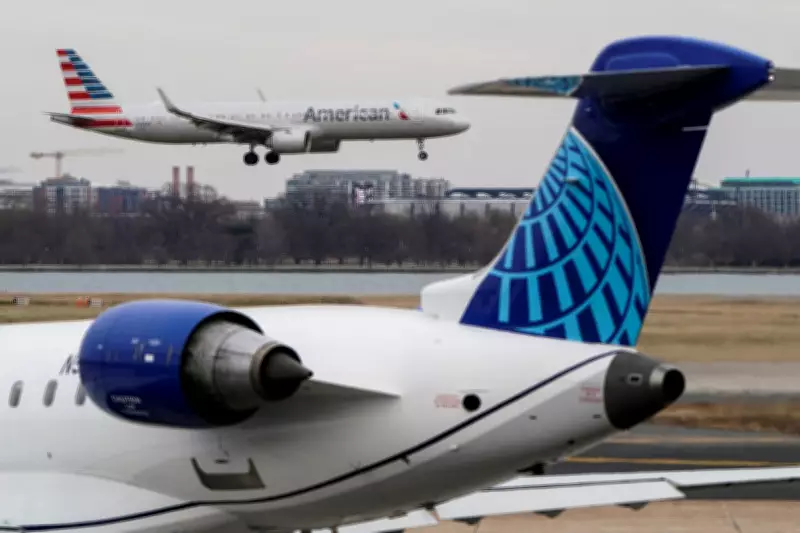
United Airlines CEO Pitched American Merger to Trump, Sources Reveal
United Airlines Chief Executive Officer Scott Kirby reportedly pitched the potential for merging with American Airlines during a meeting with former United States President Donald Trump in late February, according to two sources familiar with the matter. This revelation raises the prospect of an industry-reshaping deal that would likely encounter significant regulatory and political obstacles.
Meeting Details and Industry Context
The meeting with Trump occurred on February 25, toward the conclusion of a scheduled White House discussion regarding the future of Dulles International Airport, the sources disclosed. This was just three days prior to the commencement of the U.S.-Israeli conflict with Iran, an event that subsequently sent jet fuel prices soaring and compelled airlines to increase fares and fees to offset escalating operational costs.
A combination of United and American, two of the largest U.S. network carriers, would represent the most substantial consolidation move within the aviation sector in over a decade. This merger would further tighten a domestic market already dominated by four similarly sized major players: American, Delta Air Lines, United, and Southwest Airlines.

When international flights are included, United and American were already the world's two largest airlines by available seat capacity in 2025, according to data from the aviation analytics firm OAG.
Kirby's Arguments and Regulatory Hurdles
Kirby has reportedly argued to administration officials that a combined airline would constitute a stronger competitor in international markets. He noted the Trump administration's historical focus on addressing U.S. trade deficits globally. The United CEO highlighted at a forum in September that while two-thirds of long-haul seats to and from the United States are on foreign carriers, approximately 60 percent of the passengers are U.S. citizens.
However, industry officials and analysts express significant doubt regarding the deal's likelihood of approval. They cite probable opposition from labor unions, rival airlines, lawmakers, and airports, alongside concerns about route overlap and potential job losses. One person close to the White House indicated skepticism about such a tie-up, given its potential impact on competition and ticket prices, especially as the administration remains focused on rising consumer costs ahead of midterm elections.
Antitrust lawyer Seth Bloom stated the deal would be unlikely to clear regulatory hurdles, even under a Trump administration known for a more relaxed approach to enforcement. "The administration has said it really cares about the issues that affect the consumer's pocketbook, and this would give the airlines more pricing power," Bloom remarked.
Market Concentration and Financial Pressures
The U.S. airline industry is already highly concentrated. According to Department of Transportation data, American, Delta, United, and Southwest control the bulk of domestic traffic, each holding a market share of roughly 17 percent. U.S. Transportation Secretary Sean Duffy commented this month that while there might be room for consolidation, any proposed deal would face intense scrutiny regarding its impact on consumers.
Ganesh Sitaraman, director of the Vanderbilt Policy Accelerator, warned that a United-American merger would reduce competition. "Fewer choices mean higher ticket prices, more fees, and fewer options for anyone who wants to get from point A to point B," he said.
American Airlines has been under considerable pressure to improve its profitability and narrow the performance gap with rivals Delta and United. Unions have recently criticized management over lagging financial returns. The Texas-based carrier also carries approximately $25 billion in long-term debt, a figure exceeding that of its larger competitors, which limits its financial flexibility during a challenging turnaround period marked by high fuel costs.
American is the smallest of the big four U.S. airlines by market valuation, at about $7 billion, compared to roughly $31 billion for United, $19 billion for Southwest, and $44 billion for Delta.

Dennis Tajer, a spokesman for American's pilots' union, stated, "We have been very open about our concerns regarding American's financial, operational and customer service underperformance."
Uncertainty and Aftermath
It remains unclear whether United has made any formal approach to American Airlines or if a merger process is currently underway. The sources spoke on condition of anonymity due to the private nature of the discussions. Both United Airlines and American Airlines declined to comment on the report, and the White House did not respond to requests for comment.
Following the report's publication, American Airlines' shares rose more than five percent in after-hours trading, while United Airlines' shares showed little change. United has projected a more confident tone recently, with CEO Kirby suggesting last month that prolonged high fuel costs could create opportunities for stronger airlines to gain market share as weaker rivals struggle.
Notably, Kirby previously served as American's president from 2013 to 2016 but has historically downplayed the appeal of large-scale acquisitions within the industry.





