
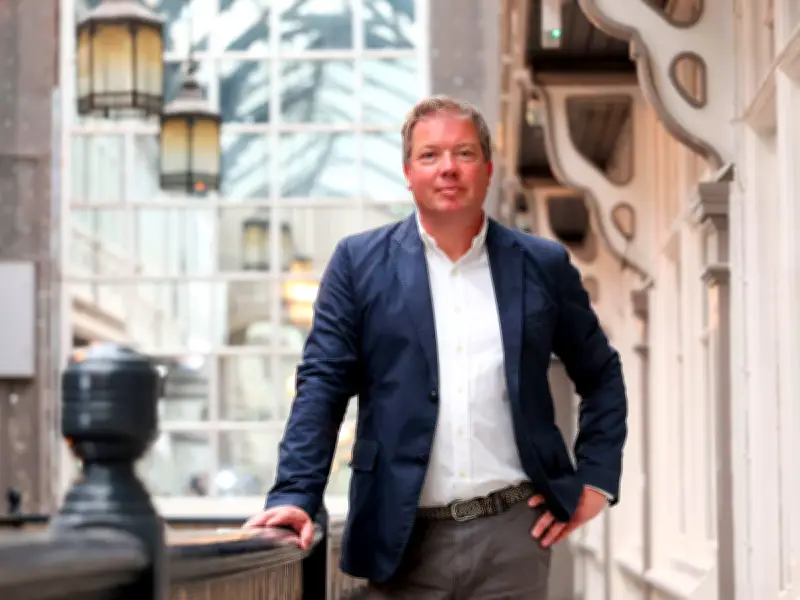
Iain Mansfield, chief executive of Principality Building Society, has stated that he cannot foresee a time when the mutual will not have a presence on the high street. The Cardiff-born executive, who took the helm of the UK's sixth largest building society last November, emphasized the importance of physical branches despite digital growth.
Stadium Deal and Brand Recognition
Mr Mansfield said the three-year naming rights extension with the Welsh Rugby Union for the Principality Stadium will deepen brand recognition. The original 10-year deal, signed in 2015 and valued at around £12.5 million, was extended by a year due to the pandemic. The new extension runs to 2030, with a slight uplift but largely static when adjusted for inflation.
“Our brand awareness has increased, with awareness in Wales, prompted and unprompted, continuing to be positive on the back of the stadium,” Mr Mansfield said. “There are a million people a year who walk into or around it. For us, that is a massive opportunity to engage with existing members, but it also gives us visibility across the UK and beyond.”
Branch Network Commitment
Principality currently operates 54 branches and 16 agencies across Wales and the English borders, with a total of 1,100 employees. The mutual holds savings deposits of around £11 billion, with the vast majority linked to a branch. However, last year it opened 175,000 new accounts, two-thirds through a digital route.
“I think it is highly unlikely that we would be a digital-only business as we have a community and heritage in Wales,” Mr Mansfield said. “We have the largest branch network in the financial services sector in Wales. We are committed to our communities and I think our branch colleagues also want to bring in digital customers.”
Commercial Lending Ambitions
Mr Mansfield is optimistic about commercial lending, which is mainly focused on housing development. The mutual has a lent book of £900 million and commitments of £1.1 billion. “We would like to double the size of the business to £2 billion-plus,” he said.
About a third of commercial lending goes to housing associations, with Principality providing finance to around 20 of the 30 housing associations in Wales and a handful in England. The mutual also lends for residential investment and development. Mr Mansfield highlighted the Mill development in Cardiff, a joint venture with Welsh Government, which delivered around 800 homes.
“The reason that worked was getting the right group of stakeholders together for a site that would not have been able to be developed just with a commercial developer,” he said. “We would like to have more relationships with regional housing developers to help the Welsh Government reach the 20,000 new homes target by the end of the decade.”
Future Office Requirements
Principality had considered moving to a smaller head office, including a potential lease at 1 Callaghan Square, but that space was taken by British Gas. While no longer actively searching, a new HQ remains a long-term option. “My responsibility is that the balance sheet assets of this organisation are protected,” Mr Mansfield said. “The long-term strategy is to find an alternative home for this business, but we are not rushing into that.”
If Principality House is redeveloped, the mutual would not act as developer but would fund the project through its commercial lending arm, with a housing element likely.
Digital Transformation and Savings
Principality expects to launch a mobile app by the end of the year, marking a significant digital shift. The mutual has invested heavily in its website to improve access to rates. Mr Mansfield emphasized the importance of savings: “The amount of people saving in the UK is relatively low and the number of people with just £100 of savings is a frightening statistic.”
While more than 90% of lending comes from savings deposits, the mutual also uses wholesale funding. In early 2024, it issued its first covered bond of £500 million, part of a £4 billion programme. “We were created to help people save and we would like that percentage to be as high as we possibly can,” Mr Mansfield said.




