
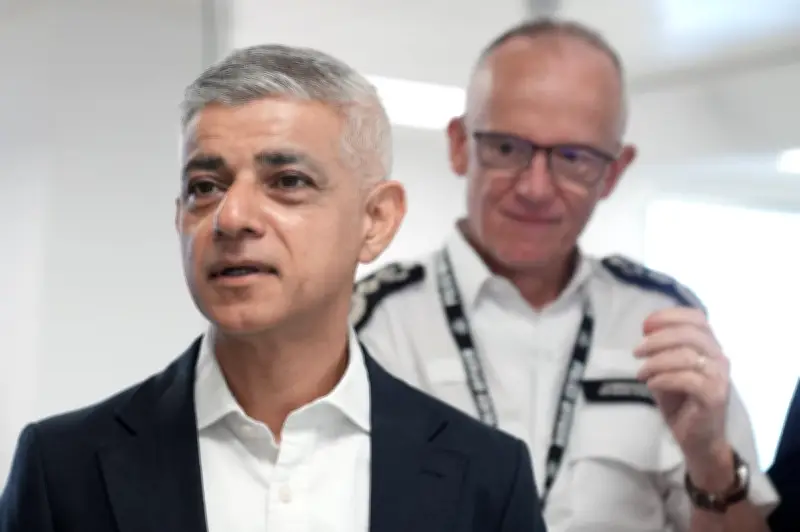
The Metropolitan Police has warned it may be forced to cut frontline services after Mayor of London Sadiq Khan blocked a £50 million contract with data analytics firm Palantir. The decision has sparked a legal challenge from the technology giant, which is threatening to sue.
Contract Controversy
Sir Sadiq Khan intervened after arguing that the police force had only engaged with a single supplier when awarding the contract. The Metropolitan Police Commissioner, Sir Mark Rowley, defended the process, stating it was “legally and commercially compliant.”
In a report for the London Policing Board, due to meet on Thursday, Sir Mark warned that the force could face cutting services or staff as a result of the mayor’s decision. The Palantir system was expected to help the Met cut 500 jobs to address a budget shortfall of £100 million this year and £125 million next year. Without the deal, these savings must be found elsewhere.
Budget Pressures
The budget for 2026/27 already included plans to cut a total of 1,150 jobs, with 500 of those roles to be replaced by AI tools that would reduce the time needed to compile intelligence reports and analyze mobile phones. Sir Mark stated: “As a direct result of this decision, we are now scoping at pace tough choice options. While we had a contingency list, we had not developed this work as had hoped not to have to make these reductions. However, we have mobilised the organisation to bring forward options. These will range from stopping services, reducing teams or changing how we deliver a service.”
He noted that by March 2026, the number of Metropolitan Police Service (MPS) officers per 100,000 population would be lower than at any point since 1981.
Mayor's Office Response
A spokesperson for the Mayor of London said: “The mayor fully supports the Met using modern technology to drive efficiencies and improve the performance of the police. However, as with all procurement, we must always ensure the correct processes are followed and that Londoners get value for money. In this case, the Met did not present its procurement strategy for approval, as required, and the process followed by the Met did not adequately demonstrate value for money for Londoners for a proposed contract at this value. Given the tight budgetary constraints the police are operating under, it’s even more important that robust processes are followed when awarding large contracts.”
The spokesperson added: “The Met does face a difficult financial situation, which stems from the huge cuts implemented by the previous government and the significant underfunding of the Met’s capital city responsibilities. The mayor has already doubled the policing budget from City Hall and he will continue to do everything he can to support the Met and secure the national funding needed for policing in our city.”
Additional Funding Needs
The report also highlights the force’s push for extra funding to tackle a recent wave of antisemitism, which has resulted in a series of alleged arson attacks in London. The Home Office granted funding for an additional 100 officers, but Sir Mark is seeking a further 300, including a dedicated team of neighbourhood and armed officers to be based permanently in north-west London.
“This is essential if we are to provide lasting, bespoke protection in the face of a level of state threats and hate crime far greater than that faced by other communities. It is not sustainable – or operationally effective – to rely indefinitely on overtime or the redeployment of officers from across London. The threat is increasing and we need a policing model capable of meeting it over the long term,” the Commissioner said. “If this funding is not secured, the MPS will need to reassess what is affordable in the context of a police service already required to shrink further this year to balance its budget.”
The force is currently using more than 1,000 officer shifts to protect north-west London and other vulnerable locations.




