
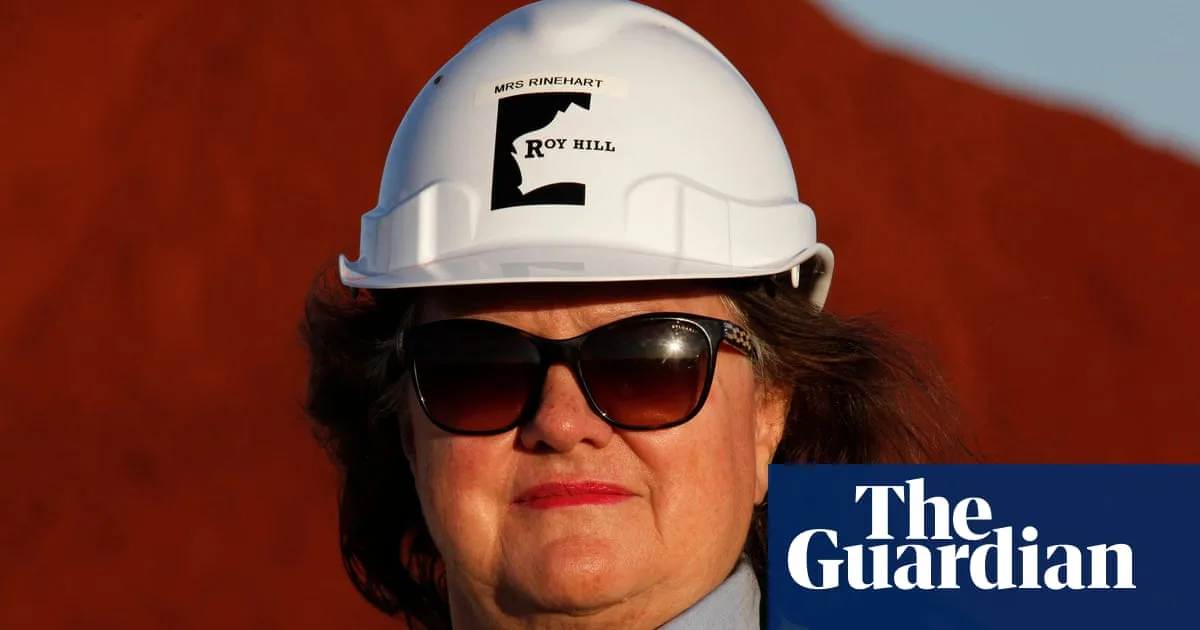
Australia’s richest person, Gina Rinehart, has secured a partial victory in a long-running legal dispute over mining tenements in Western Australia’s Pilbara region. The Western Australian Supreme Court ruled on Wednesday that Rinehart’s company, Hancock Prospecting, must pay royalties worth hundreds of millions of dollars to the rival Wright family, but rejected their claim for an equity stake in other mining assets.
The judgment, delivered by Justice Jennifer Smith after a 51-day trial, found that Wright Prospecting was entitled to a half share of royalties from the Hope Downs iron ore project, a joint venture between Hancock Prospecting and Rio Tinto. However, the court dismissed Wright’s claim for an equity interest in other tenements, marking a significant win for Rinehart.
The dispute dates back to a partnership formed in the 1950s between Lang Hancock, Rinehart’s father, and Peter Wright. Their company, Hanwright, pegged vast iron ore deposits in the Hamersley Range. The judgment, spanning over 1,650 pages, reconstructed events from 1967 to 2005 based on records written by people now deceased.
Justice Smith also rejected claims from Rinehart’s children, John Hancock and Bianca Rinehart, for an equity share of Hope Downs, stating the tenements belonged to Hancock Prospecting and that Lang Hancock had breached his duties in transferring assets. The children separately seek a greater share of the company under a 1988 agreement, with that matter headed to arbitration.
Following the verdict, John Hancock called for family reconciliation, while all parties claimed partial victory. Wright Prospecting, along with another claimant DFD Rhodes, secured future royalties from parts of the Hope Downs complex. The case underscores the enduring legacy of Australia’s mining pioneers.




