
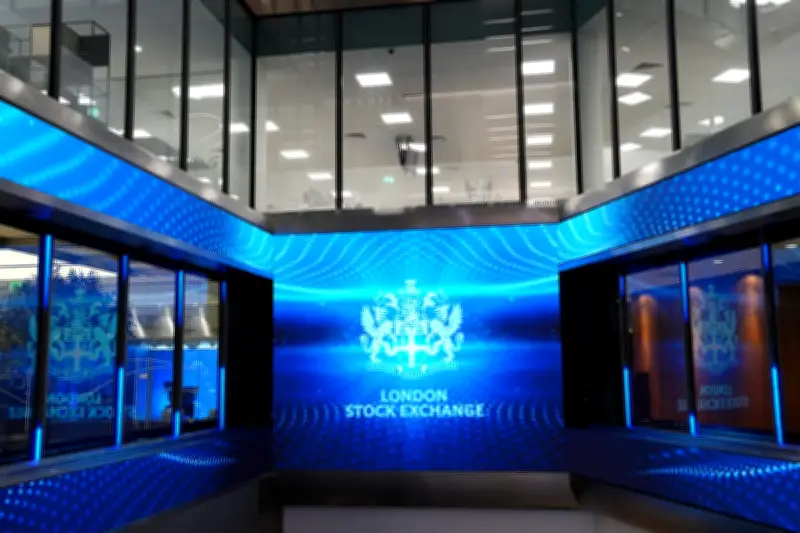
The FTSE 100 made steady progress on Wednesday, outperforming US and European peers, despite ongoing tension in the Middle East and accelerating US inflation. The blue-chip index closed up 27.48 points, or 0.3%, at 10,254.81. The FTSE 250 ended 113.38 points higher, or 0.5%, at 22,951.34, while the AIM All-Share fell 8.43 points, or 1.1%, to 772.38.
European and US Markets
In European equity markets, the CAC 40 in Paris ended down 0.5%, and the DAX 40 in Frankfurt closed 1.0% lower. In New York, the Dow Jones Industrial Average was down 1.0%, the S&P 500 fell 0.7%, and the Nasdaq Composite declined 1.1%.
US Inflation Surges
US consumer inflation surged to a fresh three-year high in May, driven by soaring energy prices, adding pressure on President Donald Trump amid Middle East conflict. The consumer price index rose 4.2% year-on-year, up from April's 3.8%, matching analyst expectations. On a monthly basis, energy prices alone increased 3.9%, following a 3.8% rise in April and an 11% surge in March. The energy index accounted for over 60% of the monthly all-items increase, according to the Bureau of Labour Statistics.
Excluding food and energy, core annual consumer price inflation accelerated to 2.9% in May from 2.8% in April, in line with consensus. On a monthly basis, core consumer prices rose 0.2% in May from April, slowing from 0.4% growth in April and below the consensus estimate of 0.3%.
Central Bank Decisions
In Canada, the Bank of Canada left its benchmark rate at 2.25%, as expected, balancing slowing growth and rising inflation from the Middle East war. The BoC said it would look through the war's near-term impact on inflation but warned that sustained high energy prices could lead to broader inflation.
Middle East Tensions
Market sentiment remained cautious following fresh US military action against Iran, after a US helicopter was downed near the Strait of Hormuz. David Morrison at Trade Nation noted the sudden escalation after tensions appeared to ease. Qatari negotiators travelled to Tehran to address remaining differences between the US and Iran, according to AFP. President Trump stated Iran has taken too long to negotiate and will face consequences.
Brent crude for August delivery traded at $92.98 a barrel on Wednesday, up from $90.90 at Tuesday's London equities close, but below recent peaks. Kathleen Brooks at XTB noted that declining onshore Middle Eastern oil inventories suggest significant oil is leaving the Gulf, though exports remain below pre-war levels due to the blocked Strait of Hormuz.
Currency and Commodity Markets
The pound traded at $1.3397 on Wednesday afternoon, up from $1.3381 on Tuesday. Against the euro, sterling firmed to €1.1593 from €1.1581. The euro traded higher against the dollar at $1.1556, and the dollar was at ¥160.46. The US 10-year Treasury yield eased to 4.53%, while the 30-year yield narrowed to 5.00%. Gold traded sharply lower at $4,129.15 an ounce, down from $4,270.69, hitting Endeavour Mining and Fresnillo, which fell 4.1% and 1.7% respectively.
FTSE 100 and 250 Movers
Tritax Big Box REIT led blue-chip gainers, up 4.9%, after UK government approval for a data centre development near Heathrow. On the FTSE 250, WH Smith plunged 16% after raising £106 million and lowering profit guidance for the second time in three months. Trading has been hit by the Middle East crisis, particularly in North America. Dan Coatsworth at AJ Bell noted the downturn following an accounting hiccup is not ideal for a capital raise. Ceres Power dropped 6.2% after a fund raise, and Raspberry Pi fell 12% amid US tech weakness.
The biggest FTSE 100 risers were Tritax Big Box REIT, Entain, Land Securities, Tesco, and Unilever. The biggest fallers were Endeavour Mining, Experian, Mondi, Weir Group, and Relx.
Outlook
Thursday's global economic calendar includes an ECB interest rate decision, US PPI, and weekly jobless claims. Local corporate results are due from Halma and Wizz Air.




