
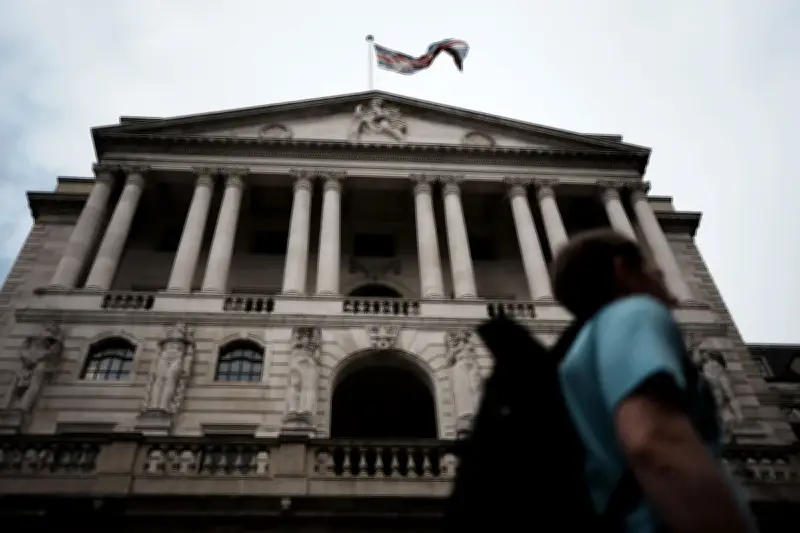
The Bank of England's deputy governor has said she was “surprised” with how well the economy has absorbed the latest energy price shock caused by the conflict in the Middle East.
Sarah Breeden made the comments after the UK economy reported surprise growth in August on the back of strong factory production, marking a boost to the Chancellor ahead of the autumn Budget.
The gross domestic product (GDP) increased by 0.1% in August, following 0.4% growth in July, according to the Office for National Statistics (ONS). The August reading surpassed the expectations of economists, who had pointed to a 0.1% decline for the month.
Resilience amid global volatility
It suggests resilience in the UK economy despite pressure on consumer spending and wider volatility in the global economy due to the war in Iran.
Ms Breeden told business news channel CNBC on Thursday: “So we’ve been surprised so far about how well the economy has absorbed what has been a pretty significant energy price shock.
“All of the talk around Bangkok, as you know, is of resilience and how surprised many central banks and finance ministers have been with the health of the economy through this shock.
“I think part of that is because the firms had learned the lessons from the energy shock of 2022. So when I go and talk to businesses, many of them are hedged, and that means that the shock that they’re feeling now is less than it would otherwise have been.
“In addition, we’ve got the AI activity, the AI boom that’s happening, that’s cascading all around the world, and we’ll have some feed into… the UK businesses we talk to are thinking about adopting it, building data centres, even if not at the scale in the US, and all of that is supporting activity, which is what you’ve seen in this morning’s data.”
Consumer behaviour and inflation
Ms Breeden added the Bank of England was focused on understanding whether the private sector’s ability to swallow the energy shock meant its effect was reduced or delayed, and could therefore come later.
Asked about British consumers’ behaviour and feelings towards the economy, Ms Breeden said: “So when I am out and about around the UK, what I’m hearing is a sense of: ‘Oh, here’s another shock… this is another energy shock after a series of trade shocks after a war in Ukraine’. There’s a sense of: ‘oh here we go again’.
“But at the same time, there is… a resilience to it. And what I also hear is that people are trying to manage their costs. What’s really different now, relative to when we had the last energy shock in 2022, is that people aren’t looking to push costs through.”
She added consumers were “suffering” with prices going up, adding the cost of living was “definitely” impacting people.
Labour market holding up
Asked whether there was an affordability crisis, she said: “It is really clear that there are some people for whom this is a real challenge.
“But what is encouraging is that I get the sense that, as we saw with the GDP data this morning, activity isn’t falling off a cliff, that the labour market is holding up through it and there’s a desire to absorb the shock rather than just pass it on, which makes our job as monitoring policy makers a bit easier in these uncertain times.”
Consumer Prices Index inflation was most recently recorded at a five-month-high of 3.1% in August, having been pushed higher by rising fuel prices and air fares. The ONS will unveil the latest monthly inflation data next week, shedding more light on the changing cost-of-living for UK households.




