
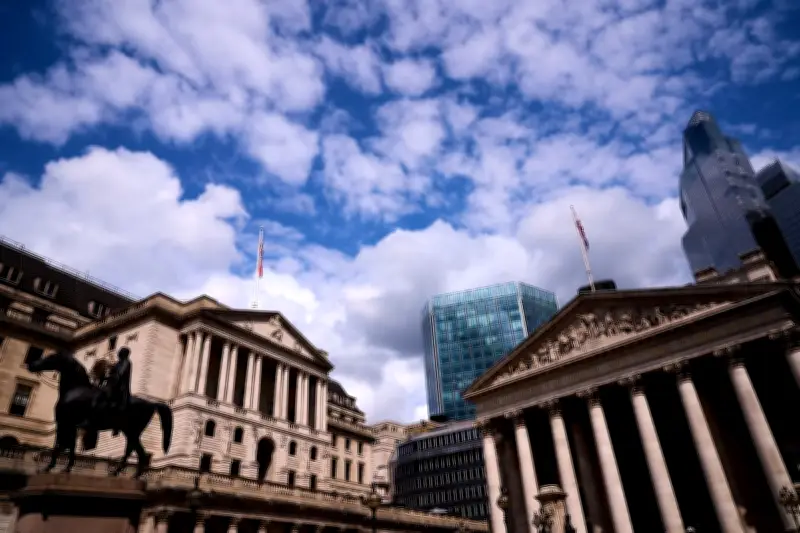
A majority of the Bank of England's Monetary Policy Committee voted to keep the base interest rate at 3.75%, even as the central bank cautioned that energy prices and a memory chip shortage driven by artificial intelligence will lift inflation.
Inflation forecast revised
Six of the nine MPC members voted to hold the rate steady, while three called for an increase to 4%. Governor Andrew Bailey said: “Inflation has fallen faster than we’d expected, but the conflict in the Middle East continues to mean high and volatile energy prices. That will cause inflation to rise again later this year. However the conflict unfolds, our job is to make sure any increase in inflation is temporary and that it comes back to our 2% target.”
The Bank now expects UK inflation to average around 3% this year, before slowing to 2.7% in 2027 and 1.8% in 2028. Consumer price inflation, which stood at 2.6% last month, is likely to peak at about 3.2% later this year, lower than the “slightly above 3.25%” forecast in last month's MPC meeting.
Energy bills and memory chip shortage
Higher oil prices linked to the Middle East conflict are expected to push energy prices higher for households and businesses. The Bank predicts a marginal rise in household energy bills from October due to the new price cap: from £1,663 in July to £1,680 in October. This is about £45 lower than would have been the case without the government's temporary VAT removal on household electricity bills, which is expected to knock 0.1 percentage points off inflation in the second half of the year.
A memory chip supply shortage, driven by high demand from the AI sector, could add a little over 0.1 percentage points to UK consumer price inflation by year-end, as technology prices rise.
Food inflation and economic outlook
Food inflation is expected to rise to nearly 3.5% by the end of the year, driven by higher energy bills for producers and supply issues from hot, dry conditions linked to the El Niño weather phenomenon. This is weaker than previous estimates.
The Bank also suggested a slightly improved economic outlook: GDP growth of 1.1% this year and next, compared to the 0.8% forecast for 2026 in April. Unemployment is expected to reach 5.3% next year, improved from a previous projection of 5.5% in 2027.
In the first monetary policy report since Andy Burnham became Prime Minister, policymakers noted that the war in the Middle East continues to cause significant uncertainty over the development of the UK and global economies.




