

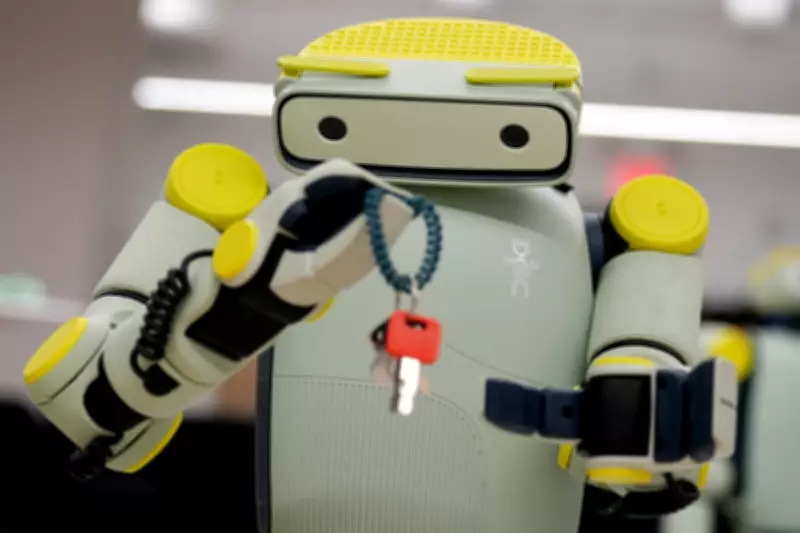
Amazon has officially acquired Fauna Robotics, a move that comes just under two months after the startup unveiled its Sprout humanoid robot. This acquisition marks a significant step for the e-commerce giant as it ventures further into the realm of consumer-focused robotics, beyond its established dominance in warehouse automation.
Expanding Amazon's Robotics Footprint
Fauna Robotics, based in New York, introduced the Sprout robot earlier this year, targeting social environments such as homes and educational institutions. The 1.5-foot-tall robot features a rectangular head and is designed for interactive tasks rather than heavy lifting, capable of performing dances like the Twist or the Floss, picking up small items like toy blocks or teddy bears, and moving autonomously from chairs to stroll around.
Strategic Integration and Future Plans
Following the acquisition, Fauna Robotics will operate as a subsidiary under Amazon, with its founders and employees joining the tech behemoth in New York. Amazon has stated that the team will focus on developing innovative ways to enhance customer experiences, aligning with the company's broader mission to simplify and improve daily life through technology.

Financial details of the deal have not been disclosed, but the acquisition underscores Amazon's commitment to bolstering its robotics capabilities. Previously, Amazon has deployed over 1 million robots in its warehouse operations, showcasing its prowess in industrial robotics. However, this move into social robotics represents a new frontier, as the company seeks to integrate more interactive and companion-like devices into consumer spaces.
Background and Market Context
Fauna Robotics initially launched its debut product in January, which included not just the Sprout robot but also a software developer platform aimed at academic and corporate research labs exploring home robotics. Early adopters of this technology included notable entities like Disney, highlighting its potential in entertainment and educational sectors.
Despite its advancements, Amazon has faced challenges in the consumer robotics arena. In 2024, the company abandoned its planned acquisition of iRobot, a leading robot vacuum maker, due to regulatory obstacles in both Europe and the United States. This setback has not deterred Amazon, as evidenced by its latest acquisition of Fauna Robotics, which could help overcome past hurdles by focusing on less regulated, social interaction-based robotics.
The Sprout robot, priced at $50,000, is positioned as a high-end product for research and development purposes, rather than mass-market consumer use. Its capabilities emphasize fun and engagement, contrasting with Amazon's existing AI assistant, Alexa, which is already integrated into many households for voice-activated tasks.
This acquisition signals Amazon's ongoing ambition to diversify its robotics portfolio and explore new applications in everyday life, potentially paving the way for more advanced humanoid robots in the future.






