Weather maps indicate the UK could experience a sixth heatwave in early September, with temperatures potentially reaching 29C in parts of England. The forecast follows a period of heavy rain and thunderstorms across the country.
Temperature Forecast and Heatwave Criteria
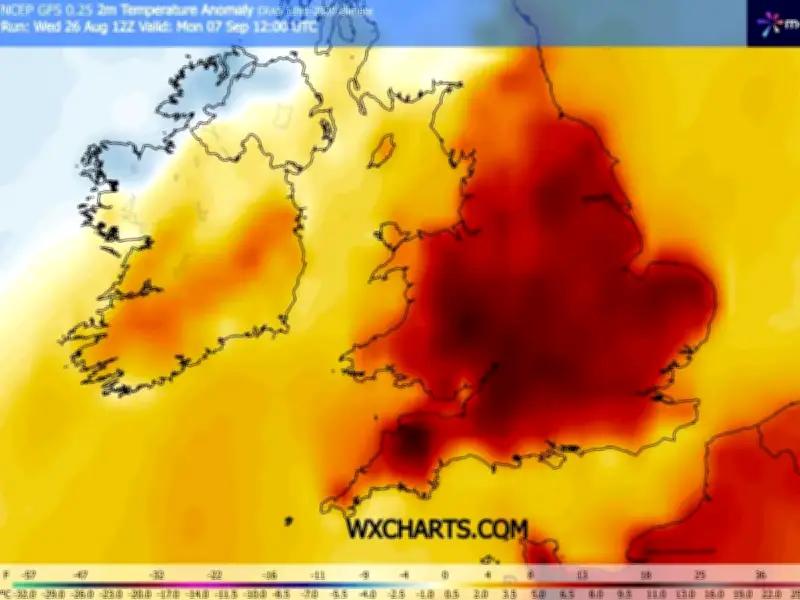
The GFS weather model predicts temperatures could hit 28C in southern and western England on September 5, with similar highs possible more broadly, even as far north as Yorkshire, on September 6. On September 7, temperatures could peak at 29C in eastern and western England, with highs of 27-28C likely across central and southern regions.
While these temperatures are not as blistering as those experienced earlier in the year, they would still qualify as an official heatwave in certain areas. The Met Office designates an official heatwave when temperatures reach the "heatwave threshold" for three consecutive days. The threshold is set at 28C in the south-east, where conditions are typically warmer, and decreases to 25C further from the south-east.

Met Office Forecast and Seasonal Context
Temperature anomaly maps for this period show England and Wales shaded in red and orange, indicating areas where temperatures will significantly exceed the seasonal average. The Met Office has predicted "very warm spells" at the beginning of September, particularly in southern regions, but a fair amount of rainfall is also anticipated.
The Met Office's forecast from 31 August to 9 September states: "Likely remaining unsettled with showers or longer spells of rain across all areas at times. Rainfall amounts will probably be above average for the time year with the wettest conditions in the northwest.
"Potential for some strong winds at times. Some drier and more settled interludes could develop, perhaps becoming longer in duration across southern areas later in this period. Temperatures are likely to be near average, although some short-lived warm or very warm spells are possible, especially in the south."
Record-Breaking Summer and Drought Impacts
This year's summer has smashed the previous record of 19 days of heat set back in 1995. New data from the Copernicus Climate Change Service shows Western Europe has just endured its hottest June on record, averaging 20.74C across day and night, more than 3C above the long-term norm.
Experts say the impacts go beyond sweaty nights and packed beaches. Despite a wet winter, the extreme heat has driven what is being described as a "new type" of drought, with intense evaporative demand sucking moisture out of rivers, reservoirs and farmland.