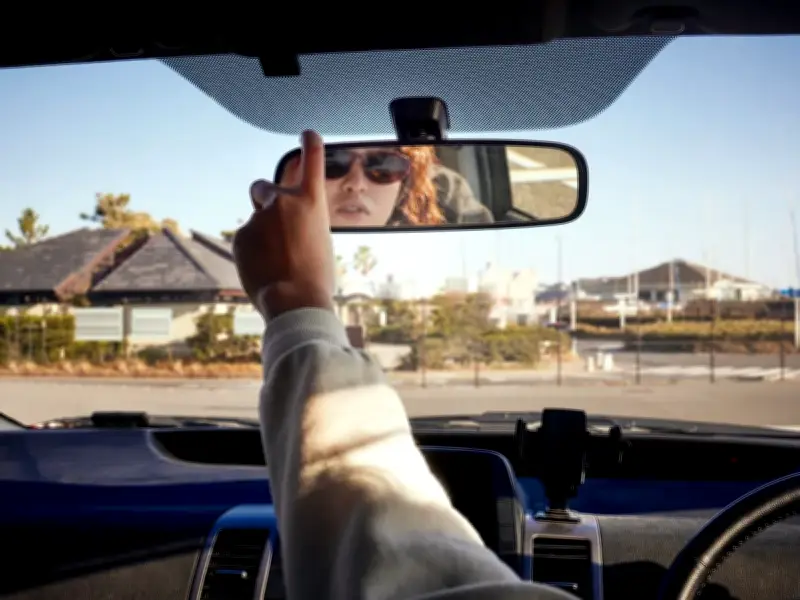
UK drivers are being urged to check their sunglasses, amid warnings that some lenses could leave motorists unknowingly on the wrong side of the law. And if you're in an accident as a result, you could face serious legal issues.
The RAC says sunglasses are useful for cutting glare in bright weather, but the darkest styles can reduce vision too much for safe driving. The key measure is Visible Light Transmission (VLT) - how much daylight the lens lets through.
Lenses at the very top end of the tint scale (often labelled “category 4” on the packaging) allow in only a tiny amount of light, which can make it harder to judge hazards, spot other road users and react in time.

The motoring organisation also cautions that some tinted lenses can become a problem when light levels suddenly drop, for example, during heavy rain or an unexpected storm, leaving drivers struggling to see clearly.
Where the law and Highway Code come in
The RAC points to Section 96 of the Road Traffic Act 1988, which makes it illegal to drive if your eyesight doesn’t meet the legal standard. If your vision is impaired - including by overly dark sunglasses - you could face penalties such as a fine and three points.
There’s also Highway Code guidance. Rule 94 advises motorists not to use tinted glasses, lenses or visors at night, and to take care in poor visibility if eyewear restricts what drivers can see. In practice, if sunglasses affect your ability to see hazards or road users, it could be viewed as careless driving - and in serious circumstances, dangerous driving.
What sunglasses are best for driving?
According to the RAC, category 3 sunglasses are generally the safest choice for daytime driving because they offer strong sun protection without being excessively dark. It adds: "Category two, although not as dark, are also considered a good option for daytime driving, providing a good balance between glare protection and visibility."
However, the RAC warns that even these should be avoided in low-light conditions and at night. Category 1 lenses are lighter, meaning they are suitable for weaker sunlight, and are legal to wear while driving in the day, but they provide limited glare protection.
It's not just the RAC that gives motorists advice. The AA explains: "All sunglasses should carry the CE mark and meet the European Standard BS EN 1836:2005."
A good quality anti-reflection coating is recommended, along with a hard coating to protect the lenses from scratches. Sunglasses with deep side arms can block side, or peripheral, vision and are not recommended for driving.
Can I be fined for wearing sunglasses while driving in the UK?
Potentially, yes. The AA notes that if you’re involved in a crash and unsuitable eyewear is considered a contributing factor, you could face prosecution.
Your sunglasses need to meet the requirements set out in the Highway Code. This means:

- They must not have any scratches or external damage that makes it difficult for you to see
- They must not be tinted while you're driving at night or in otherwise poor visibility
- They must not be so dark that they stop you from seeing clearly
- They must not make it difficult for you to see traffic signals clearly