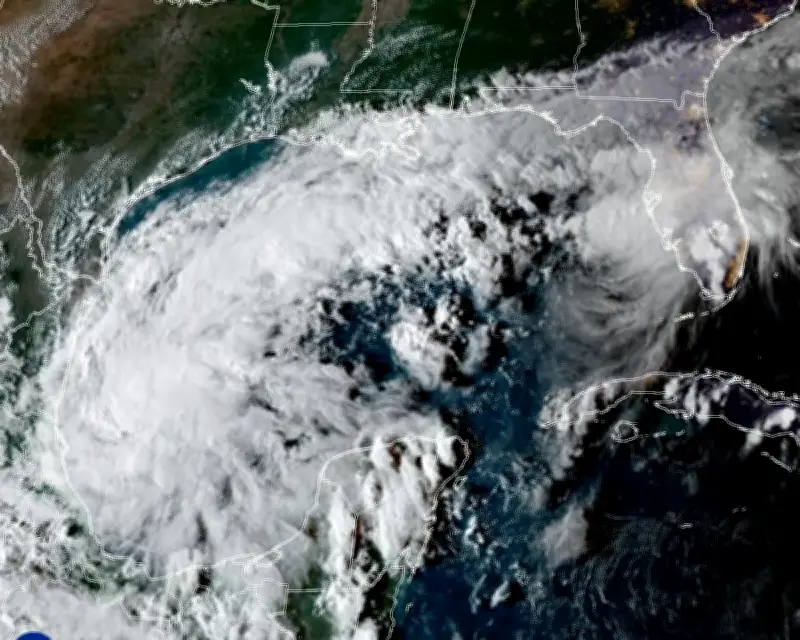
Tropical Depression Nine has been predicted to be the Atlantic season's first hurricane and potentially the latest first hurricane to develop in over a century.
The system was located Tuesday afternoon about 630 miles south-west of the mouth of the Mississippi River, with maximum sustained winds of 35 mph, according to the US National Hurricane Center.
Storm Intensification Forecast
The NHC expects the depression to grow into a tropical storm by Wednesday before potentially becoming a hurricane on Thursday as it moves across the Gulf of Mexico.
If it becomes a hurricane, the storm would be the first of the 2026 Atlantic season. The first hurricane of the season has not formed this late since 8 October 1905, the Associated Press reported.
Track and Potential Landfall
“Our forecast track has the storm avoiding the strongest wind shear, which should foster strengthening, until the end of the week when it approaches the central Gulf coast, at which point it should start to lose wind intensity,” AccuWeather hurricane expert Alex DaSilva said.
The storm is expected to turn north-east and approach the central Gulf coast late this week, with a possible US landfall early Saturday, AccuWeather said. The most likely area stretches from southeastern Louisiana to the Florida Panhandle, it added.
Expected Impacts
The system is expected to bring 3-6in of rain across parts of the central US from Friday through the weekend, with some areas potentially receiving as much as 10in, according to the NHC. Flash and urban flooding, in addition to isolated river flooding, will be also possible.
Strong winds, dangerous surf and rip currents are also expected. If the system reaches hurricane strength, gusts of 60-80mph could occur near the center, with stronger gusts possible, AccuWeather reported.
Meanwhile, heavy rainfall from a separate tropical wave has already triggered flooding and landslides in St Vincent and the Grenadines, where schools were closed on Tuesday, according to the Associated Press.
The current, extremely strong El Niño climate pattern is a factor in the quieter Atlantic hurricane season. While it warms sea surface temperatures in the Pacific, and there has been greater storm activity there, it also increases wind shear over the Atlantic, which can reduce the likelihood tropical storms grow into hurricanes.