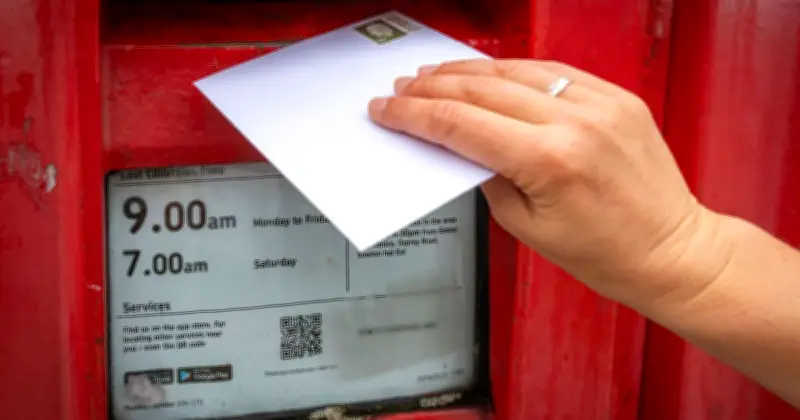
Royal Mail has issued a warning that letters and parcels could face delays if customers make a simple mistake when writing addresses. The advice comes as the postal network handles large volumes of mail, with automated sorting equipment relying on address details to direct items correctly.
Why punctuation causes problems
Many people naturally add punctuation when writing an address, especially after a street name or locality. However, Royal Mail’s guidance says address blocks should not contain commas or full stops, helping keep the information clear and consistently formatted.
Royal Mail’s technical guidance says the full postcode should appear on the last line in capital letters and should not be underlined or punctuated. It also says the postcode must be accurate enough to match the address held in its Postcode Address File.
How to format an address correctly
For customers, the safest approach is to give each part of the address its own line rather than squeezing everything together. Start with the recipient’s name, add the building number and street, include a locality if needed, then write the town and postcode on the final lines.
The Post Office also advises people sending UK mail not to use commas or full stops in addresses. It recommends left-aligning each line, printing the town and full postcode in capital letters and leaving out the county when the town and postcode are already included.
Reducing the risk of delays
A correctly formatted address will not remove every possible cause of delay, but it can reduce the risk of avoidable mistakes. If an address is incomplete, difficult to read or contains an incorrect postcode, the item may be harder to route accurately.
Anyone unsure about an address can use Royal Mail’s Postcode Finder to check the recognised address details before posting. This is particularly useful when sending something important, such as paperwork, a greeting card or a parcel that needs to reach its destination without unnecessary complications.
The simple takeaway is to keep address lines neat, avoid punctuation and make sure the postcode is correct. A few seconds spent checking an envelope before it goes in the postbox can help ensure it gets delivered properly.