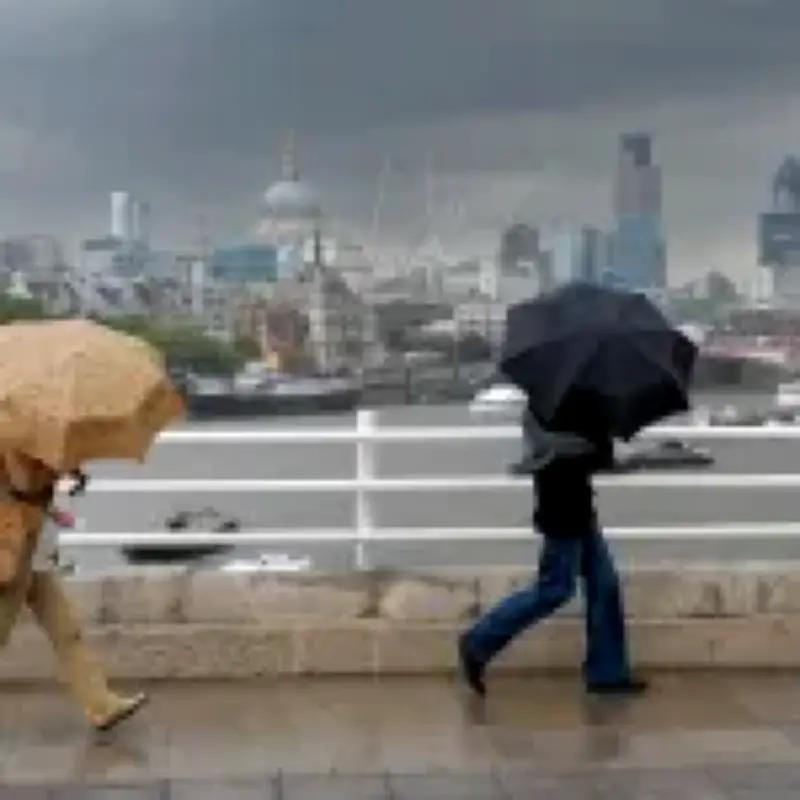
London could face a 'polar vortex' this winter as an unusual phenomenon moves in as a result of the El Niño effect. Experts have warned the incoming super El Niño could be one of the most severe on record.
While most commonly associated with warming Pacific Ocean temperatures, it also may have the effect of disrupting the Arctic polar vortex, the winds that circle the North Pole. This may allow colder air to drift southwards towards Europe and North America, potentially bringing blizzard conditions with heavy snow. The effect also 'heightens the potential' for wet weather, stormy conditions and therefore flooding.
Emergency supplies advised
Londoners have been warned to prepare for potentially severe weather, such as by keeping emergency food supplies for up to three days. Met Office forecasters explain that the weakening of the polar vortex associated with El Niño can cause cold north and north easterly winds to outcompete the usual warmer North Atlantic drift which influences the UK climate.
Dr Will Lang, chief forecaster at the Met Office, said there had been a 'subtle shift in the odds' with windier, colder weather in the next few weeks far from certain.
El Niño surpasses previous events
'The El Niño event is still developing in the tropical Pacific and already it has surpassed the magnitude of previous events including the one in 2015/16', Met Office climate spokesperson Grahame Madge said. 'Globally, an El Niño event has several impacts, including altering rainfall patterns and increasing global temperature overall.'
More broadly, the El Niño event could cause more than 450,000 heat deaths between June 2026 and February 2027, a concerning report has suggested.
Heat deaths report
'The estimate of 451,000 people is such a large number that it can be numbing, but it is made up of parents and children, grandparents and neighbours, people going to work, caring for families, and living their lives,' said Professor Michael Greenstone of the University of Chicago, co-founder of the Climate Impact Lab who co-authored the report.
This year has seen temperature records smashed, including the record for the hottest day in history, which was broken multiple times. Last month, the UK recorded the joint-fourth warmest September since records began. It was also slightly wetter than average.