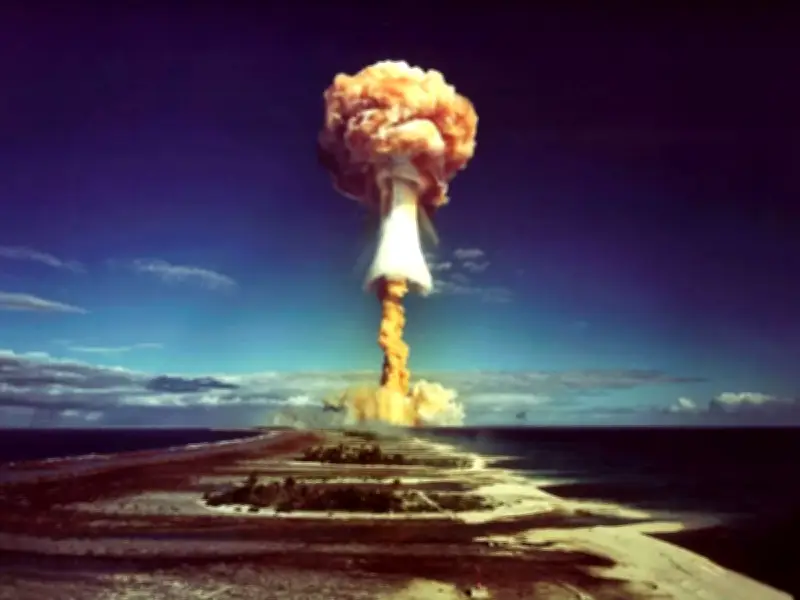
Official radiological guidance sets out five crucial actions that must be taken within the first 24 hours of a nuclear strike on Britain to give the best chance of survival.
The International Commission on Radiological Protection (ICRP) has released comprehensive guidance detailing what UK residents need to do in the event of a nuclear disaster on home soil.
Immediate steps after exposure
If exposure to nuclear fallout is suspected, outer garments and shoes should be removed straight away. Any exposed areas of skin and hair must be wiped down or thoroughly washed.
Fallout consists of radioactive particles that descend from the sky following a nuclear blast. For those with animals that may have been exposed to contamination, the ICRP recommends: "Any potentially contaminated pets should be brushed in a room away from where people are sheltered and washed if possible."
The radiological protection body confirms that food, beverages and medicines already stored in shops or within a refuge remain safe for consumption.
Stay inside and tune in
A further vital measure involves tuning into available media sources, including AM or FM channels, via a battery-operated radio. This enables survivors to receive up-to-date guidance on necessary actions following the disaster.
Another key ICRP recommendation states: "Stay inside unless instructed otherwise. The danger from fallout will decrease rapidly. Remain in the most protective location (basement or centre of a large building) for the first 12 - 24 hours unless threatened by an immediate hazard (e.g., fire, gas leak, building collapse, or serious injury) or informed by authorities that it is safe to leave."
Avoid self-evacuation
Those considering self-evacuation are firmly warned against taking such action. The ICRP states: "Self-evacuation is strongly discouraged until hazardous fallout areas have been identified and safe evacuation routes established."
The guidance further notes that in certain locations, UK residents may encounter essential workers who have been permitted to leave their protective shelter for brief periods to carry out critical support and life-saving activities.
During the initial 24 hours, it is vital to take refuge in a basement or the innermost part of a building, shielding against perilous radiation levels outside. Once that 24-hour period has elapsed, outdoor radiation levels should have dropped considerably, though protective measures in the locality may still be necessary.