Millions of people are set to witness one of the deepest solar eclipses in decades tomorrow, but UK observers are being urged to ensure they have proper eye protection. The eclipse will be total for around 15.2 million people, mainly in northern Spain, Iceland and Greenland, but partial for those in the UK.
Why certified glasses are essential
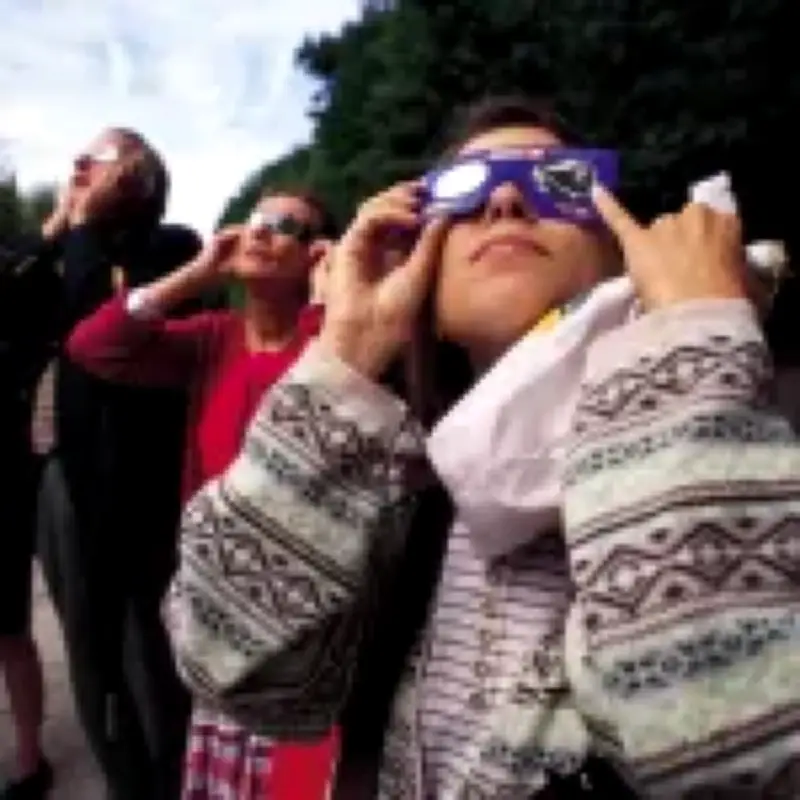
As it is a partial eclipse, a sliver of the sun will remain visible, meaning it cannot be viewed with the naked eye without risking sight damage. The International Organization for Standardization recommends buying eclipse glasses that carry the ISO 12312-2:2015 certificate, ensuring they are safe for direct solar viewing.
However, ordering a pair online may prove difficult. Many glasses are now sold out online, with some customers reporting that their orders will not arrive until after the eclipse. Observatories and libraries have closed due to the 'unprecedented volume' of orders for reliable paper-framed glasses. On Reddit, a user shared a photo of people queuing outside a camera shop in Whitechapel, London, to grab a new shipment at 2am today.
Beware of knock-offs and damaged glasses
Experts have told Metro that certified eclipse glasses are the only safe way to look directly at the partial solar eclipse. Tania de Sales Marques, senior astronomer at the Royal Observatory Greenwich, said: 'Looking directly at the sun can cause serious and permanent eye damage. Even during a solar eclipse, the sun's light is intense enough to harm the sensitive cells in the back of your eye. The only safe way to look directly at the sun is by using certified eclipse glasses or a properly fitted solar filter on a telescope or binoculars.'
Marques stresses that any glasses with scratches or other damage should be discarded. Regular sunglasses are not sufficient, as they do not reduce glare or block harmful UV rays. She advises buying from 'reputable sources' to avoid knock-offs.
Daniel Mohacek, CEO of review authenticity platform TruthEngine, warns that scammers are exploiting the demand. 'Don't simply choose a pair because it has thousands of five-star reviews or because the product description says it is "certified",' he said. 'Look carefully at who is actually selling it, whether the seller can be identified and whether the safety claims can be verified.' He adds that shoppers should scrutinise reviews, especially if they are overwhelmingly positive.
Alternative viewing methods and livestream safety
If you cannot get certified glasses, there are safe alternatives. A DIY pinhole camera, or box projector, can project the eclipse onto a surface. You need scissors, white paper, tape, tin foil and a pin. Cut the paper to fit the bottom of the box as a screen, cut two holes on top, cover one with foil and punch a tiny hole. Face away from the eclipse and view the projection through the other hole.
Even simpler, you can use your hands: place one hand at a right angle with fingers slightly apart, letting sunlight stream through onto the ground. A colander or cheese grater works similarly. Livestreams from Nasa or the Royal Museums Greenwich YouTube account are also an option, but beware of fake sites.
NordVPN's chief technology officer, Marijus Briedis, warns that scammers create phony livestreams to steal data. During the 2024 eclipse in North America, crooks made fake SpaceX streams with a deepfake Elon Musk. 'The technology has only become more convincing since then,' Briedis said. 'People should be suspicious if a supposedly free eclipse stream asks them to create an account, enter payment details, scan a QR code or download anything before they can watch.'