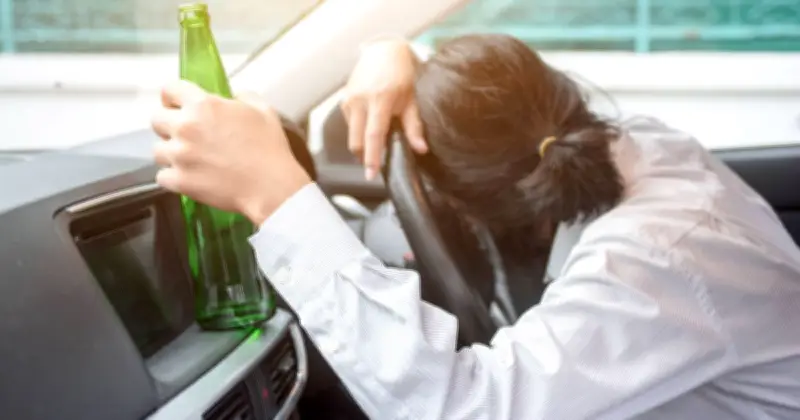
Police chiefs and road safety campaigners have written to the Prime Minister urging him to introduce alcolocks for repeat drink-driving offenders. Alcohol interlocks, known as alcolocks, are devices which prevent a vehicle from being started or driven unless the motorist passes a breath test.
Open letter to the Prime Minister
In an open letter to Andy Burnham, campaigners including the National Police Chiefs' Council, the RAC and Road Safety Great Britain, urged the Government to introduce a mandatory alcolock programme for "high-risk and repeat drink-driving offenders".
The letter reads: "International evidence shows alcolocks can reduce reoffending by up to 70%, and RAC polling found that 82% of UK drivers support their introduction."

"Yet courts in the UK still cannot require convicted drink-drivers to use one.
"An effective programme should make the use of an alcolock a mandatory condition of an offender returning to driving, backed by monitoring and appropriate rehabilitation.
"It would prevent a vehicle being driven after drinking, rather than relying solely on a ban or penalty after the event."
Support from road safety groups
The letter continues: "As mayor of Greater Manchester, you backed Vision Zero and the ambition that nobody should be killed or suffer life-changing injuries on the roads, saying 'more needs to be done' to make roads safer.
"We agree that ambition is right for Greater Manchester, and we hope you agree that it is right for the whole country."
Other signatories to the letter include road safety charity Brake, the Road Safety Foundation and Royal Society for the Prevention of Accidents.
Government position and statistics
It comes after the Department for Transport (DfT) announced, last month, it would not mandate technology to ease the installation of alcolocks, as part of a review into what safety features new cars must include. In response to a consultation on the issue, the department said many responses stated it would be "disproportionate" to impose the interlock requirement on manufacturers ahead of wider policy decisions on the devices. It added the issue will be kept under review.
In a separate consultation, the DfT is analysing feedback on proposed changes to penalties for motoring offences, which included the use of alcohol interlocks.
Driver and Vehicle Licensing Agency statistics obtained by the Press Association indicated that 27,837 British motorists were convicted of drink-driving multiple times in the 11 years to July 20 2024.
Latest DfT figures suggest an estimated 260 people were killed in crashes on Britain's roads involving at least one driver over the legal alcohol limit in 2023. Approximately 1,600 people were seriously injured.
RAC head of policy, Simon Williams, said: "Drink-driving remains one of the most preventable causes of death and serious injury on our roads.
"Alcolocks physically stop someone from driving after drinking, and there is strong public support for repeat or high-risk offenders having to have them fitted to their vehicles before being allowed to drive again.
"The Government said it would set out its next steps within three months of the road safety strategy consultation closing.
"That deadline has now passed, and every further delay means more preventable harm on our roads."
International precedent and UK penalties
Several countries such as Australia, Belgium, Canada, the Netherlands and the US mandate the use of interlocks during sentencing of some drink-drive offenders.
This does not happen in the UK, where people caught drink-driving lose their licence for at least 12 months, although offenders may be offered a reduced ban if they complete a rehabilitation course. They also face a fine and possible imprisonment.
A DfT spokesperson said: "Driving under the influence of alcohol puts everyone at risk, and every drink-drive collision represents a preventable tragedy.
"Through our new road safety strategy, we've consulted on lower alcohol limits and tougher measures, including immediately suspending drink-drivers while they await their court date and harsher sentences.
"While we're not mandating the use of alcohol interlocks, we have consulted on their potential use to help prevent repeat drink-driving offences."