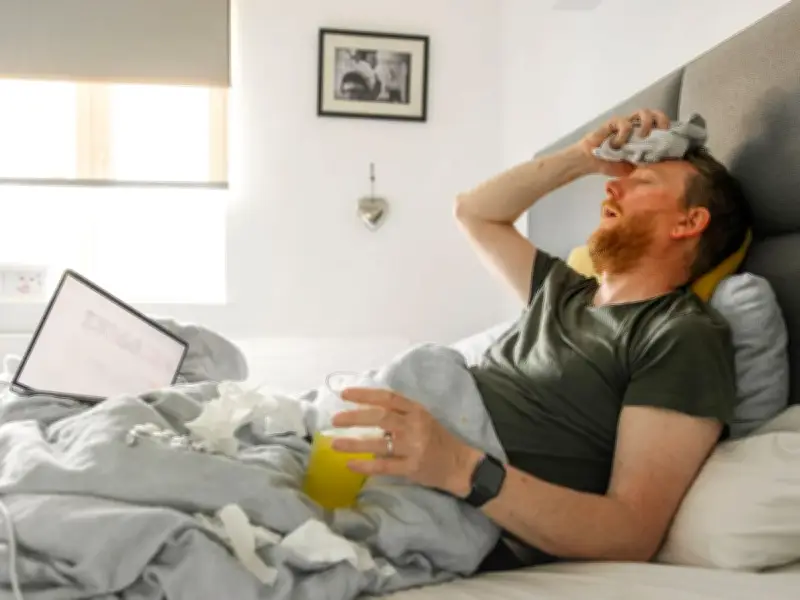
The XFG Covid variant, also known as Stratus and dubbed "American Covid," is now responsible for more than half of positive Covid tests in the UK, with both cases and hospital admissions rising.
Figures from the UK Health Security Agency (UKHSA) show 1,374 Covid cases were recorded in August, jumping to 4,589 in September. Hospital admissions involving Covid also increased from 950 in August to 4,939 over the same period.
Symptoms of the XFG variant
Health experts say the symptoms of XFG are similar to those seen with previous Covid variants. A sore throat appears to be one of the most common signs, but other symptoms include fever, fatigue, cough, sneezing, a runny or blocked nose, nausea, vomiting, and diarrhoea.
Symptoms can vary from person to person and may resemble those caused by other respiratory infections. It is important to note that you may not experience all of these symptoms if you catch the XFG strain.
NHS advice on testing and isolation
The NHS says most people who develop symptoms do not need to take a lateral flow test. However, if you think you have Covid, you should avoid contact with other people for at least five days to help prevent spreading the virus. For anyone under 18, the advice is to stay away from others for three days.
If you test positive, you should also avoid meeting people with weakened immune systems for 10 days from the day you took the test.
How to recover at home
Most people with Covid can recover at home. The NHS recommends getting plenty of rest and drinking lots of water to avoid dehydration. You should ensure your urine is light yellow or clear, which indicates you are drinking enough water.
You can take paracetamol or ibuprofen, and if you have a cough, a teaspoon of honey may help. However, honey should never be given to babies under 12 months old. If you feel breathless, the NHS recommends turning down the heating or opening a window. Sitting upright in a chair, relaxing your shoulders, and leaning forward slightly can also help. You can support yourself by placing your hands on your knees or on something stable, such as a chair. Breathing slowly in through your nose and out through your mouth, with your lips together as though gently blowing out a candle, is also advised.
When to seek urgent medical help
While most people will not need emergency treatment, the NHS says you should call 999 if you suddenly feel very unwell and your symptoms are getting worse, develop sudden chest pain, have severe breathlessness that means you cannot finish short sentences even when resting, find that your breathing suddenly gets worse, cough up blood, collapse, faint or lose consciousness, have a seizure for the first time, cannot wake up or stay awake, develop new confusion, notice your lip, nail beds or skin turning pale, grey or blue depending on your skin tone, or develop a rash that does not fade when a glass is rolled over it.