Stargazers across the UK have the chance to witness another striking celestial event this week, as a partial lunar eclipse takes place in the early hours of Friday 28 August. The event comes just weeks after the UK experienced its most dramatic partial solar eclipse in nearly 30 years, followed by the Perseid meteor shower at its peak.
What happens during the eclipse
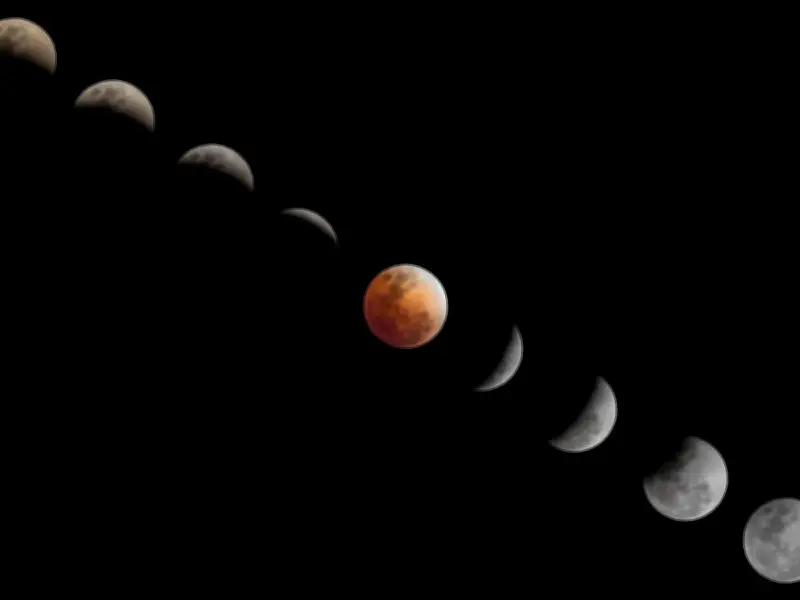
Lunar eclipses occur when the Earth passes between the Sun and the Moon, causing the Moon to temporarily move into the Earth's shadow. The partial eclipse will begin at 03:33 BST, when the Moon enters Earth's darkest shadow, and will reach its maximum at 05:12 BST, when around 90% of the Moon will be within the umbra.
At that point, the Moon will be very low in the south-western sky, creating an effect known as the Moon illusion, where the Moon appears much larger than it is based on its position in the sky. Rather than disappearing entirely, the Moon often takes on a deep reddish-orange glow, which is why these events are popularly known as blood moons.

Why the Moon turns red
This colouration occurs because small amounts of sunlight still reach the Moon by travelling through the Earth's atmosphere. Shorter wavelength light, including blue and violet hues, is scattered away, leaving only the warmer red and orange tones to illuminate the lunar surface.
Exact moonset times will vary across the UK, but for Newcastle, the Moon is estimated to set and move out of sight at approximately 06:15 BST. For the best chance of seeing the eclipse, astronomers recommend finding a high location with an unobstructed view towards the south-western horizon.
Weather forecast for the North East
However, forecasts for the North East show a bleak outlook for stargazers. It is estimated to be a cloudy night across the region, with mist coming in as sunrise approaches on Friday 28 August. This means the North East will likely be hidden from the lunar eclipse by thick cloud cover.
Forecasts change often, so it is worth staying updated on the latest from the Met Office in case conditions improve.