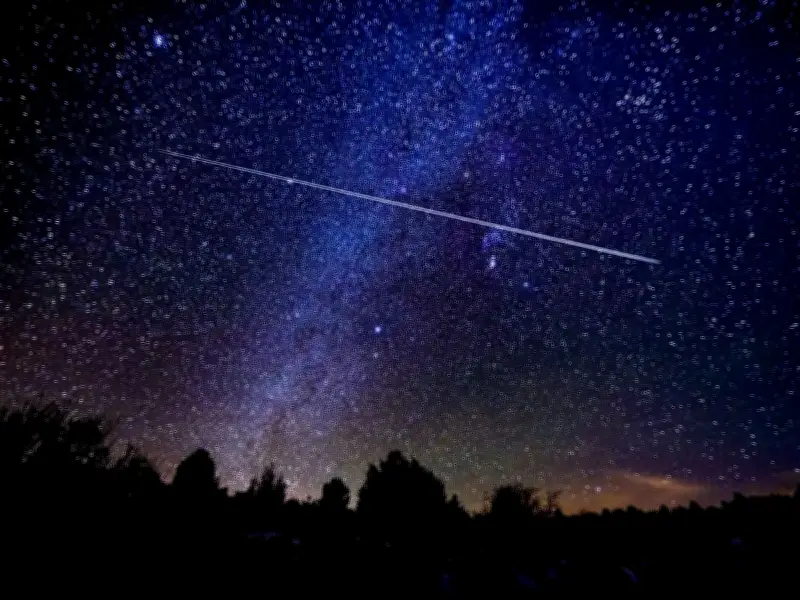
Stargazers across the UK are being encouraged to look up towards the end of August as a lesser-known meteor shower begins appearing in the night sky and builds towards its September peak. According to Alan Jones, astronomy expert at 365 Astronomy, the Alpha Aurigid meteor shower becomes active from around 25 August, giving UK stargazers another opportunity to spot shooting stars after the Perseids begin to fade.
When and where to watch
The shower is expected to reach its peak around 1 September, making the final days of August a good time for anyone wanting to get outside and look up. “The Alpha Aurigids are a relatively minor meteor shower, but that doesn't make them any less interesting for stargazers,” said Alan. “They are created when Earth passes through a stream of debris left behind by a comet. As these tiny particles enter our atmosphere at extremely high speeds, they heat up and burn, creating the bright streaks of light we see as meteors.”
“The shower gets its name from Auriga, the Charioteer, a constellation in the northern sky,” Alan said. “This doesn't mean that the meteors are actually coming from Auriga. They can appear anywhere across the sky, but if you trace their paths backwards, they appear to originate from this particular region.”

Best time to observe
The Alpha Aurigids become active from around 25 August, with activity increasing towards their peak around 1 September. “For UK observers, the final few nights of August are a good opportunity to look for the Alpha Aurigids before their peak,” said Alan. “The best time to watch is generally during the early morning hours, when the radiant is higher in the sky and there is less interference from the horizon.”
However, stargazers don't need to stare directly at Auriga. Alan said: "Don't worry too much about finding the exact constellation. Meteors can streak across a huge area of the sky, so the best approach is to find a dark location and give yourself as wide a view of the sky as possible.
“Sometimes the best way to get into astronomy is simply to go outside and look up. You don't need a telescope, and you don't need to know every constellation. Find somewhere dark, give your eyes time to adjust and be patient. You may be surprised by what you see.”