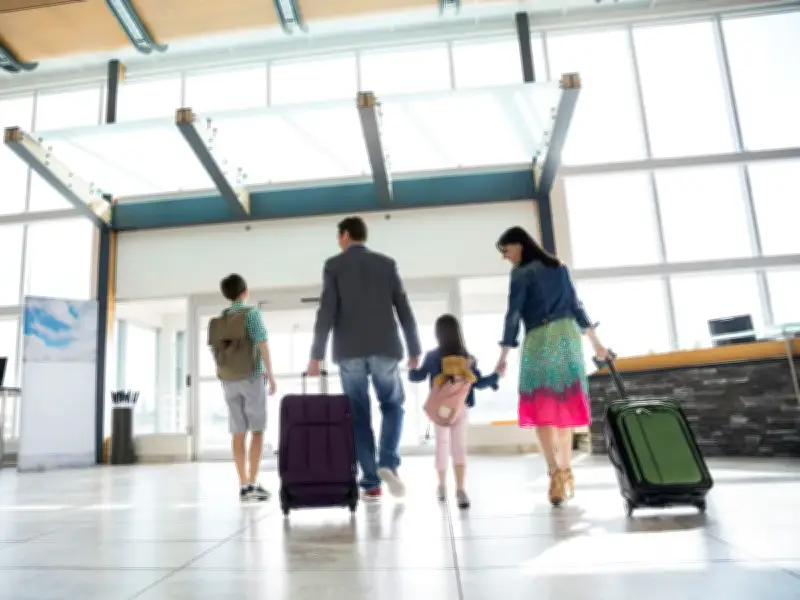
The travel industry has bounced back to nearly pre-Covid pandemic levels, according to ABTA – The Travel Association's annual Holiday Habits report. The study found that 88% of Brits surveyed took a holiday this year, with the average Brit taking 3.9 holidays a year – both figures matching those of 2019 before Covid hit.
ABTA members, which include tour operators and travel agents, are reporting steady numbers in early bookings from British holidaymakers. Travel contributes around £57 billion annually to the UK economy, according to ABTA.
Brits turning to travel professionals
Over the last 12 months, there has been a shift in Brits turning increasingly to travel agents and professionals when booking getaways. The study found that 38% of people said they booked with a travel professional, up from 34% the previous year. Given that package holidays proved the most popular type of booking, that's no surprise.
Ease of booking and value for money were two of the main reasons that UK holidaymakers turned to professionals. When it comes to AI, there has been a surge in people using it for holiday planning – 14% up from 8% last year – but this is generally for inspiration when researching a holiday.
Challenges facing the industry
The industry is still facing a number of challenges. The Middle East conflict earlier this year caused severe disruptions and a drop in confidence for holidaymakers, although countries including Spain, France and Italy remained top choices for getaways given their short-haul location. Other factors, such as the rollout of the Entry/Exit System (EES) in the EU, also remain a challenge.
Under the EES, British passport holders need to have their fingerprints taken and facial scans done before entering one of the 29 countries in the Schengen Area. However, countries including Greece decided to ditch the requirement for summer after the rollout caused hours-long delays at some airports. Legislation was brought in requiring member states to use the EES from September 6, although the European Commission has said it won't penalise countries which delay the EES until the end of the year.
Industry outlook
Mark Tanzer, Chief Executive of ABTA – The Travel Association, said: "The headlines of this Holiday Habits report are broadly positive – people going on holiday nearly back to pre-pandemic levels, and a continued appetite for holidays into the next 12 months."
"Demand has held up well despite a range of challenges this year, and that looks set to continue, as does the willingness to prioritise spending on travel over other discretionary items."
Tanzer added: "Behind the headline figures, it has been a tough year for the travel industry. The conflict in the Middle East shook the sector, not just in terms of the initial disruption to travel, but also the ripple effects of changes to fuel supply and prices. How we travel to and through the Middle East has changed and there does not appear to be an immediate resolution of the disruption on the horizon."
"Closer to home, Europe's new Entry/Exit System, and climate-related events such as wildfires and extreme heat, have also affected people's travel plans. Together, this is a lot for an industry to deal with over a short period."
"Perhaps, though, it is the cost of living – more than anything – that has been the constant challenge shaping customer behaviour. While people do continue to spend on travel, they are leaving it much later to departure before committing to their holiday. It is a pattern that is becoming regular for travel businesses, adding increased pressure and unpredictability."
"The difficulties of the last 12 months aren't behind us but, as an industry, we can move forward with confidence that organised travel remains in demand, and we are part of a growing industry that now contributes £57bn annually to the UK economy."