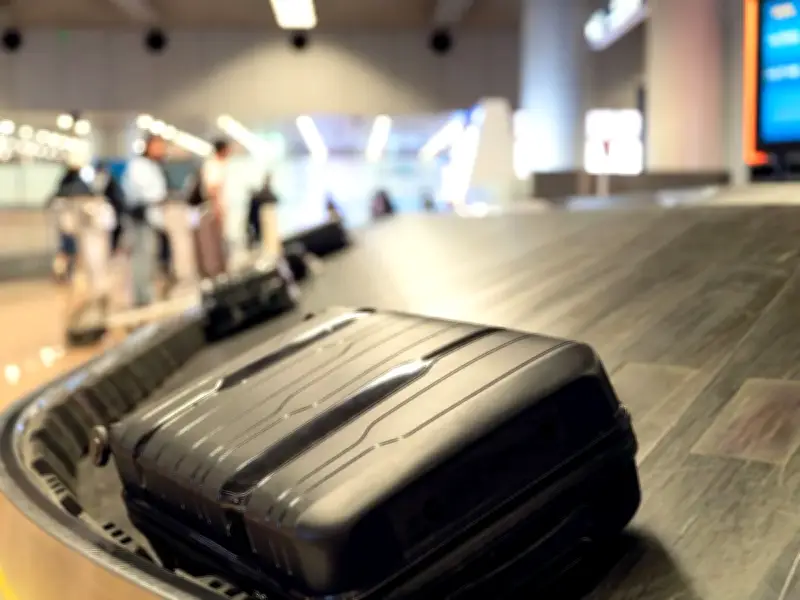
British holidaymakers flying to Barcelona this week have been warned that an on-time landing does not necessarily mean the disruption is over. An indefinite strike involving Groundforce employees at Barcelona-El Prat Airport has affected baggage handling, check-in, boarding and flight coordination since August 4.
Twenty flights were reportedly cancelled on the first day, while at least two aircraft operated without passengers' luggage. At least 36 cancellations were reported during the first two days of action. Groundforce serves airlines including Lufthansa, Air France, KLM, Air Europa, Qatar Airways, Etihad Airways, Turkish Airlines, United Airlines and Finnair. Around 11,600 flights are scheduled with affected carriers during August and September, with as many as two million passenger journeys potentially exposed if the dispute continues.
What travellers should check on arrival
Andrea Platania, travel expert at Transfeero, says passengers must not assume that an on-time arrival shown on the airport screen means their luggage and onward transport will be unaffected. Flight-tracking systems can detect when an aircraft lands and update a transfer provider's expected collection time. However, they cannot normally see whether checked luggage has reached the baggage carousel.

Platania said: "A green 'landed' status only confirms that the aircraft has arrived. It does not confirm that your suitcase has been unloaded. This creates a hidden problem because your driver may believe you are about to enter the arrivals hall while you are still waiting beside an empty carousel. Some airport transfers include a limited waiting period, and that time may already be running. Passengers should check three separate things: whether their flight has landed, whether their luggage is moving and whether their driver knows they are still inside the terminal. Watching the carousel without contacting anyone could turn a baggage delay into a second problem."
Passengers should contact their transfer provider as soon as luggage stops appearing or airport staff confirm that unloading has been delayed. They should provide their terminal, carousel number and baggage situation rather than sending a general message saying they are delayed. This allows the driver to distinguish a baggage-handling problem from a passenger who has failed to arrive at the meeting point.
How to report missing luggage
Platania said: "Do not wait until the carousel has stopped completely and other passengers have left before sending a message. Tell the provider that you have landed, identify the baggage belt and explain whether staff have given an estimated waiting time. If there is no update, say that clearly. A flight tracker cannot communicate any of this. Early contact gives the provider a chance to hold the driver, move the collection time or agree on another arrangement before the original pickup becomes impossible."
Travellers should not leave the baggage reclaim area without formally reporting a suitcase that has failed to arrive. The UK Civil Aviation Authority says lost, delayed or damaged baggage should be reported at the airport. Passengers should obtain and retain a Property Irregularity Report, commonly known as a PIR.
The report will normally require the passenger's boarding pass, baggage receipt, contact details, address in Spain and a description of the missing suitcase. Travellers should keep the reference number and photograph or save the completed document.
Platania explained: "Do not leave simply because an AirTag appears to show that your suitcase is somewhere inside the airport. A tracker may help staff locate the bag, but it does not replace an official report. Show the location to the baggage desk, obtain a PIR and keep your baggage receipt. Without that documentation, it may be much harder to prove when the problem was reported or recover reasonable expenses later."

Steps to take before and after the flight
Passengers should also confirm which company handles their particular airline. The strike does not affect every carrier operating at Barcelona, meaning people arriving at neighbouring baggage belts may experience completely different circumstances. Those travelling with an affected airline should keep essential medication, keys, chargers, travel documents and one change of clothing in their cabin bag, provided the items comply with security and airline baggage rules.
If luggage is delayed, passengers may be able to claim reasonable essential purchases from the airline. However, this does not provide permission to replace the entire contents of the suitcase immediately. Platania said: "Buy what you genuinely need for the period without your bag and keep itemised receipts. Basic toiletries, underwear or a simple change of clothing may be easier to justify than designer purchases or a complete holiday wardrobe. Photograph every receipt as soon as you receive it because small paper receipts are easily lost. Passengers should also check their travel insurance, as the policy may provide separate delayed-baggage cover."
Under CAA guidance, passengers must make a written claim to the airline within 21 days of receiving delayed luggage. Having a PIR does not automatically guarantee reimbursement, so travellers must still submit the written claim and include supporting evidence. Holidaymakers should save screenshots of their flight status, baggage updates, messages to the transfer provider and any instructions received from airport staff. They should also keep receipts for unavoidable transport and essential purchases.
Passengers flying to Barcelona this week should check directly with their airline before departure, confirm their arrival terminal and save the telephone number for their airport transfer somewhere accessible offline.