A 6.0 magnitude earthquake struck Hawaii’s Big Island late Friday night, startling residents and prompting scientists to monitor nearby volcanic activity. The quake occurred near Honaunau-Napoopoo on the western side of the island, according to the U.S. Geological Survey (USGS). It originated approximately 23 kilometres (14 miles) below the surface, allowing the shaking to be felt across a wide area.
Over 2,500 residents reported feeling light to strong shaking not only on the Big Island but also on Maui and Oahu, where tremors briefly rattled homes and buildings. The earthquake caused minor damage and some rockslides, but the Pacific Tsunami Warning Center confirmed no tsunami threat. Officials reported no immediate injuries, deaths, or significant structural damage.
The USGS stated that the earthquake was not related to volcanic activity. “The depth, location, and recorded seismic waves of the earthquake suggest that it was caused by stress due to bending of the oceanic plate from the weight of the Hawaiian island chain,” the agency said in a statement.
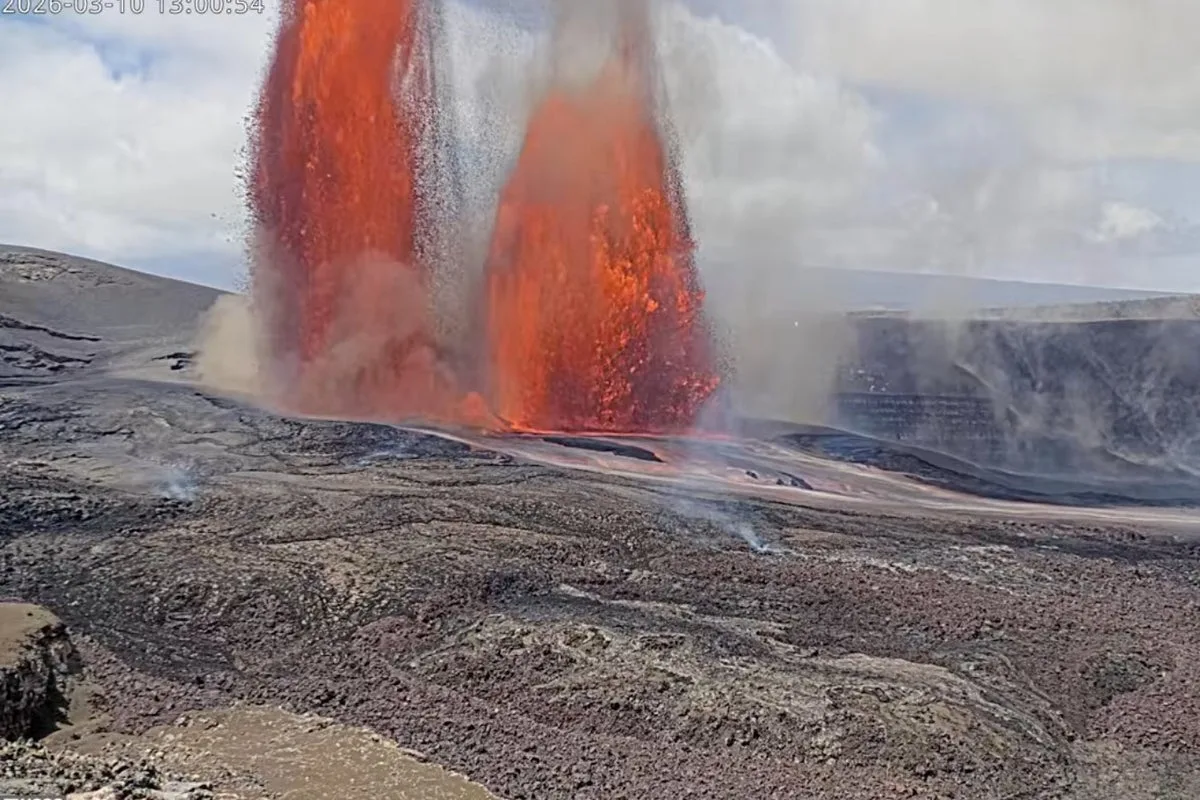
Earlier Friday, the Hawaiian Volcano Observatory noted that forecast models suggest the next eruptive episode at Kilauea, one of the world’s most active volcanoes, could occur between Sunday 24 May and Wednesday 27 May. Officials stressed that volcanic eruptions are difficult to predict precisely and conditions can change quickly underground.
Kilauea, located on Hawaii’s Big Island, has been erupting intermittently since 23 December 2024, making it one of the most closely watched volcanoes in the Pacific region. Its frequent activity has kept scientists alert for any changes in behaviour that could signal shifts in eruption patterns.