The UK is set for an 'incredible' partial lunar eclipse this week, just weeks after the partial solar eclipse that blocked out over 90% of the sun. An astronomy expert has urged everyone to look to the skies again, as the lunar eclipse is on the way.
When and where to see it
In a video shared to Instagram, Daisy Dobrijevic said the upcoming lunar eclipse will take place on Friday (28th August), and it will be the best one the UK will see for the next couple of years. The eclipse is due to start around 3am, with the peak happening around 5am, when the moon will be very low on the horizon as the sun prepares to rise.
Daisy added: "If you're in the UK, you can see it, but you're going to need to set an early alarm. The partial eclipse begins around 3:30 am, and by around 10 past five, it will be close to its deepest point as seen from the UK."

What makes this eclipse special
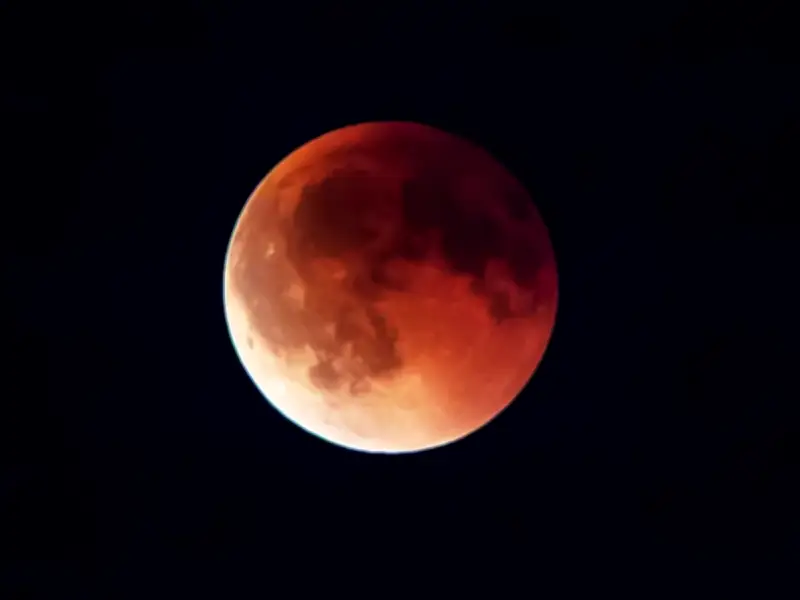
A lunar eclipse happens when the Earth moves directly between the sun and the moon, blocking sunlight and creating a shadow across the surface of the moon. They are also known as blood moons because any sunlight that does reach the moon has passed through the Earth's atmosphere first, stripping it of short-wavelength colours like violet and blue, and leaving behind reds and oranges.
Daisy said in her video: "The UK is about to get one of its best lunar eclipses for the next couple of years. On the 28th of August, the moon is going to pass through the Earth's shadow, creating a deep, partial lunar eclipse. And don't let the word partial fool you - this one could look seriously impressive."
At maximum eclipse, around 93% of the moon will be inside Earth's dark central shadow, leaving just a thin sliver untouched. "We don't see another total lunar eclipse until December 31st, 2028," she added. "Because sunlight filtered through Earth's atmosphere can still reach the eclipsed part of the moon, much of it could take on that beautiful reddish-orange colour we associate with the total lunar eclipse, or blood moon."
How to watch the lunar eclipse
Lunar eclipses happen more often than solar ones, with one happening globally between two and five times each year. From any specific place on Earth, a total lunar eclipse is visible on average once every two and a half years, compared to once every 300 to 400 years for a total solar eclipse.
The catch is that by 5am, the moon will be getting pretty low on the western sky, so you need somewhere with a nice, clear view towards the horizon. This means you probably won't see it from your back garden unless you live on a hill or don't have any other houses or buildings near you that might block your view. Unlike with the recent solar eclipse, you do not need special eye protection to view the lunar eclipse, so you can put the eclipse glasses and pinhole projectors away for this one.