Meteorologists predict that a developing El Nino, forecast to become quite strong, will likely dampen the upcoming Atlantic hurricane season, but it will not eliminate the threat of potentially deadly storms, according to federal and outside experts.
NOAA Seasonal Outlook
The National Oceanic and Atmospheric Administration (NOAA) issued its seasonal outlook on Thursday, giving a 55% chance of a below-average season. The agency forecasts 8 to 14 named storms, with 3 to 6 becoming hurricanes and 1 to 3 intensifying into major hurricanes (Category 3 or higher, with winds exceeding 110 mph or 177 kph). A normal season averages 14 named storms, 7 hurricanes, and 3 major hurricanes.
Other Forecasts Agree
Eighteen other groups, including private and academic institutions, have also released forecasts, most predicting a below-average summer and fall. Their average calls for a dozen named storms, five hurricanes, and two major hurricanes, with an Accumulated Cyclone Energy index at 80% of normal.

Colorado State University, a pioneer in hurricane seasonal forecasting since 1984, predicts the lowest overall activity since 2015, which saw the strongest El Nino in 75 years. That forecast may be revised downward in June, said Phil Klotzbach, the university's hurricane expert.
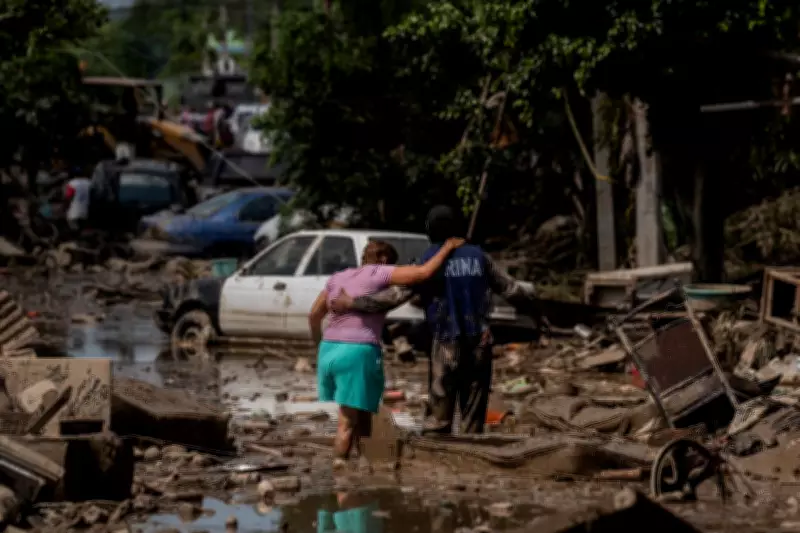
This comes after nine of the last 10 Atlantic hurricane seasons were above normal or hyperactive. Last year started slow but produced a near-record three Category 5 hurricanes, including Melissa, which devastated Jamaica and Cuba, noted Suzana Camargo, a climate scientist at Columbia University.
Economic Impact
Inflation-adjusted global damage from tropical cyclones has risen from an average of $11.4 billion per year in the 1980s to $109.7 billion per year over the past decade, with three-quarters of the damage occurring in the Atlantic, Gulf of Mexico, and Caribbean, according to Munich Re.
"We should expect a less active year than certainly what we've seen recently, and perhaps significantly so below average," said Kristen Corbosiero, an atmospheric scientist at the University at Albany. "But again, it only takes one to cause real devastation and destruction in the mainland U.S. or even in Hawaii."
El Nino's Role
El Nino, the natural warming of the central Pacific, warps weather patterns globally. Scientists have long noted a correlation between El Nino and below-average Atlantic hurricane activity, while the central and eastern Pacific see more storms. This year, many forecasts call for a strong or even record-setting El Nino. During La Nina, the opposite phase, the Atlantic is generally busier.
NOAA Administrator Neil Jacobs said Thursday there is a 98% chance of an El Nino this summer and an 80% chance it will be moderate or strong. An AP analysis shows that Atlantic hurricane seasons with strong or very strong El Ninos have two-thirds the named storms and half the hurricanes of the 1991-2020 average.
El Nino fights storm formation through increased wind shear—crosswinds 1 to 7 miles (1.5 to 11 km) above the surface—that can tear apart thunderstorms fueling hurricanes. "A stronger than normal wind shear tends to tilt storms as they try to develop, pushes dry air into storms, and prevents them from intensifying," said Brian Tang, an atmospheric scientist at the University at Albany.
Forecasts for peak hurricane season show strong wind shear from the west over the main development region for long-lasting hurricanes that originate off Africa. Fewer such storms occur during El Ninos, Klotzbach said.
Landfall Statistics
In the 15 strongest El Nino years since 1950, 37 named storms, 11 hurricanes, and 3 major hurricanes made landfall in the continental U.S. In contrast, during the 15 coldest La Nina years, 61 named storms, 31 hurricanes, and 10 major hurricanes hit the Gulf and Atlantic coasts. El Nino reduces Atlantic coast hits but has less influence on Gulf coast landfalls, Klotzbach noted.
Pacific Impacts
El Nino and La Nina have opposite effects on storms in the central and eastern Pacific. Jacobs said there is a 70% chance of an above-normal eastern Pacific season. While many eastern Pacific storms near Baja Mexico stay at sea, some can cause damage, like Hurricane Otis in 2023, which smashed into Mexico, or 1992's Hurricane Lester, which brought heavy rains to the U.S. Southwest.

Hawaii, a small island chain in a vast ocean, can be threatened. In 1992, an El Nino year with few Atlantic storms (though Hurricane Andrew devastated Miami), Hawaii was hit by Hurricane Iniki. Further west toward Asia and India, the odds of storms becoming super typhoons increase significantly during El Nino, Klotzbach said.
The eastern Pacific hurricane season began May 15, while the Atlantic season runs from June 1 to November 30.