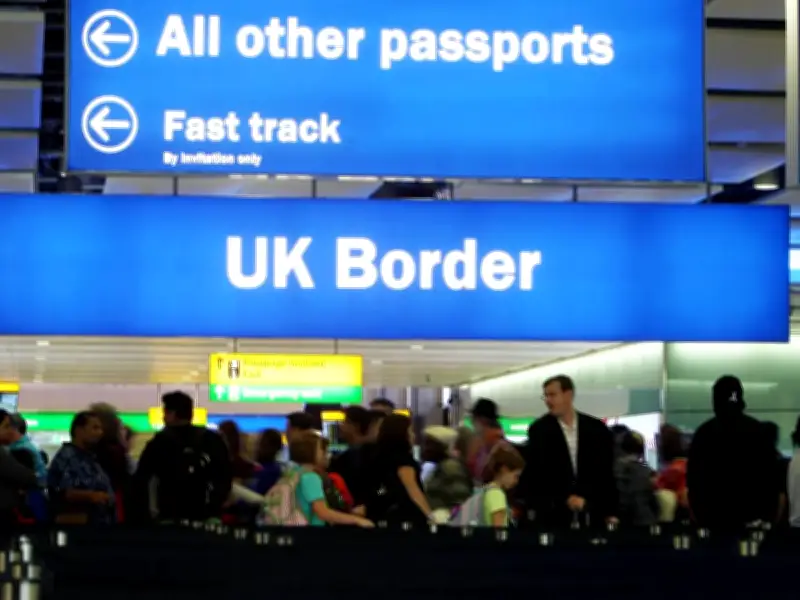
British travellers returning to the UK will soon be able to pass through airport e-gates without showing their passports, as UK Border Force introduces contactless facial recognition technology at airports across the country.
Upgrade rollout at UK airports
Manchester Airport recently completed a three-week trial of the new contactless facial recognition e-gates. The upgraded system will now be introduced at Birmingham Airport and East Midlands Airport.
By early next year, all e-gates at Birmingham, Bristol, Cardiff, Heathrow, Manchester, Edinburgh, Gatwick, Glasgow, London City, Luton, Newcastle, and Stansted airports will have the upgraded system.
How the new system works
Passengers returning to the UK who use the e-gates and have their face captured on camera will not need to scan their passport. However, they still need to bring their passport to check in and board.
The new facial recognition e-gates work by loading a digital gallery of arriving passengers' photos and using live cameras to match faces with that day's list. Unlike the old e-gates, you do not need to open and scan your passport, so the process is faster.
Border Force comments and impact
Phil Douglas, the director general of Border Force, said: "It will mean we have a more secure border and a much faster transit through the airport.
"It's quicker, it's more modern, it's more secure." Mr Douglas told the Sunday Times that contactless gates could speed up border control by up to 25 per cent.
The new system will be introduced in the next few weeks and will first be available only to British passport holders. It may later be expanded to include other nationalities who can use e-gates.
Currently, the process usually takes 20 to 25 seconds. However, it can take longer if the passport is not placed correctly in the machine or if the chip is damaged and cannot be read.
With the new system, each airline will send a gallery of arriving British passengers' passport photos to border control at each airport. These photos will be collected for the e-gates to use as a reference.
Mr Douglas added: "We know who's coming and can load up that gallery of who is arriving; it's not a one in 60 million check, it's a one in tens of thousands check."
If the e-gate does not recognise a passenger's face, they will be asked to scan their passport; if that is still unsuccessful, the passenger will be sent to a Border Force officer at a staffed desk.