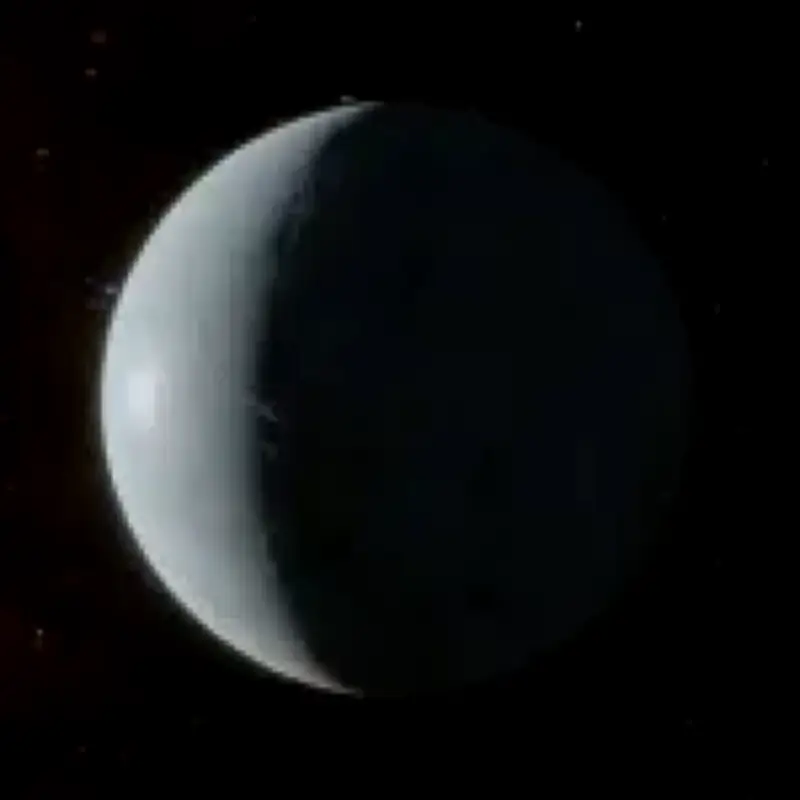
A new study suggests that a hidden planet, dubbed 'Planet X2', may exist in the outer solar system, distinct from the previously proposed 'Planet Nine'. The research, published in Monthly Notices of the Royal Astronomical Society, indicates this world could be about twice the size of Earth and orbit hundreds of times farther away.
What is Planet X2?
The concept of Planet X2 differs from Planet Nine, which is theorized as an orb 10 times the size of Earth, located 155 billion miles from the Sun. Planet X2, or PX2, would be far smaller, with an elliptical orbit that has a semi-major axis of 46,000,000,000 miles.
Researchers from the University of Southern Queensland in Australia created computer models of the solar system's birth 4.5 billion years ago. They simulated how Jupiter, Saturn, Uranus, Neptune, thousands of icy chunks, and 1,500 Pluto-sized worlds interacted gravitationally.
Explaining the Kuiper Belt's Weirdness
The outer solar system contains the Kuiper Belt, a region of icy leftovers from the solar system's formation beyond Neptune. Many objects there orbit in a similar way, circling outward in the same part of the solar system and tilted at about the same angle. Experts say the odds of this are one in 14,000.
When the team added Planet X2 to their models, its gravity pulled some icy objects out of Neptune's influence and tilted others into weird orbits. Only a planet about twice the size of Earth, orbiting hundreds of times farther away, seemed to make this possible.
Could We Spot It?
Dr Alfredo Carpineti, a London-based astrophysicist not part of the study, told Metro that the outer solar system remains underexplored. He noted that the possibility of larger bodies has been floated for several years.
Dr Carpineti, space and physics editor at IFLScience, said these ideas are just 'ideas' for now. However, he pointed to the Vera Rubin Observatory in Chile, which is performing a 10-year-long survey of the Universe. As it expands knowledge of what lies beyond Neptune, he said, 'If there's one or more planets there, we might finally spot them!'