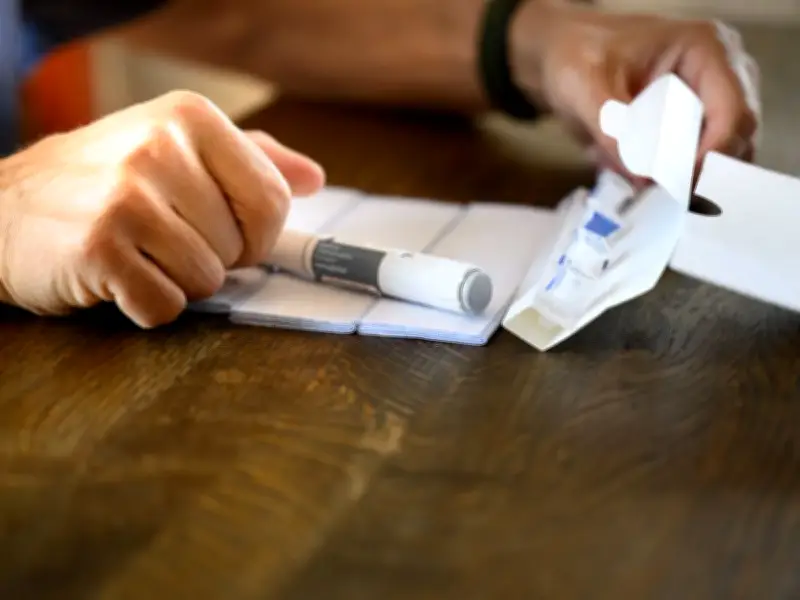
Monthly enforcement actions against illegal weight-loss drug sellers rocketed by 684% between February and July 2026, as experts warned consumers' health could be “at risk” from a surge in counterfeit slimming pills and bogus injections.
Fresh data from Corsearch showed monthly enforcement actions against illicit GLP-1 listings across its monitored portfolio soared 684% in the period. Online marketplaces were responsible for 58% of all detected infringements, followed by social media at 27%.
Most common infringement types
According to the data, 35% of GLP-1 enforcement actions involved listings offering medicines without a prescription, making it the most common infringement type. Trademark violations followed closely behind, accounting for 33% of actions.
Experts speaking to Newspage expressed growing alarm over a fresh wave of counterfeit slimming pills and bogus injections flooding the market, with criminals exploiting everything from cut-price deals to glowing online reviews to lure unsuspecting customers.
Experts warn on fake reviews
Mike Sweeney, vice president at Corsearch, said the scale of the counterfeit weight-loss problem was staggering. He said: “Counterfeit GLP-1 medicines are already a rapidly growing threat online. Our enforcement data shows just how quickly criminal activity is responding to demand, with monthly enforcement actions across our monitored portfolio increasing by 684% between February and July.
“The arrival of weight-loss pills creates another opportunity for criminals to exploit consumer demand. Counterfeiters don't care whether they're copying an injection pen or a tablet, they follow demand. As more legitimate products enter the market, we should expect illicit sellers to broaden their operations and impersonate trusted brands across multiple formats.”
Daniel Mohacek, chief executive of TruthEngine, said he was increasingly alarmed about how criminals could fabricate five-star reviews to make dubious sellers appear credible. He said: “With up to half of online reviews now showing signs of being suspicious, consumers need to be cautious online generally. In a sector like this, the consequences of getting it wrong can be far more serious than simply losing money.”
Buy only from registered pharmacies
Francis West, CEO of Security Everywhere, urged shoppers that the only safe place to purchase weight-loss medication is through a registered pharmacy – never via a marketplace. He said: “My advice: only buy through a registered pharmacy, never a marketplace listing or a DM sliding into your inbox, and if the price looks too good, assume it's because there's no real product or no real company behind it. Urgency and a bargain together is the tell every time.”
Nouran Moustafa, practice principal and IFA at Roxton Wealth, warned that the surge in counterfeit products had the potential to place consumers' health “at risk”. She said: “A fake handbag wastes your money. A fake medicine can put your health at risk. Consumers should treat any seller offering GLP-1 medication without a proper consultation or prescription as an immediate red flag.”
Pharmacies across Great Britain are required to be registered with the General Pharmaceutical Council, which maintains a publicly accessible online register.