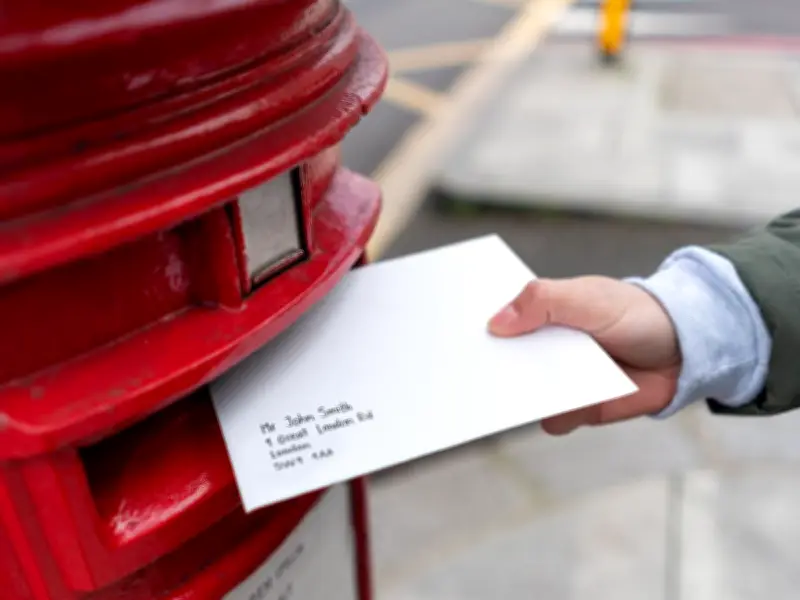
Royal Mail has issued guidance for anyone who writes addresses on envelopes or parcels by hand. With up to 6.6 billion letters handled each year, following these tips can prevent delays and delivery errors.
The advice is crucial because Royal Mail's automated sorting machines rely on clear, well-formatted addresses to process mail quickly. Left-aligned text and high-contrast ink reduce sorting mistakes, speed up delivery, and help ensure letters reach the correct destination rather than being lost or returned.
Key Recommendations
Royal Mail advises: "Use clear and easy to read handwriting (or font if you are printing the address). Use a pen or ink that is clear against the colour of the envelope or parcel." While no specific pen is banned, the ink must contrast sharply with the envelope. Black ink is recommended for best readability, especially on light surfaces. The company suggests: "It's important that the address shows up against the colour of your envelope. (Tip - stick on a white label with black ink.)"
Avoid light or faded inks like light grey, pale yellow, or faint pink, which blend into the background. Also steer clear of writing tools that smear easily during automated handling.
Address Formatting Tips
Royal Mail adds: "Write the address clearly on the front, following our guidelines, and always include a postcode if possible. You can search for up to 50 postcodes or addresses, free of charge, with our Postcode Finder."
When addressing mail, place the name and address in the bottom left corner of the front. Use clear handwriting, left-align all lines, omit commas and full stops, leave a generous margin, and put postage in the top right corner.
Structuring the Address
For the top lines, Royal Mail instructs: "Write or print the name of the person (or people) you are sending to on the first line, above the address. It's best to include their surname as well as their first name. You can add a line for an organisation name."
For middle lines, use a line for the property number and street name. If the property has a name, it can take one line, with the street on the next. Then add the local area or village name.
Next, write the town in capital letters. A county name is optional. The final line should be the UK postcode in capitals. For international mail, add the country name in capitals on the last line.