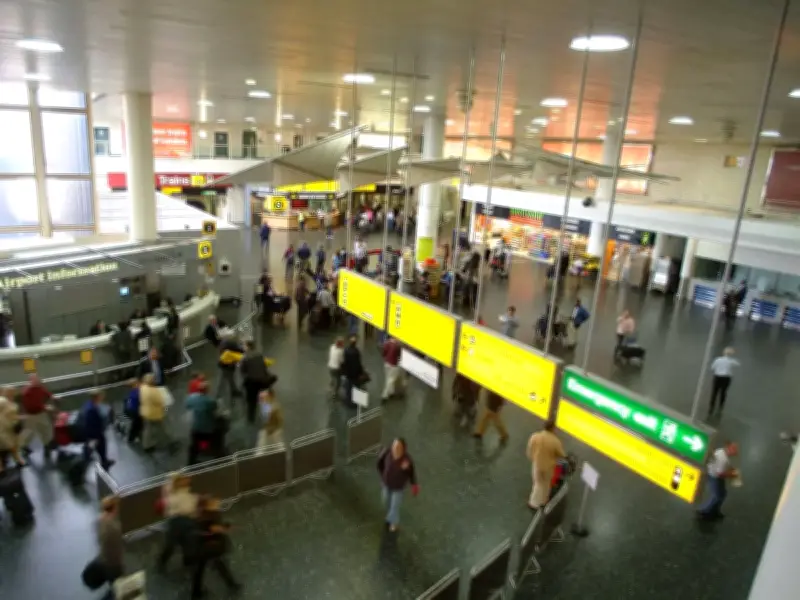
Gatwick Airport's North Terminal is experiencing significant disruption after a burst water main caused a water outage, leading to the closure of toilets and restaurants. Passengers have reported being turned away from restaurants as the supply to the airport was cut off.
The outage was triggered by a burst water main, which has disrupted the water supply to the airport. This incident follows a similar water outage just weeks ago that left the airport without running water, functioning loos, or access to bars. On July 26, a power failure at a water treatment plant in south-east England led to low water pressure and supply issues at the airport.
Passengers voice frustration on social media
Irate passengers have taken to social media to air their grievances. One individual posted on X (formerly known as Twitter): "You took your time to make this announcement. How about tell all your passengers at Gatwick Airport that all toilets are closed and all restaurants, bars, cafes are not operating, no hot food or drinks available anywhere. No notices issues anywhere at the airport."

Another user remarked: "Under investigation? That's all you have after hours of no water? Any timetable? Utterly ridiculous and pathetic."
Repair teams on site, flights continue
Anthony Rochester, head of networks at SES Water, said the burst main was "temporarily affecting supply including Gatwick Airport", and that teams were on site to repair the issue "as quickly and safely as possible". "We are sorry for the disruption this is causing customers and will continue to provide updates," he added.
Despite the problem, flight operations are carrying on as usual. The affected area falls within the SES Water network, which serves customers across parts of Surrey, Kent, and London.
This comes after Manchester, Stansted, and East Midlands airports fell prey to hackers, with customer data belonging to millions of passengers compromised. The airports were "subject to a cybersecurity incident by an unauthorised third party", and customer data, including email addresses, phone numbers, vehicle registrations, and postcodes, was accessed. It is believed that data from 8.7 million customers was breached.