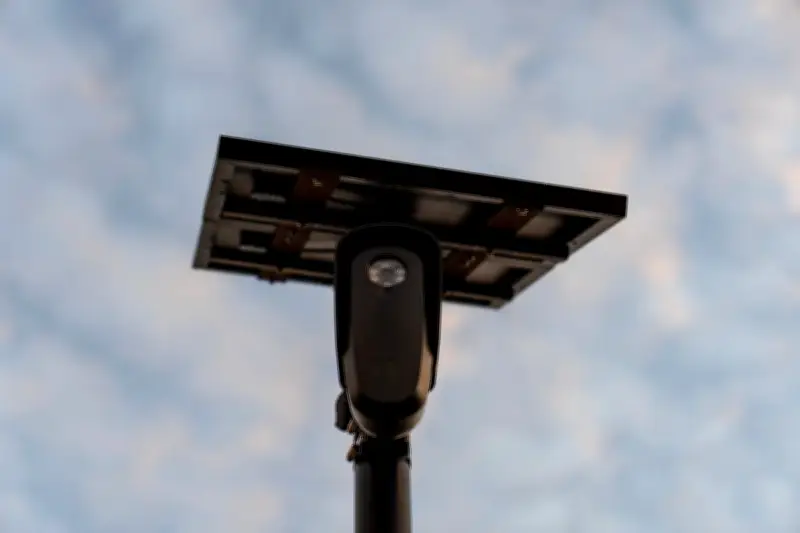
Flock Safety, the company behind a vast network of license plate reading cameras across the US, announced on Thursday that it will begin mandating that law enforcement agencies switch on features that could help audit how individual officers use its tracking capabilities. The move comes after reports that more than 50 law enforcement officers were accused of or charged with abusing the system, including to stalk ex-partners.
New mandatory features
Garrett Langley, Flock’s CEO, said in a blogpost that the company would make its Audit Assistance feature mandatory. The feature, introduced four months ago as voluntary, flags “abnormal activity” for administrative review. Langley said about a third of customers had turned it on. Now, all customers—including law enforcement agencies, retailers, universities, and homeowner associations—must activate it by the end of the year. Under the new system, when behavior is flagged as “abnormal”, the user would be automatically suspended pending review. The announcement did not specify what qualifies as “abnormal”.
“These changes reflect years of work and deliberation,” Langley wrote. “They are not the end of that work, but simply the continuation of our commitment to both safety and privacy.”
Restricting data sharing and retention
The company will also allow law enforcement agencies to restrict the information shared with other agencies on specific offenses, rather than giving partner agencies free access to all license plate scans. Agencies can now limit scans shared with other cities or states to specific investigations, such as stolen vehicle or missing persons cases. This addresses years of reports that the system was used to target immigrants or people seeking out-of-state abortions, sometimes in violation of state or local laws.
Additionally, Flock will automatically set its license plate scan retention time to seven days, down from the existing default of 30 days. However, agencies can identify scans as part of a longer-term investigation if they want to keep that data longer, and can continue to choose “the retention period that fits its public safety strategy”.
Concerns persist
These concerns have grown since the US supreme court’s reversal of Roe v Wade. The Guardian found in 2022 that some California police departments were sharing license plate reader data with states where abortion is banned, potentially violating California’s out-of-state data-sharing laws. At the time, a Flock executive said the company’s mission was to “eliminate crime”, with crime defined by the state or municipality where a camera operates.
Privacy experts question whether these features are enough to protect the more than 6,000 communities with Flock cameras. “I don’t think there’s such a thing as ‘mass surveillance, but with guardrails’. Ultimately, networked cameras sprinkled across the country are incompatible with a free society,” said Chris Gilliard, author of the forthcoming book Luxury Surveillance.
Flock has faced criticism for years, but recent events have increased scrutiny. After Amazon Ring announced and then cancelled a plan to integrate Flock’s technology, more than 80 cities have dropped or are publicly considering dropping their contracts with Flock. Langley previously called vigilantes taking down Flock cameras “terrorists”, then apologized.
Robert Frommer, a senior attorney at the Institute of Justice, which represents plaintiffs in two federal lawsuits against warrantless use of license plate readers, said the new features amount to police departments policing themselves. “This is yet more window dressing,” said Frommer. “Flock suggests that police departments limit their retention periods to seven days, while admitting that decision is still entirely up to the police departments themselves.”