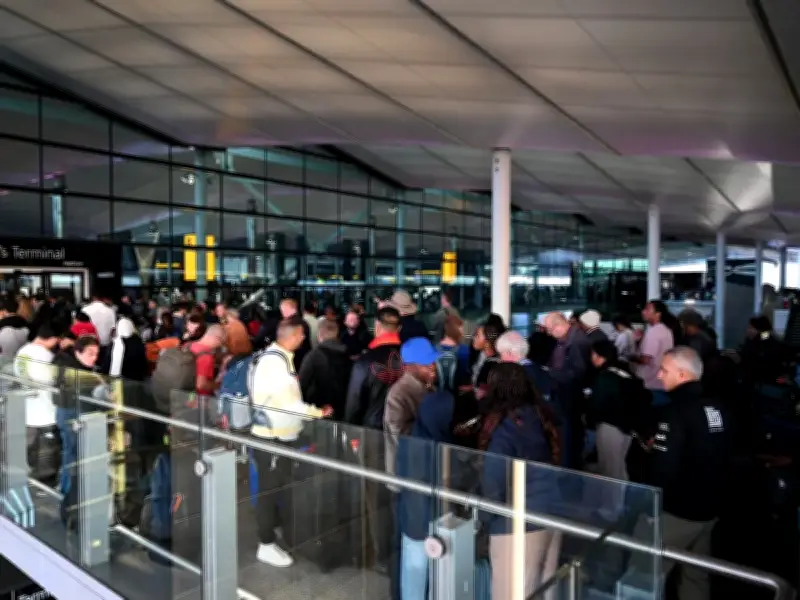
Passengers affected by the National Air Traffic Services (NATS) technical failure that led to more than 1,000 flight cancellations may be able to claim compensation. The disruption continued on Wednesday, with 279 flights already cancelled by early morning, mainly at Heathrow.
What happened
The NATS flight processing system suffered a technical issue on Tuesday, affecting tens of thousands of passengers. The system provides air traffic control services to 15 UK airports, and the impact was felt at Heathrow, Newcastle, Gatwick, Stansted, and Manchester, with airlines including Ryanair and BA hit by cancellations.
Passenger rights
According to the Civil Aviation Authority (CAA), passengers have rights when flights are cancelled or delayed. Airlines must provide food and drink, and possibly hotel accommodation depending on the delay length. Passengers are advised to keep receipts for any expenses.

For flights under 1,500km (932 miles), assistance is due after a two-hour delay; for flights between 1,500km and 3,500km (2,175 miles), after three hours; and for flights over 3,500km, after four hours. Assistance includes food, drink, phone calls, and accommodation if needed.
If airlines fail to provide assistance during major disruption, the CAA says passengers can arrange their own and claim costs back with receipts. However, airlines are unlikely to reimburse for luxury expenses, and the CAA advises not to “spend more than is reasonable”.
Compensation and refunds
If a flight is cancelled, airlines must get passengers to their destination if they still wish to travel, possibly booking them on another airline or alternative transport. Passengers may need to purchase tickets and claim reimbursement from the original airline.
Passengers delayed by more than five hours are entitled to a refund. Compensation is due if the delay is within the airline’s control, such as aircraft faults or pilot sickness, but not for events like severe weather or air traffic control restrictions. In the current case, the technical issue is considered an “extraordinary circumstance”, so passengers are unlikely to be owed compensation.