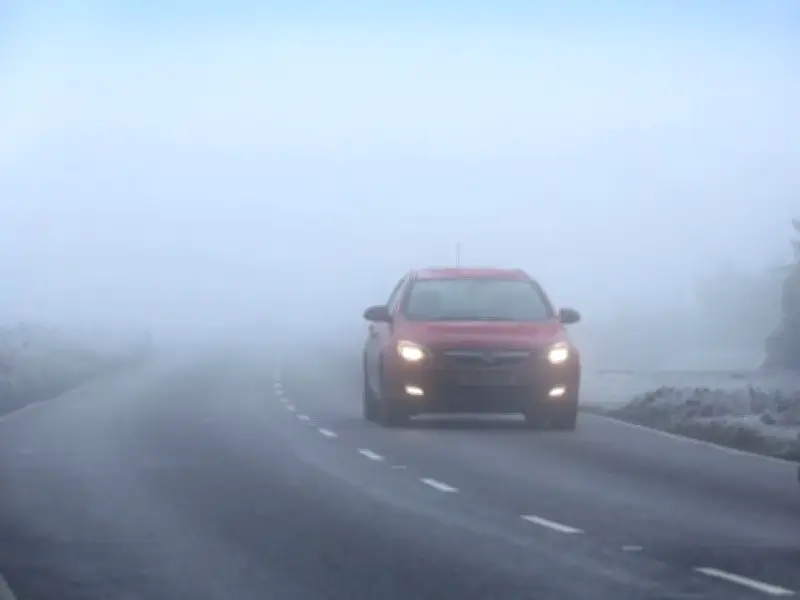
Drivers who flash their headlights to let another motorist out at a junction are being warned they could be breaking the law. Motoring lawyers say many people do not realise that what may seem polite and helpful could fall foul of the police, and could even cause an accident.
Highway Code rules on flashing
Rule 110 of the Highway Code explicitly states that drivers must only flash headlights to let other road users know they are there, never to convey any other message or invite someone to proceed. Rule 111 adds that drivers should never assume a flash is an invitation to go.
If a driver flashes someone out and that vehicle pulls into a collision, or hits a pedestrian or cyclist hidden from view, the person who gave the signal can be held civilly or legally liable for causing an accident through an unofficial signal.
Penalties and prosecution risks
Penalties depend on the reason behind the flashing. For general misuse such as giving way or signalling thanks, motorists risk fines between £100 and £200, plus three to six penalty points for careless driving.
Flashing headlights to warn others about police presence or speed traps carries a much heavier risk. This can be prosecuted as wilfully obstructing a constable under Section 89 of the Police Act 1996, with fines reaching up to £1,000.
Motoring Defence Solicitors MAJ Law said one use of lights that can see motorists prosecuted is warning them of speed cameras. They said: "What often comes as a genuine shock, however, is that this simple act could potentially amount to a criminal offence. Under certain circumstances, warning other motorists about a police speed trap may lead to allegations that a driver has obstructed police in the execution of their duties. While prosecutions are relatively uncommon, they do happen, and the law surrounding the issue is far more serious than many people realise. In some cases, a conviction could result in: a criminal record, financial penalties, community service or unpaid work, court costs and surcharges, and a permanent conviction on record."
Police view on speed trap warnings
MAJ Law added: "The offence most commonly linked to this behaviour falls under Section 89(2) of the Police Act 1996, which makes it an offence to wilfully obstruct a constable in the execution of their duty. Although the wording of the legislation sounds quite broad and old-fashioned, it has been interpreted by the courts over many years to include a wide range of conduct capable of interfering with police activity."
"Although many motorists see flashing headlights as harmless or even helpful, police forces tend to view the issue very differently. From an enforcement perspective, roadside speed checks and camera operations are designed to identify drivers who are breaking the law. If approaching motorists are warned in advance and immediately reduce their speed, police may argue that the effectiveness of the operation has been compromised. In other words, the concern is not simply about drivers slowing down temporarily, but about people deliberately undermining enforcement activity before offences can be detected."
The RAC said: "While the official Highway Code stance on light flashing says it should only be done to let other road users know we're there – the unspoken laws of etiquette see us use them otherwise. Maybe we're saying 'thank you', 'you're welcome' or more problematically 'go ahead'." They added that criminals are even doing it to make people crash into them and make insurance claims: "It's seen as well-mannered to make such acknowledgement, but it's increasingly important not to make assumptions about what the other driver is trying to convey. Unfortunately, scams like 'flash for cash' threaten to make what is a harmless example of good etiquette into something more sinister."