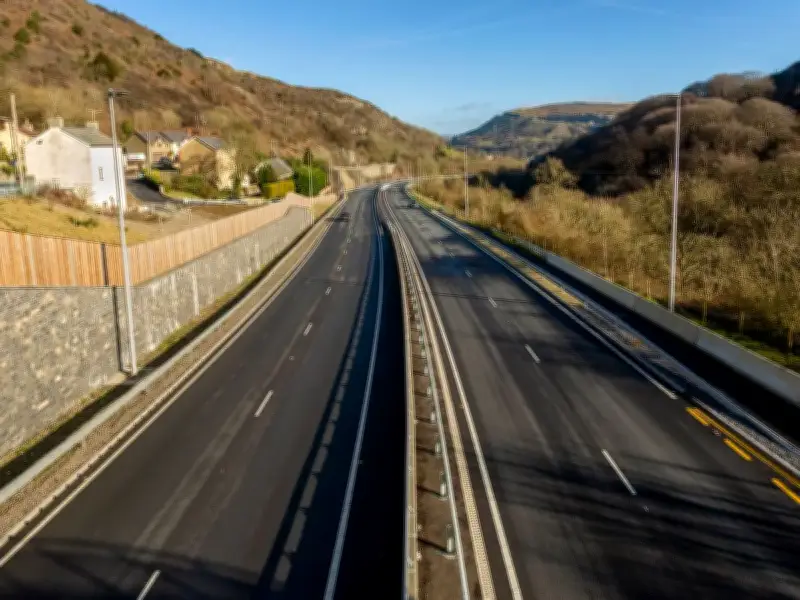
A driving instructor has highlighted a common mistake many motorists make about dual carriageways, stemming from a misunderstanding of how they differ from motorways. Richard Fanders, a driving instructor at Conquer Driving, regularly shares educational content on social media to help drivers understand road regulations.
The Common Misconception
In a recent YouTube video, Fanders drew attention to a widespread belief that dual carriageways and motorways are distinguished simply by the number of lanes. He noted it's "common" to encounter this belief.
Fanders pointed out that most people assume dual carriageways have two lanes while motorways have three or more, but this is not the case. He said: "A motorway is a road with motorway status - and how many lanes are in each carriageway does not determine whether or not that road gets motorway status."
What Defines a Dual Carriageway
He added: "'Dual' means two but 'carriageway' does not mean lane and I think that's where some people can get this wrong."
In the UK, a dual carriageway is characterized by a central reservation separating two carriageways, one for each direction of traffic. The number of lanes does not determine its classification, and it may feature two or more lanes in either direction.
Fanders explained: "In Great Britain, if they are travelling in opposing directions they will be passing on the left. This road is a dual carriageway. We have one carriageway on the left travelling in one direction and another carriageway on the right travelling in the other direction and each carriageway is separated by a central reservation. This can be a barrier, a kerb or just a piece of grass. This is what makes it two carriageways or a dual carriageway - how many lanes are in each carriageway is not relevant. There can be one lane in each carriageway, or there can be many lanes in each carriageway. There is no limit to how many lanes can be in each carriageway."
Key Differences from Motorways
Fanders then emphasized the fundamental distinction between dual carriageways and motorways, which concerns access restrictions and permitted vehicles. Dual carriageways accommodate a wider variety of vehicles, including bicycles and slower traffic, while motorways enforce stricter rules.
Motorways feature blue signage, whereas dual carriageways generally use green signs.
In the comments, viewers shared reactions. One said: "Useful stuff, thanks. I think I knew all the points raised, but I've been driving for many years now." Another said: "Thank you for clearing this up for people. I was once on a single lane dual carriageway country road and got stuck behind someone who was only going 60mph when they should've been going at 70mph." A third added: "Brilliant explanation. Thank you."