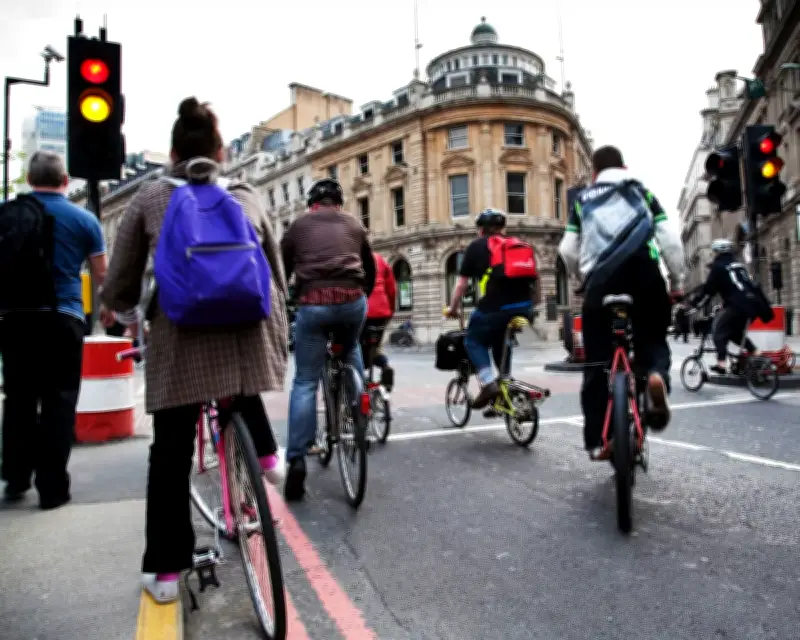
Cyclists running red lights is a familiar sight on city streets, but the motivations behind it are more complex than simple law-breaking. While some riders blast through intersections without slowing, others perform a careful 'Idaho stop' – treating the red light as a yield sign when the road is clear.
Why cyclists jump red lights
Research suggests that the reasons vary. For some, it is a matter of efficiency – stopping and starting on a bike takes energy, and waiting at a red light can feel pointless when there is no traffic. For others, it is about safety: moving ahead of traffic at a junction can help a cyclist be seen by drivers, particularly when turning.
There is also a practical element. Many traffic lights are triggered by sensors that detect metal, and bicycles – being lighter and partly made of non-metallic materials – may not always trigger the sensor, leaving cyclists stranded at a red light until a car arrives.

The risks and the law
Running a red light on a bike is illegal and can result in a fixed penalty notice. The risks are real: a cyclist who enters a junction against the signal can collide with vehicles, pedestrians, or other cyclists who have a green light. Even when the road looks clear, a vehicle approaching at speed can appear suddenly.
In the UK, the Highway Code is clear that cyclists must obey all traffic signals. However, enforcement is inconsistent, and many riders believe the risk of being caught is low. This has led to a culture where some cyclists routinely treat red lights as advisory rather than mandatory.
The debate over legalisation
Some campaigners and transport experts have called for the 'Idaho stop' to be legalised, arguing that it would make cycling more attractive and reduce the number of cyclists who feel compelled to break the law. Opponents, however, say that legalising red-light running would increase danger and undermine respect for traffic rules.
The debate is unlikely to be resolved soon. In the meantime, cyclists continue to make their own choices at every junction, balancing the desire for a smooth ride against the risks and the law.