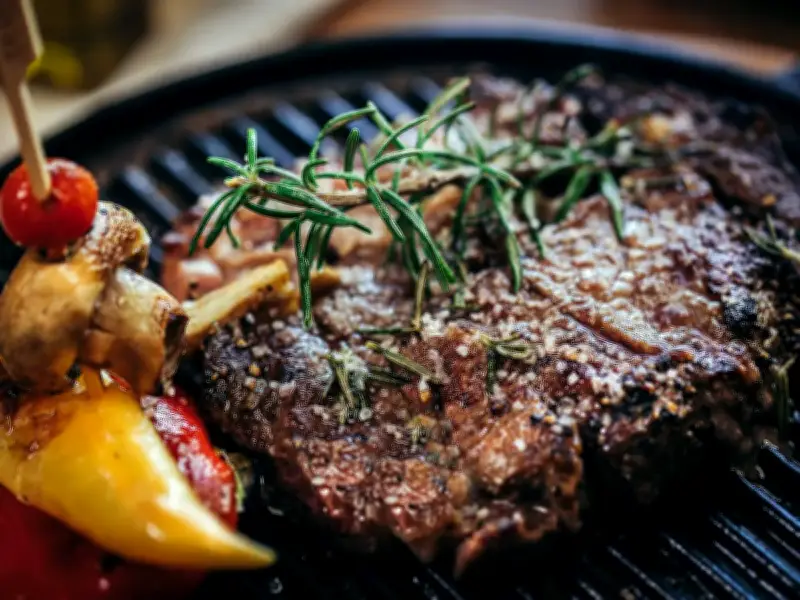
Adding a fine sprinkling of grated parmesan to steak during the resting period can make it taste more intensely beefy, according to specialist butcher Niall McCusker of Campbells Meat.
McCusker suggests a light dusting of the cheese, rather than the amount you would use on pasta, to enhance the meat's savoury flavour. "Just a very light dusting, almost like you're seasoning it a second time. It melts into the steak and brings out a deeper, more savoury beef flavour," he says.
Why the parmesan trick works
Aged beef and aged parmesan both contain high concentrations of glutamates, the compounds responsible for intense savoury flavour. When combined, the two ingredients complement each other, making the steak taste more beefy rather than cheesy.

McCusker notes the tip works best on ribeye and sirloin rather than leaner cuts, as the marbling helps carry the flavour. "It works best on ribeye and sirloin rather than leaner cuts as the marbling helps carry the flavour, something a fillet doesn't have," he says.
Best methods for cooking steak
There are several debated techniques for cooking the perfect steak, from the classic pan-sear and butter-baste to modern approaches favoured by food scientists.
The pan-sear and butter-baste method involves searing the meat in high-smoke-point oil over high heat, then finishing with a continuous bath of foaming, herb-and-garlic-infused butter to achieve a deeply caramelised crust and juicy interior.
On flipping, chefs like Gordon Ramsay argue for flipping only once to build a crust, while food scientists at Serious Eats found that flipping every 30 seconds cooks the steak up to 30% faster and more evenly, avoiding a thick overcooked "gray band".
For thick cuts over 4 cm, the reverse sear method is recommended: bake the steak at around 105°C until almost done, then flash-sear it in a hot pan. Sous vide purists use a temperature-controlled water bath at exactly 54°C for 1 to 2 hours, followed by a 45-second sear per side, making it impossible to overcook.