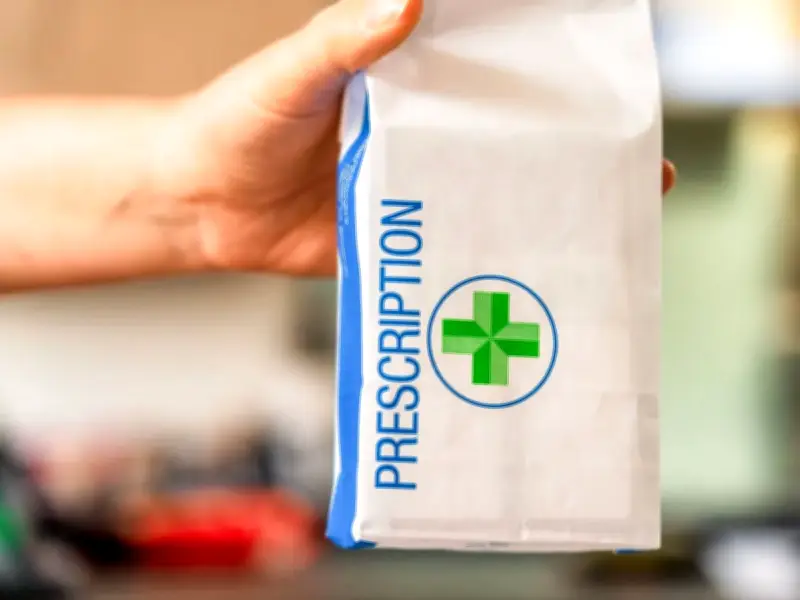
NHS patients could face delays in receiving some prescriptions following a major global Microsoft outage. The National Pharmacy Association (NPA) said the disruption was affecting pharmacies across the country, including their access to NHS email systems.
A spokesperson for the organisation said: “We are aware of the disruption impacting pharmacies today, including access to NHS email systems, due to national issues with Microsoft. This affects a pharmacy’s ability to communicate with GP practices and some patients. Please bear with your pharmacy teams today, where waits may be longer than normal and there may be delays to some prescriptions.”
Trusts urge patients to attend appointments
Meanwhile, NHS trusts have urged patients to attend appointments as normal, despite the ongoing IT problems. Guy’s and St Thomas’ NHS Foundation Trust said on its website that staff were currently unable to send or receive emails, but services remained operational and procedures were going ahead as planned.
It said: “Please attend as scheduled and follow the instructions you’ve already received.”
Leeds Teaching Hospitals NHS Trust also reassured patients that its clinical systems had not been affected. In a statement on its website, the trust said: “We would like to reassure you that our clinical systems are not affected, and appointments are continuing as normal. There is no need to change your plans – please attend your appointment as usual.”
Bristol NHS Foundation Trust also confirmed in a post on X that all appointments, clinics and procedures were continuing as planned. It said: “All appointments, clinics, and procedures are going ahead as normal – you do not need to call ahead to check. Please attend your appointment as planned.” The trust added that patients with urgent queries should contact the relevant department by phone.
University Hospitals Dorset NHS Foundation Trust also reported problems with its email systems, advising patients to contact the trust by telephone instead.
NHS contingency measures in place
NHS England said healthcare staff were using established contingency measures to manage the disruption and ensure essential services could continue. These include using alternative IT systems and paper records where necessary.
An NHS spokesperson said: “With the global Microsoft issue inevitably having a disruptive impact for staff, local NHS services are enacting long-standing measures to manage IT outages and ensure critical services and appointments can continue for patients today – including using other IT systems or paper records where possible. Patients should continue to use 999 in an emergency, and otherwise use 111, 111 online, or their local pharmacy, and come forward for appointments unless told otherwise.”
Police and councils affected
The disruption has also affected other public services, with police forces and local authorities, including Merseyside Police, Sefton Council and Liverpool City Council, reporting issues.
Merseyside Police has advised people whose reports are time-critical but do not require an emergency response to contact the force by calling 101. Anyone facing an emergency should continue to call 999. A message on the force’s website said: “Due to a global Microsoft service issue, some online form submissions may be affected. If your report is time-critical but not an emergency, please call 101. In an emergency, call 999.”
Liverpool City Council also warned that some of its services could be affected by the outage. In a post on X, it said: “Due to the current global Microsoft outage, council officers are unable to respond to emails and other services may be affected. We apologise for any inconvenience.”
Sefton Council said some of its digital services were experiencing intermittent problems, although its telephone services remained operational. In a social media post, the council said: “Due to the global Microsoft outage today some of our digital services remain subject to intermittent issues. Our phone services remain fully operational. We apologise for any inconvenience this may cause. Further updates will be provided in due course.”
What caused the Microsoft outage?
The problems began late on Thursday afternoon, with hundreds of thousands of users worldwide reporting difficulties accessing Microsoft's services, including Outlook, Teams and other Microsoft 365 applications. Thousands of users experienced problems sending and receiving emails through Outlook, while Microsoft's Teams messaging platform, Copilot AI assistant and several cloud-based services were also affected.
Outage monitoring website Downdetector recorded a sharp rise in reports of problems with Microsoft Teams in the UK at around 6.15pm on Thursday. Reports of Outlook issues also surged, reaching almost 130,000 at their peak.
Microsoft executive vice-president Charles Lamanna said the disruption did not appear to have been caused by a cyber attack. The technology giant said it had attempted several measures to restore services, including isolating parts of its infrastructure and redirecting traffic through alternative routes. However, the company acknowledged that its recovery efforts were not progressing as expected.
In a statement, Microsoft said: “We've monitored the status of the changes applied to improve serviceability and confirmed that change is not taking as expected.” In an update on Friday (November 13), the company said it had managed to bring servers back online several times overnight, UK time, but they had subsequently crashed.
The outage has affected several of Microsoft's most widely used products, including Outlook, Teams and Copilot, as well as elements of its cloud services.