Hiking daypacks seem simple enough: toss in water, snacks, extra layers, some first aid and hit the trail. But anyone who has spent miles wrestling with cramped shoulder straps or chafing hip-belt pockets knows that the wrong daypack can make a short hike feel like the worst of slogs.
The best daypacks help you move comfortably, keep your gummy bears within reach and match the kind of hiking you actually enjoy. Some are built for fast, ultralight missions while others are meant for rough weather, heavy loads, or body types underrepresented in gear design.
As an outdoor adventure writer living outside of Aspen, Colorado, I've reviewed hiking gear for over a decade. I tested 12 of the most popular packs across those categories to find the ones that felt best where it counts: on the trail.
The best hiking daypacks at a glance
- Best overall: The North Face Trail Lite 24, $140
- Best budget: Quechua MH500 22L, $114.99
- Best for heavy loads: Osprey Tempest/Talon 30, $250
- Best lightweight: Deuter Speed Lite Pro 25, $140
- Best waterproof: Rab Syclon XP ND28L, $200
Why you should trust me
I live outside of Aspen, Colorado, where a daypack is an everyday necessity. Mine gets used for hikes, bike rides, ski days, family outings, travel and the kind of mountain hikes where the weather can change before you've finished your sandwich. For this particular testing cycle, I even took two of the daypacks on a four-day hike in Peru.
I've also tested outdoor gear professionally for nearly 15 years for national publications such as the Washington Post, the Denver Post, Outside, Backpacker and REI. I've carried a lot of packs in that time: tiny running vests, overloaded backpacking packs, ski touring packs, travel bags and even absurdly heavy kid carriers when our daughter was younger. I know which features sound clever but mostly get in the way, which straps annoy you after an hour and which packs are comfortable enough that you forget you're wearing them.
How I tested the hiking daypacks
I rotated every pack through my usual hiking routine in Colorado's Roaring Fork Valley, where my local trails range from lunchtime climbs that gain 1,000 ft in a mile to Aspen classics like the Ute Trail.
In early May, the North Face and Rab packs also came with me to Peru for the Santa Cruz trek, a four-day, 35-mile route that climbs to nearly 16,000 ft. Because I went with a guide, donkeys carried the overnight gear, which let me alternate the daypacks with a friend and compare fit across different bodies.
To test sizing and fit, I tried women-specific packs on my 5ft 5in, 145-lb body, while a 6ft, 185-lb male friend wore the unisex or men's version. For the Osprey Sportlite Extended Fit built for larger bodies, two friends helped test: a 6ft 6in, 250-lb man and a 5ft 7in plus-size woman who often struggles with backpack fit.
I also took each pack on the same 45-minute morning dog hike, carrying two liters of water, snacks and the same shell and warm layer, replicating what most folks likely take on a day hike.
After testing, I donated all daypacks to a local school's outdoor education program and its teachers.
Best overall hiking daypack: The North Face Trail Lite 24
Price: $140
Capacity: 24 liters
Weight: 1lb 14oz
Sizes: S/M, L/XL; women's and men's
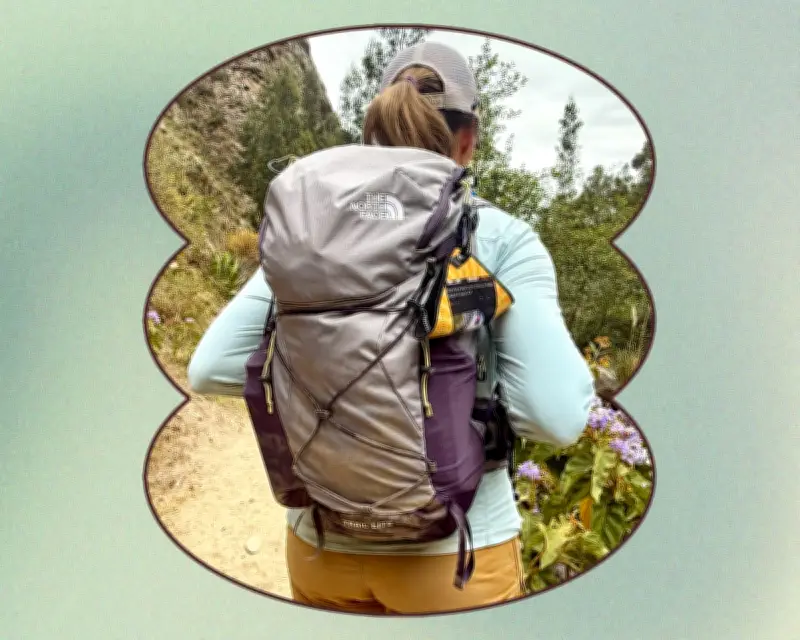
I kept reaching for the North Face Trail Lite 24 even when I wasn't going hiking. It's not the flashiest pack in this guide, but for most people, it does exactly what a daypack should do. I carried it for half of Peru's Santa Cruz trek, used it as a personal item backpack on a flight to Honolulu, and grabbed it constantly when emergency bridge construction in my town turned everyday errands into bike commutes.
Why we love it: The pockets are amazing, especially in this era of streamlined design. Two stretchy water bottle pockets, an exterior stash pocket, a top zippered pocket and an interior zippered pocket made it easy to organize everything without losing my keys somewhere in the Andes. I also loved the chest-strap storage: one stretchy soft-flask pocket and one zippered pocket that fit my phone, so I could grab it for trail photos without taking the pack off.
It's a shame that … it's not a heavy-load hauler. When I packed it with three liters of water, snacks, layers, sunscreen and a tripod, I felt the weight in my shoulders. But for ordinary hikes, travel, biking and daily use, it's a screaming value.
Best budget hiking daypack: Quechua MH500 22L
Price: $114.99
Capacity: 22 liters
Weight: 1lb 11oz
Sizes: one size; unisex
The Quechua MH500 22L was one of the most pleasant surprises in this test. Weighing a little over one pound, it was noticeably lighter than the Trail Lite, but still comfortable and not nearly as flimsy as some lightweight packs can feel. It's a budget-friendly daypack that works best for shorter hikes, light loads and anyone who wants decent trail features without blowing their bank account.
Why we love it: For the price, the MH500 includes a lot: two stretchy water bottle pockets, a mesh back panel and chest-strap storage with one stretchy soft-flask pocket and one zippered phone pocket. The roll-top design can be a little cumbersome, but it lets you adjust the size of the pack depending on what you're carrying.
It's a shame that … it low-key collapses under heavier loads. Short-and-light missions are where it shines.
Best hiking daypack for big days: Osprey Tempest/Talon Pro 30
Price: $250
Capacity: 30 liters
Weight: 2lbs 10oz (women's), 2lbs 11oz (men's)
Sizes: S/M, M/L; women's and men's
The Osprey Tempest Pro 30 and Talon Pro 30 are for the people whose "day hike" somehow includes a summit, three layers, two lunches and a questionable weather forecast. At 30 liters, this is too much pack for a casual hour-long wander. But for full-day hikes, high-alpine outings or technical adventures that require a bucket of gear, it nails the balance of support, comfort and weight distribution.
Why we love it: The Tempest felt good immediately, which is not always true of larger daypacks. It sat close to my body, handled heavier loads beautifully and didn't create tiny hot spots. The hipbelt was especially good on my wider hips: supportive and comfortable, with pockets placed far enough back that my underarms didn't chafe.
It's a shame that … at $250, it's not cheap. If you only dabble in shorter day hikes, it's probably way more pack than you need.
Best lightweight hiking daypack: Deuter Speed Lite Pro 25
Price: $140
Capacity: 25 liters
Weight: 1lb 8oz
Sizes: one size; unisex
The moment I put on the Speed Lite Pro SL 23, it disappeared on my body more than any other pack in this guide did. If traditional daypacks feel bulky or bounce annoyingly with every step, the Speed Lite is the cure. It sounds cliche, but it felt less like a backpack and more like a supportive hug.
Why we love it: The secret sauce: the vest-style design. The running pack-inspired shoulder straps combine with a wider hipbelt to distribute weight so well that the pack seemed to vanish on my back. Two zippered chest pockets kept my phone and snacks within easy reach, while two zippered hip-belt pockets provided more grab-and-go organization.
It's a shame that … the main compartment is just one big open space. There isn't any internal organization to speak of.
Best waterproof hiking daypack: Rab Syclon XP ND28L
Price: $200
Capacity: 28 liters
Weight: 1lb 12oz
Sizes: one size; women's fit
The Rab Syclon XP ND28L is for wet trails, long alpine days and forecasts that look absurdly confused. Its look leans technical, so don't expect it to moonlight as a laptop bag. But as a waterproof hiking pack, it delivers. The waterproof materials, taped seams and roll-top design helped it shed light rain during two days on Peru's Santa Cruz trek.
Why we love it: The Syclon feels like a weatherproof workhorse, not a delicate daypack you have to baby. It swallowed more gear than I expected and still carried the load well. The roll-top design also makes the pack more flexible than its 28-liter size suggests. ND stands for Narrow Dimensions, designed for women and anyone with a narrower frame.
It's a shame that … it isn't a crossover bag. If you want one pack for hikes, commuting, laptops and town, this isn't it.
The best of the rest
Best for large fit: Osprey Sportlite 25 Extended Fit ($130)
Built for larger bodies, with longer shoulder straps and a hipbelt designed to fit waists up to 70in. Our 5ft 7in plus-size female tester loved it, saying it fit comfortably across her chest and hips without pinching. Her 6ft 6in, 250-lb partner also found the straps fit well, though the pack body was too short for his tall frame.
Best for minimal hikers: Fjällräven Abisko Hike Lite 20 ($180)
At just 1lb 5oz, it's the lightest pack in this test. Simple design with one large main compartment, two water bottle pockets and bungee cord storage. Great for lunchtime hikes and around-town bike commutes, but costs about $60 more than the Quechua.
Best for sustainability: Nemo Equipment Persist Endless Promise 30L (from $229.95)
Part of Nemo's Endless Promise collection, designed to be fully recyclable at the end of its life. Durable materials, generous pockets and a metal hip-belt buckle. Heavier and pricier than many packs here, but built to last.
Best for fast hikers: Salomon Aerotrek 28/30 W ($170)
A daypack with trail-running roots: vest-inspired harness, front storage for snacks or soft flasks, snug fit. Women-specific version carried comfortably. Hip-belt pockets felt small for a pack this dialed.
Best for durability: Yeti Skala 32L (from $300)
Yeti's first backpack, built burly with tough nylon exterior and reinforced high-wear areas. Spacious at 32 liters, but expensive at $300. Hip-belt pockets rubbed underneath forearms when filled.
Other hiking daypacks the Guardian tested
- Peak Design Outdoor Backpack 25L
- Kelty Asher 24
What you should know before getting a hiking daypack
What is the best size for a hiking daypack?
For most hikers, a daypack between 20-25 liters hits the sweet spot. That's enough room for water, snacks, a rain jacket and an extra layer. If you regularly tackle longer hikes or carry camera gear, consider stepping up to a 30-liter pack. Bigger isn't always better: large packs can feel cumbersome on short hikes, while small packs encourage you to bring only what you need.
What features matter most in a hiking daypack?
Fit should always come first. Then pay attention to pocket layout: stretchy water bottle pockets, hipbelt pockets and chest strap pockets can make a huge difference. Also consider weight versus support. Ultralight packs feel great on short hikes but can crush your shoulders when loaded with extra water and food. Finally, think about how you'll actually use the pack. The best pack matches your lifestyle.
How should a hiking daypack fit?
A hiking backpack should feel secure, not restrictive. The shoulder straps should sit comfortably against your body without digging in, while the hipbelt should rest on your hips rather than your waist. When properly adjusted, some of the pack's weight should transfer to your hips. Pay attention to hot spots and rubbing. During testing, the best packs almost disappeared once I started hiking.