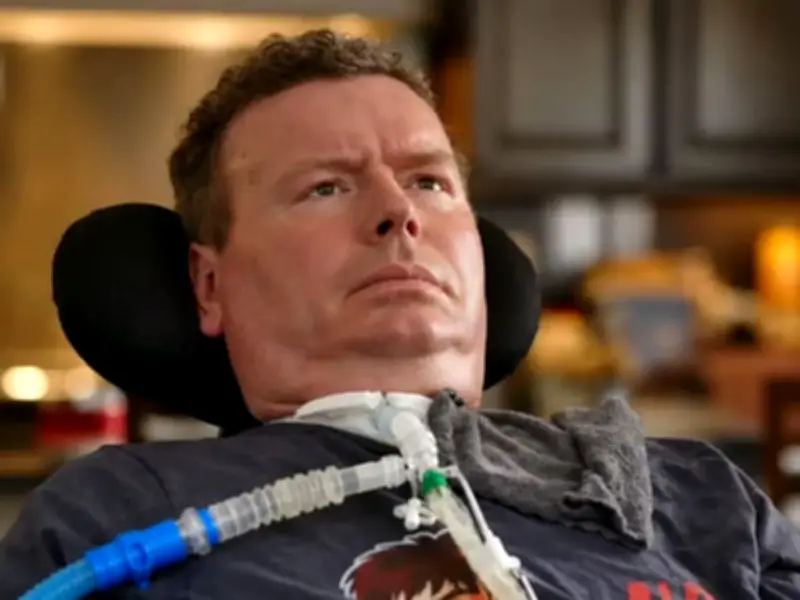
YouTube has been accused of suspending and demonetising Bradford Smith, a quadriplegic, non-verbal ALS patient who relies on an AI-recreated version of his own voice to speak, after its systems flagged the audio as spam-like content. The channel was reinstated within 24 hours following a public backlash.
Channel removed from Partner Program
Smith, who uses an Elon Musk Neuralink brain implant to control a computer with his thoughts, said his channel ALS Cyborg was removed from the YouTube Partner Program on Thanksgiving Day, November 26. In a post on X, he wrote: “Happy Thanksgiving! Today @YouTube suspended my channel from the YouTube Partner Program for ‘unsatisfying or off-putting content.’”
He explained that he is fully quadriplegic and non-verbal, and uses an AI-recreated version of his own pre-ALS voice with ElevenLabs to speak, host interviews, and narrate his videos. “It’s not an AI persona or a content farm—it’s literally how I talk,” he wrote.
The demonetisation was triggered under YouTube’s policy bucket “unsatisfying or off-putting content”, a broad label generally aimed at low-effort, repetitive material and spam-like channels. Smith’s channel features first-person videos about living with ALS, brain-computer interfaces, space and tech, including his Future Link podcast and Neuralink This Week updates.
Appeal and backlash
Smith immediately appealed, saying he believed the channel “was misread by an automated review, specifically because I use an AI recreated version of my own voice”. He also acknowledged another possible red flag, admitting that “uploading 13 long videos in one week with similar descriptions can look automated at first glance”.
The decision sparked backlash online, with creators and accessibility advocates warning that automated anti-AI and anti-spam systems can end up punishing disabled people who rely on text-to-speech or voice recreation to communicate.
Reinstatement and apology
Within 24 hours, YouTube reportedly reversed course. On November 27, TeamYouTube replied publicly to Smith, telling him his channel “has been reinstated into the YouTube Partner Program” and apologising “for any confusion caused here”.
A follow-up message, later shared by Smith, said: “I’m really sorry for the frustration this caused, especially around your use of your recreated voice,” while advising him to double-check monetisation had been switched back on across his videos. Smith then posted: “Good news. @TeamYouTube took another look at my channel, confirmed my content follows YouTube Partner Program policies, and reversed the suspension… Huge thank you to everyone who shared, tagged YouTube, and spoke up.”
He added: “It really should not take getting 500,000 people angry just to get a real human review.” He said he hopes YouTube “fixes the root cause soon so other creators who rely on recreated voices do not have to go through the same fight”.