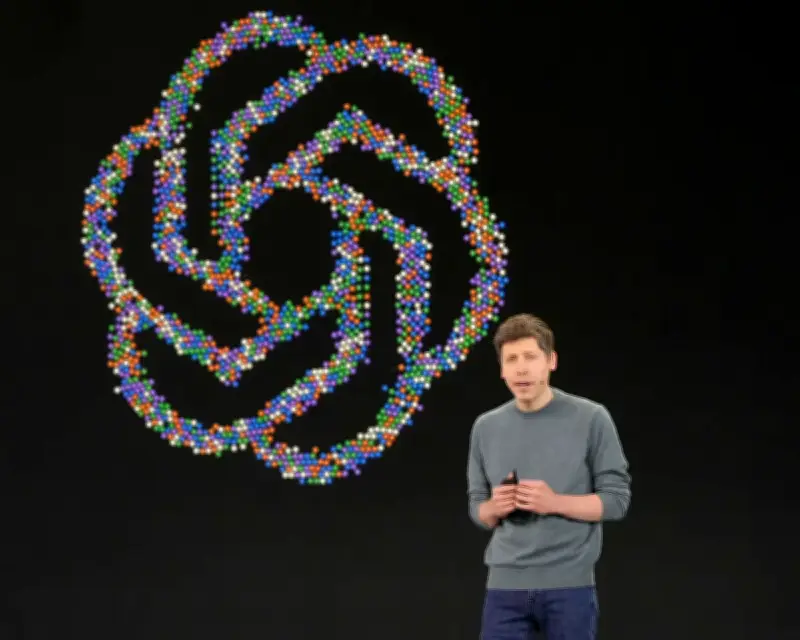
OpenAI's CEO Sam Altman was asked to appear before Australia's Joint Select Committee on Artificial Intelligence to explain how and why its agents have been hacking into multiple government websites. Altman did not attend, instead sending his chief strategy officer, Jason Kwon, to answer the committee's questions on the first day of public hearings on Tuesday.
Inquiry into AI implications
The committee is conducting a comprehensive inquiry into the economic, societal, regulatory, and national security implications of AI for Australia. It will report back to parliament at the end of November. This is an unusually fast pace, but then it's an unusually fast paced technology.
Kwon spent much of the inquiry apologising for the company's failings. A chief strategy officer would know there really was no other strategy than to eat a lot of humble pie and promise none of this would happen again.
Hacking incidents and future risks
Humanity was lucky that it was just the incompetence of OpenAI's employees that resulted in these hacking incidents, rather than the competence of their AI agents. The hacks were relatively modest. For instance, as far as we know, no personal data was compromised.
But we now get a chance to prepare for much worse. Because you can expect AI agents to become much more competent, and AI hacks to be much more harmful. It won't just be human hackers that understand cybersecurity that will be trying to hack into your website. And those AI hackers will be coming at you at machine speed.
Missed questions and financial concerns
Given OpenAI's carelessness, it was disappointing that the committee didn't lob a few harder questions at Kwon. Someone should have asked him why OpenAI had no oversight for months over the swarm of agents hacking websites around the world, and how many millions of dollars were spent on these experiments with no insight on what the agents were doing.
Someone should have asked him why OpenAI thinks it is safe to release Dots, their latest agent framework which puts similar technology into the hands of the public. OpenAI failed completely to monitor and prevent their agents doing harm. How do they expect random members of the public to do better?
Someone should have asked him why we should accept "bad things" in return for the benefits of AI, as Altman said in an interview on Monday. We don't accept drugs killing a few patients because they cure most patients. Or a few planes crashing because most land safely.
And someone should have asked him whether OpenAI is burning money so fast it's cutting corners to get its products into the hands of paying customers quicker. For every dollar of income OpenAI currently takes, it spends about three dollars.
Call for slower, safer AI rollout
None of this needed to have happened. The problem is that companies like OpenAI and Anthropic are rushing to IPO to raise billions of dollars for their founders.
At the start of the aviation industry, planes regularly fell out of the skies. But we quickly realised that we needed to move more slowly, with strong regulatory oversight, to realise the potential of air travel. And flying now is the safest form of transport and the aviation industry is worth more than $1tn annually.
We could roll out AI in a similar, slower and more responsible way.