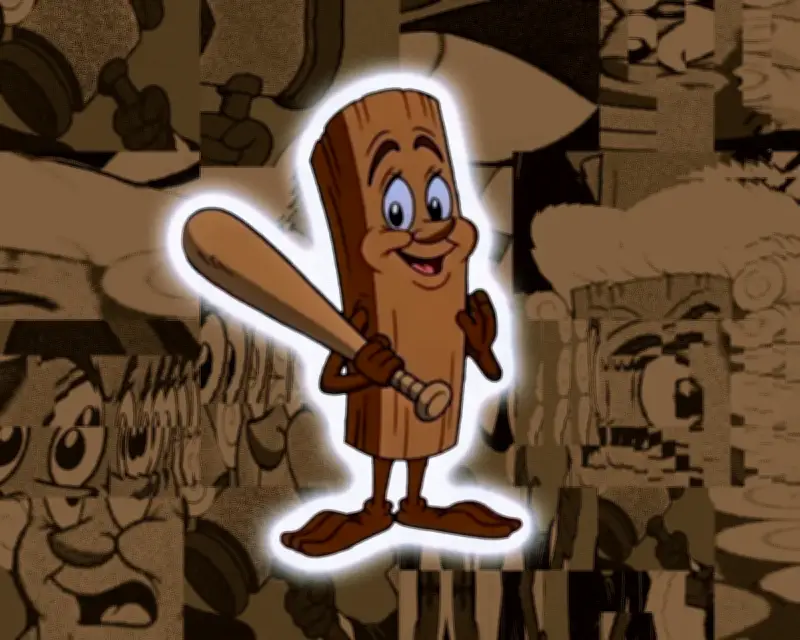
A legal battle over the viral AI-generated character Tung Tung Tung Sahur could determine where human creativity ends and artificial intelligence begins. The character, also known as Triple T, was created in 2025 by an Indonesian teen using the username Noxa with OpenAI’s image-generation tool. Based on a kentongan – a drum used to wake south-east Asian Muslims for their pre-dawn meal during Ramadan – the character is an anthropomorphized version of the instrument with a broad smile and a vacant stare, sitting under the umbrella of “Italian brain rot” internet videos.
Global Sensation and Legal Dispute
Since his creation, Triple T has become a global sensation: YouTube and TikTok host dozens of videos with hundreds of millions of views starring the character. People dress like Triple T at cosplay conventions, create fan art and animations, and his likeness appears on plushies, perfume and stickers. The character has generated significant money and stands to create much more – he will soon be joining Fortnite as a skin.
The question of who should benefit from this virality is at the heart of a lawsuit filed in the US district court’s northern district of California. A games company is suing French creative agency Mementum, which represents Noxa, over the right to use Triple T as a character in a popular Roblox game.
Arguments Over Ownership
Eben Jeda, co-founder of Mementum Lab, said he started the agency with the goal of modernizing economic infrastructure around internet-native works, the creators of which are often completely cut out of any resulting profit. “Brain rot is one of the first highly visible manifestations of a much larger transformation: internet native creativity can now become global almost instantly, while the people who originate it can remain economically invisible,” he said.
Opponents argue no one person should own a meme whose ultimate value has been amplified by the online collective. Fabian Mosele, a self-described “Italian brain rot expert” who has made several Tung Tung Tung Sahur videos, said they see brain rot as collectively owned. “There are a ton of creators who made these characters come to life,” Mosele said. “Before, they were really just images. Having been part of making the virality of these characters, to gatekeep it to the original prompter of this character doesn’t seem right.”
Human Authorship in the Age of AI
Tung Tung Tung Sahur is one of many characters in the Italian brain rot genre of meme – a universe of strange, AI-generated characters beloved by generation Alpha and younger gen Z. These include Ballerina Cappuccina (a ballet dancer with a coffee cup for a head), Tralalero Tralala (a shark wearing sneakers), and other intentionally bizarre creations.
Video game company Do Big Studios released a game populated by recognizable personae in May 2025 called “Steal a Brainrot”, which quickly became one of the most-played games within Roblox. But in September 2025, Spyder Games LLC and Speedy Simulator Gaming LLC – the owners of Do Big – received a cease and desist letter from Mementum regarding the use of Tung Tung Tung Sahur in the game. Do Big initially pulled the character and attempted to negotiate a resolution, but ultimately Spyder and Speedy sued the company instead, stating in a complaint: “Mementum’s claimed rights do not exist. Under established law, copyright protection requires human authorship, and AI-generated material does not qualify.”
Copyright law in the United States applies only to human-made creations, but AI is challenging that interpretation. A 2025 report from the United States Copyright Office declared that copyright protects “original expression” in work created “by a human author” even if the work also includes AI-generated material, but that it “does not extend to purely AI-generated material, or material where there is insufficient human control over the expressive elements”. The report does not offer a clear standard for ownership: “Whether human contributions to AI-generated outputs are sufficient to constitute authorship must be analyzed on a case-by-case basis.”
Do Big argues that, in the case of Tung Tung Tung Sahur, the level of human intervention in the character’s creation is not sufficient to claim ownership. Court documents filed by Mementum in a separate trademark-related dispute in France show that Tung Tung Tung Sahur was created over 15 minutes using seven prompts before achieving his final form. The prompts included basic instructions like “draw a pentungan sahur with a face and legs”, then “human face”, and “no hands, legs like a human, and a human face”.
“We are not claiming in this case that AI-assisted work can never be owned by anybody,” said Aaron Moss, a copyright lawyer representing Do Big through the firm Mitchell Silberberg & Knupp LLP. “In a case where somebody makes real creative choices, there is human authorship that is subject to protection. But it’s our position that sparse prompts – typing in a few words and picking [the image] you like – does not constitute human authorship.”
Global Implications and Best Practices
The blurry nature of authorship in the age of AI is not the only complicating factor – the global reach of online content also makes enforcement difficult. An Italian brain rot character created by a TikTok user in Indonesia and largely popularized in Latin America is being claimed by a French company in a California courthouse. Jeda said that as a French company, Mementum does not “view this question exclusively through an American legal lens”.
Mementum issued a takedown request under the EU’s Digital Services Act, requesting the removal of Tung Tung Tung Sahur from Do Big’s Steal a Brainrot game, which was successful. Mementum then countersued in the United States for trademark infringement. The company does not yet hold a trademark for Triple T in the United States, but in some cases trademark infringement can be argued before registration.
“Our client is pursuing a global strategy on all of this,” said Steven Stein, a partner at Greenberg Glusker, the US law firm representing Mementum Lab. “It is less about approaching it from a copyright law standpoint, and more about approaching it from the standpoint of – in this new wild west, where works are created with the involvement of AI, what can you do to make it so they are protectable under intellectual property law?”
How the lawsuit plays out will come down to a complicated, international web of legal dealings surrounding intellectual property laws – one that could have major implications moving forward, said James Grimmelmann, a professor at Cornell Tech and Cornell law school. “This is the kind of case that could do one of two things: we could get a court decision that tells us, in a concrete setting, what is copyrightable and what isn’t when AI is involved,” he said. “It could also start establishing best practices and widespread norms on how people use AI.”
Such best practices could include better documenting creation processes, including what prompts are used to create characters. The prompt used to create Tung Tung Tung Sahur is at the center of this story – both in the legal case, where documentation of the process was revealed in pre-trial discovery – and online, where speculation over how Triple T was created has repeatedly gone viral.
Adam Aleksic, a content creator who has made multiple videos on the topic, said the frenzy over trying to back-solve the origin of the character reflects the mythological status and quasi-religiosity of brain rot characters. “There’s this idea of origination when it comes to Tung Tung Tung Sahur – somehow out of the void, some memes are able to emerge into the cultural forefront, into our collective mainstream discourse,” he said.
The collective creation of such characters, which made brain rot popular in the first place, is exactly what makes it difficult to claim an origin for Tung Tung Tung Sahur, legally and culturally. When it comes to Tung Tung Tung Sahur, even speaking the name of the character has now come to inherently reference the absurdity central to brain rot, similar to how “skibidi toilet” became shorthand for “being really online”.
It is perhaps fitting, then, that of all of the Italian brain rot characters, the hero who has most come to represent virality itself has become a lightning rod for this kind of copyright battle. “That’s the thing about archetypes – they are empty vehicles for you to project your expectations, desires, or narratives on to,” Aleksic said. “Triple T is a tool for you to tell your narrative, broadly, across the entire internet. That’s what memes do – they are a way for us to create our own stories in a time when it feels like our stories are meaningless.”