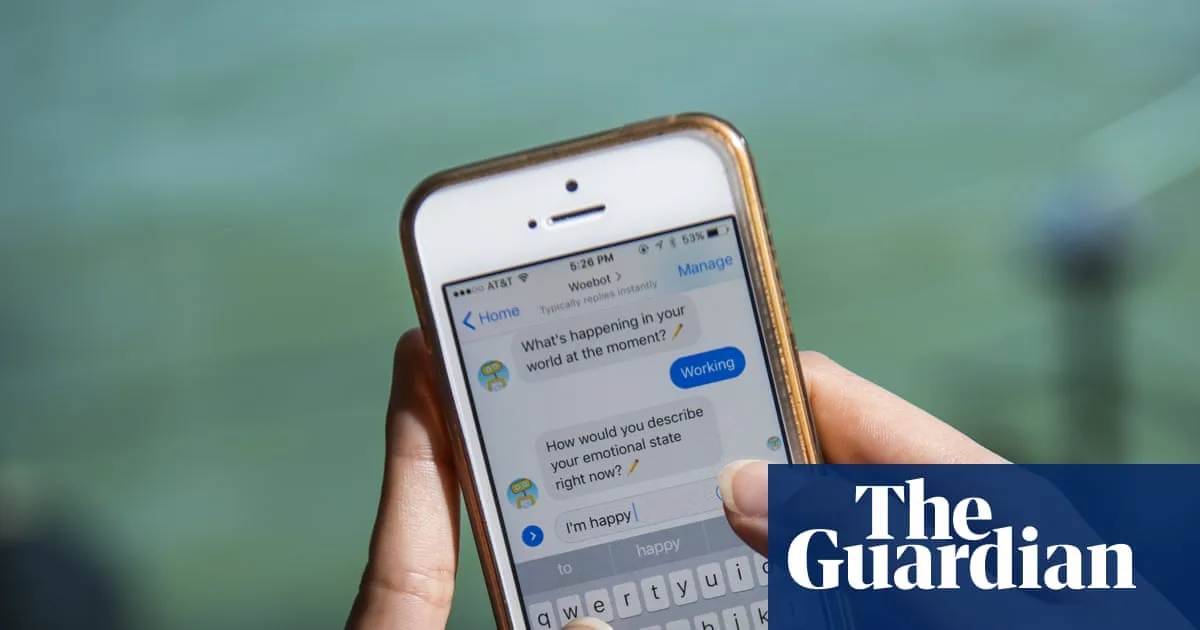
Psychotherapists and psychiatrists have warned that vulnerable people turning to AI chatbots instead of professional therapists for mental health support could be 'sliding into a dangerous abyss'. They report seeing negative impacts such as emotional dependence, exacerbated anxiety, self-diagnosis, and amplification of delusional thoughts or suicide ideation.
Dr Lisa Morrison Coulthard, director of professional standards at the British Association for Counselling and Psychotherapy, said two-thirds of its members expressed concerns about AI therapy in a recent survey. She warned that without proper oversight, 'some of the most important elements of therapy are lost and vulnerable people are in the dark over safety'.
Dr Paul Bradley, a specialist adviser for the Royal College of Psychiatrists, stated that AI chatbots are 'not a substitute for professional mental healthcare nor the vital relationship that doctors build with patients'. He called for appropriate safeguards and greater state funding for talking therapy delivered by mental health professionals.
Emerging evidence highlights harms. A preprint study in July reported that AI may amplify delusional content in users vulnerable to psychosis. Co-author Hamilton Morrin from King's College London said chatbots undermine effective anxiety treatments and risk emotional dependence due to 24-hour availability.
Matt Hussey, a BACP-accredited psychotherapist, noted clients using AI chatbots to self-diagnose conditions like ADHD, which can 'entrench misunderstandings' as chatbots rarely challenge faulty assumptions. Christopher Rolls, a UKCP-accredited psychotherapist, described conversations that were 'inappropriate at best, dangerously alarming at worst'.
In response, OpenAI recently announced changes to how it handles users in emotional distress after legal action from a teenager's family. Illinois became the first US state to ban AI chatbots from acting as standalone therapists.