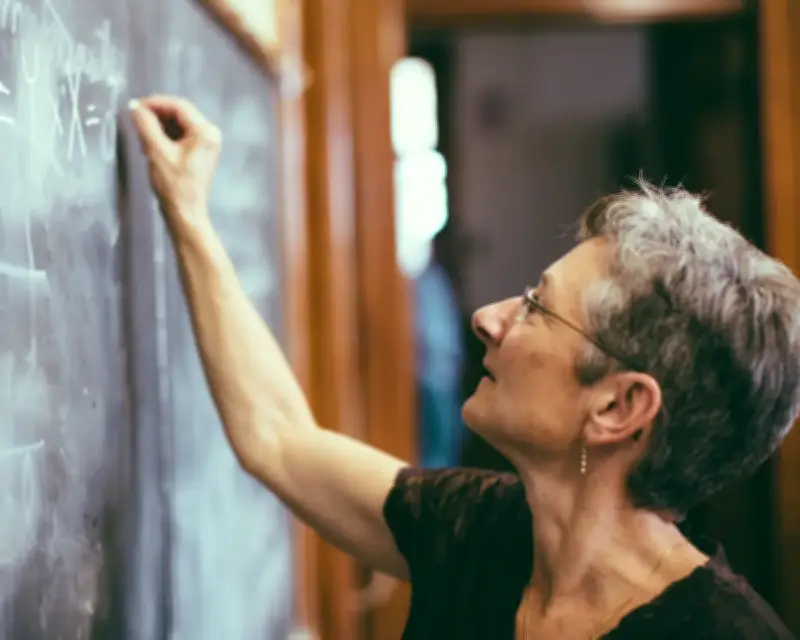
About 40 leading mathematicians recently gathered at OpenAI's offices to discuss the future of their profession. The meeting was off-the-record, but based on recent articles by mathematicians, the mood was largely pessimistic, with fears for jobs, careers, and the work they love.
However, security technologist Bruce Schneier and University of Toronto mathematics professor Kasra Rafi argue the contrary view is more likely, at least in the short term. They contend that AI models are nowhere near as capable as experienced academic mathematicians.
AI's Mathematical Achievements
This is not to say AIs are not producing stunning mathematical results at the level of PhD researchers. In mid-May, OpenAI announced that its frontier AI model disproved the unit distance conjecture, a famous 80-year-old problem in discrete geometry. In July, Anthropic published two AI-derived results in academic cryptanalysis. Earlier this month, OpenAI published 10 new mathematical results from its latest AI model, and Anthropic published Claude's attempt to prove the century-and-a-half-old Riemann hypothesis.
These results demonstrate both the amazing capabilities of frontier AI in 2026 and their limitations. Generally, AI-powered advances in mathematics fall into two categories: counterexamples to mathematical statements people had been trying to prove, and novel applications of known techniques to existing problems that human experts either did not know or did not think of using.
The Nature of AI Creativity
The counterexample to the Jacobian conjecture is the most notable example of the first kind. Once found, checking it was quick and straightforward; the difficult part was finding it among many possibilities. The AI seems to have combined intuition acquired through machine learning with extensive computational search.
An example of the second kind is the unit-distance conjecture, which was motivated by an elegant construction. Most mathematicians expected it to be essentially optimal, so they generally tried to prove rather than disprove it. The counterexample brings in ideas from algebraic number theory. An expert with that background would probably have succeeded if they deliberately set out to find a counterexample, but there was no reason for someone with precisely that expertise to focus on this problem. AIs don't have those same limitations.
These results are relatively low-hanging fruit for AI; none required developing an extensive new theory. This does not make the discoveries trivial, or the AI's achievements less impressive. Choosing the right direction and recognizing unexpected connections between subjects are themselves forms of creativity, similar to AIs playing Go at grandmaster level or doing Nobel-prize level chemistry in protein folding.
Limitations and Future Prospects
What has not yet been seen is an AI developing a substantial new conceptual framework to solve a mathematical problem. Much of mathematics proceeds by identifying the objects truly central to a question and then developing a theory that helps understand them. Current AIs are very strong at searching and recombining existing ideas, but they are weak at building any deep and sustained new theory.
This speaks to a more general limitation of current AI systems. They are creative in recombining existing ideas in novel ways, but they have not yet developed conceptually new theories or structures. While they have larger working memories, know more about more different things than any particular human, and can process information faster than humans, true novelty is still largely beyond their reach.
That distinction may not survive for very long. Predictions are notoriously hard, especially about the future of AI. None of these mathematical capabilities were explicitly designed for; they are emergent properties of increasingly capable AI models. Schneier and Rafi are confident that someday AI models will be capable of the type of creativity required to do novel mathematics, though they do not know if that will be in a few months, a few years, or a few decades. Their guess is sooner rather than later.