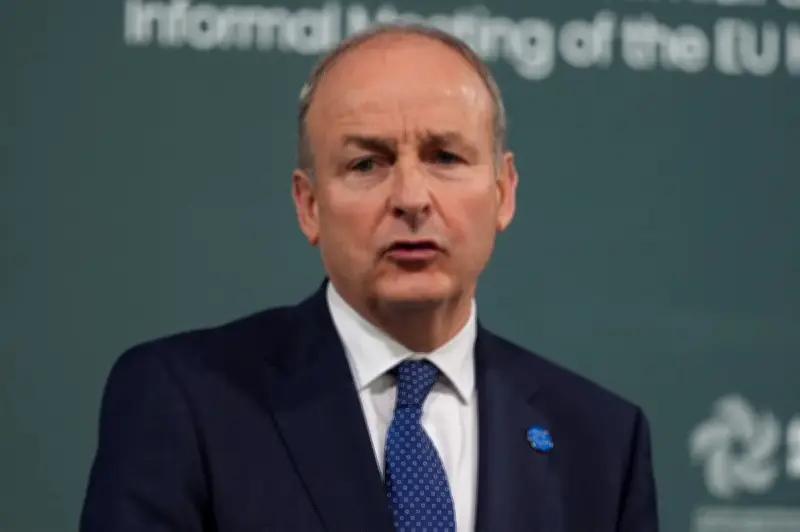
Artificial intelligence should be designed for the benefit rather than the “ruination of mankind”, Irish premier Micheál Martin has said. EU leaders discussed the future of AI during an informal meeting in Dublin on Friday.
Leaders hear stark warning on AI risks
British-Canadian computer scientist Geoffrey Hinton gave the heads of state a “stark message” on the potential of AI to destroy the world. Professor Hinton, the Nobel Prize-winning “godfather of AI”, and Arthur Mensch, chief executive of AI start-up Mistral, joined leaders for the summit.
Mr Martin said Prof Hinton was advocating strongly for global governance and global regulation of AI. “He made it very clear, he’s a scientist, not a policy expert, but he was clear that Europe was the bastion of regulation in relation to AI,” the Fianna Fáil leader said on Friday evening.
Europe's role in shaping AI governance
Mr Martin highlighted the European Union's strong platform for regulation, including the AI Act and broader measures, with further regulation regarding children expected. He described AI as “a reality in the modern technological era” that will continue to be part of life.
“What I took from it basically was the need to, at the design level of AI, to make sure we get in at the design stage, to make sure we’re designing AI for the benefit of mankind, not for the ruination of mankind or the undermining of humankind,” he said.
Balancing innovation and control
European Commission president Ursula von der Leyen said Prof Hinton set out the “enormous risks” in AI, specifically “runaway AI”. She noted an emphasis in the discussion on controlling potential new frontier AI, drawing an analogy to the pharmaceutical sector with intense testing and transparency before release.
Ms von der Leyen said Prof Hinton had “a strong call on Europe to be the one who initiates a global governance around AI”. She added that Europe's AI Act initially attracted criticism for potentially stifling innovation, but now receives praise for being first to regulate AI, while acknowledging the need to develop a balance between allowing innovation and limiting risks.