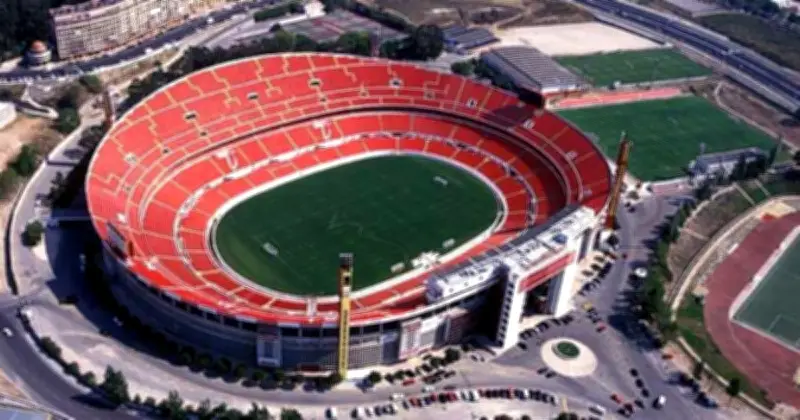
The original Estádio da Luz in Lisbon, Portugal, which once held more than 120,000 supporters and was one of the biggest stadiums in Europe for nearly 50 years, was demolished in 2003. The ground opened in December 1954 and was built to give Benfica a permanent home after years of playing at smaller venues. Supporters helped fund the project, and the club finally got the stadium it wanted.
Capacity Growth and Historic Matches
When it first opened, the stadium could hold around 40,000 to 50,000 fans. By 1985, its capacity had risen to more than 120,000, making it the largest stadium in Europe at the time. Portuguese football icon Eusébio spent much of his career playing there, and the Portugal national team used the stadium for some of its most important matches. The stadium hosted several big events, including the final of the 1991 FIFA World Youth Championship, where Portugal beat Brazil, and the 1992 European Cup Winners' Cup final.
Demolition and Replacement
By the early 2000s, the ageing stadium could not keep up with modern requirements. Portugal had been chosen to host Euro 2004, and many older grounds across the country needed major upgrades. Rather than trying to modernise the old stadium, Benfica decided to build a new one. Demolition began in stages in 2002, and supporters said goodbye to the ground in March 2003 when the final match was played there. Later that year, the old structure was completely demolished.

New Stadium and Legacy
Unlike many former stadium sites, the land was not turned into housing or shops. Instead, a brand-new Estádio da Luz was built on the same site. The new stadium opened in time for Euro 2004 and remains Benfica's home today, although with a much smaller capacity of around 65,000. One big remnant of the original stadium still remains: the famous Eusébio statue, which stands outside the ground.