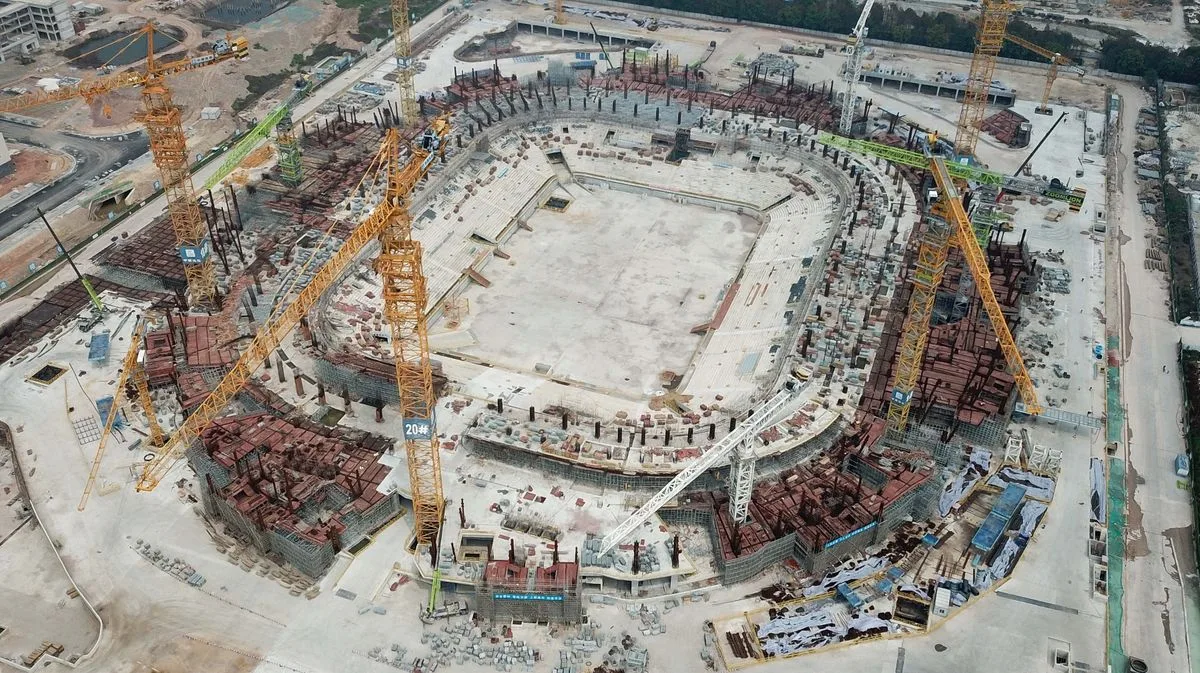
A colossal 100,000-seater stadium in China, once envisioned as the world's largest football ground, now lies abandoned just three years after construction began. The project, spearheaded by Guangzhou Evergrande, was halted after the club's parent company, Evergrande Real Estate Group, amassed debts estimated at £220 billion.
The stadium was intended to be a landmark comparable to the Sydney Opera House and Burj Khalifa, with a lotus flower design and a capacity of 100,000. Work started in April 2020 with a budget of $1.7 billion (£1.36 billion) and a target completion date of 2022. However, the Evergrande Group's financial collapse led to the seizure of the stadium by the Chinese government in November 2021.
Despite attempts to sell the site, no buyer emerged, and the project was officially scrapped last year when Evergrande cancelled its land rights contract to raise funds. Photographs show half-built stands and idle cranes, a stark contrast to the club's glory days when it won eight Chinese Super League titles between 2011 and 2019 with stars like Paulinho and managers such as Marcello Lippi.
The club, now renamed Guangzhou FC, was relegated to the second tier in 2023 and currently sits 12th, just seven points above the relegation zone. Evergrande filed for Chapter 15 bankruptcy protection in New York last month but retains a majority stake in the club.