Wales rounded off 2026 with a 40-10 victory over Japan at Allianz Stadium, Twickenham, in a performance that, while not flawless, delivered plenty of encouraging individual displays and finished the year on a high.
The autumn campaign has been a positive one for Steve Tandy's side, and the final match of the year provided several standout performers alongside some notable disappointments.
Winners
Sam Costelow, the 25-year-old Scarlets outside-half, has emerged from a difficult period in the most scrutinised position in Welsh sport as a more accomplished player. He enjoyed an outstanding autumn campaign and was a thoroughly deserving recipient of the player of the match award against Japan.
Costelow dictated proceedings with an excellent kicking game, finding ways to move Japan around the field while showing increasing maturity in his game management. After a series of assured performances, he has firmly established himself as Wales' first-choice number 10.
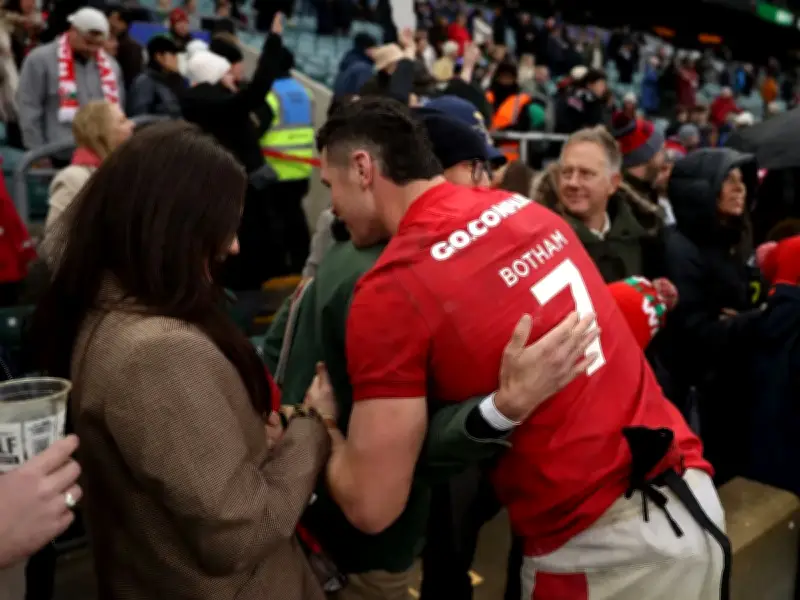
James Botham, who missed Wales' narrow defeat to Australia last weekend, responded in emphatic fashion with another outstanding display. The 28-year-old Cardiff back-row forward produced a remarkable performance, setting a world record of 39 tackles in a match.
Botham brought enormous physicality, was influential at the breakdown and carried with real purpose whenever Wales had possession. He has to be Wales' first-choice blindside flanker going forward, with Jac Morgan at openside and Aaron Wainwright at No 8.
Archie Griffin, the Bath prop, has been one of the unsung heroes of Wales' autumn campaign and produced another excellent display against Japan. Tighthead prop has been a position of real concern for Wales, and while depth remains an issue, Griffin has made significant strides in establishing himself at international level.
His dynamism and industry around the field, allied to an impressive carrying game, have long been evident, but his scrummaging has improved considerably, making him a far more complete operator. He has firmly established himself as Wales' first-choice tighthead and is now offering a more rounded game than the experienced Tomas Francis.
Captain's influence
Dafydd Jenkins, the Wales captain, has become an increasingly influential figure in this side and continues to set the standard through his work rate and commitment. The 23-year-old made an outstanding 34 tackles against Japan, a remarkable return for a player in his position.
Jenkins also played an important role in a set-piece that functioned well, underlining his value in both the tight exchanges and the wider game. It has been an excellent campaign for him, growing into the leadership role and establishing himself as a central figure in Tandy's Wales side.
Losers
Japan have endured a disappointing autumn, with their performances falling well short of the standards they have set in recent years, even if they are suffering from injuries. Since losing their opening game against Wales by just seven points, they have shipped 185 points across their subsequent fixtures, a damning statistic for a side aspiring to compete with the world's leading nations.
There is hope that more regular exposure to Tier One opposition will help accelerate their development, but the reality is that Japan have regressed considerably from the heights they reached at the 2015 and 2019 Rugby World Cups.
The Nations Championship finals weekend looked a good idea on paper, but the attendances have raised questions about whether the concept has delivered as hoped. There were around 50,000 empty seats at Allianz Stadium for Ireland's victory over Australia on Friday night, while an estimated 30,000 to 40,000 spectators watched Wales beat Japan, leaving large sections of the ground unoccupied.
More than 60,000 turned out for New Zealand's demolition of England, although that fixture was always likely to attract a sizeable crowd. The competition's showpiece occasion could also have been considerably more appealing had the final between France and South Africa been staged at the Stade de France, giving the tournament a better finale. A re-think is needed.