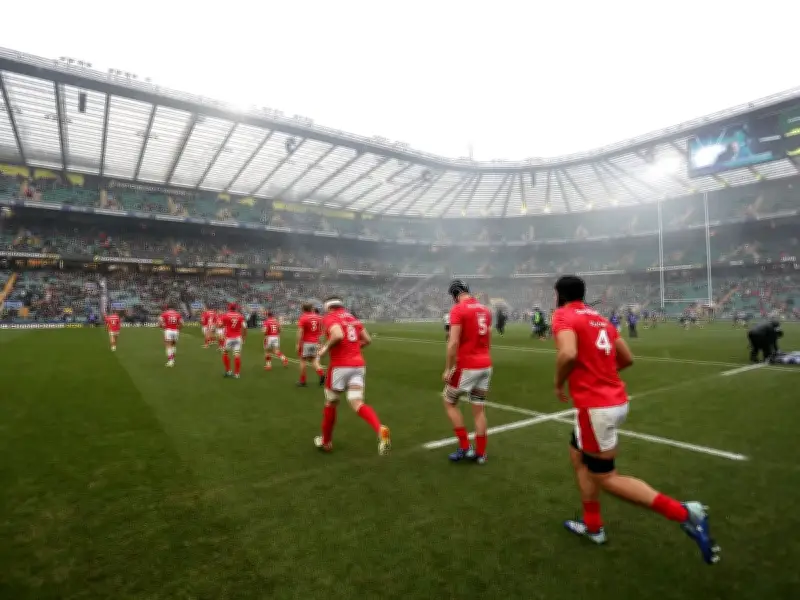
With the Nations Championship campaign complete, Wales can turn their attention to next year's Six Nations with renewed optimism. Steve Tandy's side made significant progress this autumn, but there is still plenty of work to do if they are to compete consistently with the leading nations.
Many selection questions have now been answered, and the picture of Wales' best team is much clearer. Here is the strongest matchday 23 Wales could select for the Six Nations.
Back three and midfield
Blair Murray has firmly nailed down the full-back spot with his performances this autumn. While questions remain over his aerial ability, his strengths far outweigh any shortcomings. He is an outstanding attacking full-back, capable of beating defenders with ease, while his left-footed kicking offers Wales another dimension.
Louis Rees-Zammit has arguably produced his best rugby in a Wales shirt this autumn. After a brief spell at full-back, the 25-year-old has rediscovered his best form on the wing, with his pace, footwork and finishing ability making him one of the most dangerous attacking threats in the Northern Hemisphere.
Eddie James has been one of Wales' most impressive performers this autumn, producing an outstanding display in the historic victory over New Zealand. The Scarlets centre offers a powerful, explosive carrying threat and is equally accomplished defensively. He also showed another dimension to his game against Japan, producing two superb kicks to create tries. There remains a strong case for him to operate at inside centre, but Wales are keen to develop cohesion between James and Max Llewellyn in midfield.
Llewellyn has benefited from Wales moving away from the second-playmaker option at inside centre. The Gloucester centre produced his best performance in a Wales shirt during the victory over New Zealand and deserves the chance to build on that display.
Josh Adams has done plenty to silence his critics after doubts over his place heading into the autumn. Although he was left out of the side to face New Zealand, he finished the campaign with four tries. His aerial ability, defensive work and finishing remain valuable assets. There is plenty of competition for his place, with Ellis Mee, Gabriel Hamer-Webb, Tom Rogers, Macs Page and Rio Dyer all pushing for selection, but Adams has done enough to keep hold of his shirt.
Half-backs and back row
Sam Costelow has established himself as Wales' first-choice No. 10 and, barring injury, looks set to wear the jersey at next year's World Cup. The Scarlets fly-half has taken his game to another level, with his decision-making, game management and goal-kicking particularly impressive throughout the autumn. At 25, there is still plenty of room for improvement.
Tomos Williams is one of the first names on the team sheet. He is one of the best attacking nines in the Northern Hemisphere and is central to the way Wales attack. Wales will need him to be at his best in the Six Nations if they are to kick on.
Aaron Wainwright is a dynamic carrier and has been one of Wales' better players over the past few seasons. There will be a huge onus on Wainwright to carry more ball this autumn because Wales won't beat Ireland or England unless they can get over the gainline more consistently.
Jac Morgan is a world class player who is central to everything that is good about this Wales team. The Gloucester backrower brings huge work rate, carries well and is very good at the breakdown.
Blindside flanker is one position which is seemingly not nailed down in the eyes of selectors. Alex Mann started three matches this autumn and has consistently delivered impressive numbers in defence and at the breakdown. However, it is James Botham who has made the bigger impression. Man of the match against New Zealand and a world record 39 tackles against Japan say it all. He brings greater physicality around the contact area and has been outstanding defensively, making a remarkable 68 tackles across just two appearances this autumn.
Second row, front row and replacements
Ben Carter gets the nod to partner Dafydd Jenkins in the second row. Carter offers more around the park, consistently getting through a high volume of work, while also providing Wales with a reliable lineout option. Jenkins epitomises the modern workhorse second-row, making an outstanding 35 tackles against Japan, a remarkable return for a player in his position.
Archie Griffin has stepped up a level during Wales' autumn campaign. The Bath prop's scrummaging has improved considerably, making him a far more complete operator. Dewi Lake has established himself as an outstanding captain and remains one of Wales' most explosive ball carriers. Nicky Smith is the strongest scrummaging loosehead in the Wales squad.
The replacements are Ryan Elias, Rhys Carre, Tomas Francis, Taine Plumtree, Taine Basham, Reuben Morgan-Williams, Jarrod Evans and Louie Hennessey. Carre's attacking threat gives him the edge over Gareth Thomas. A fully fit Francis wins the nod over Dillon Lewis and Keiron Assiratti because he is the strongest scrummaging tighthead in Wales. Basham was harshly left out of the final two games of the autumn after an outstanding performance against the All Blacks. Morgan-Williams made his first start against Japan and played well. If Dan Edwards is still unavailable, Jarrod Evans should take the place on the bench. Hennessey is a player with a high ceiling and Wales should stick with him, particularly as he covers multiple positions.