South Africa are preparing for crunch talks with World Rugby after Christmas as they attempt to repair an increasingly fractious relationship with the governing body following a turbulent autumn campaign.
SA Rugby president Mark Alexander has confirmed that discussions are already taking place after Springboks head coach Rassie Erasmus was handed a six-match suspension for his extraordinary criticism of match officials.
Talks planned for early next year
The two organisations are now hoping to arrange a meeting early next year, with South Africa keen to address what they believe are growing communication problems and inconsistencies surrounding the application of rugby's laws. There is an acceptance from SA Rugby officials that "death threats" and abuse of officials from some South African fans are not helping matters.
"We are talking to World Rugby," Alexander told Rapport. "We want to reach a point where we can work together."
The latest development comes after a particularly difficult few weeks for the Springboks, with Erasmus' suspension, a series of disciplinary controversies and growing frustration over refereeing decisions combining to create an uncomfortable atmosphere between South Africa and the sport's governing body.
Erasmus banned after France defeat
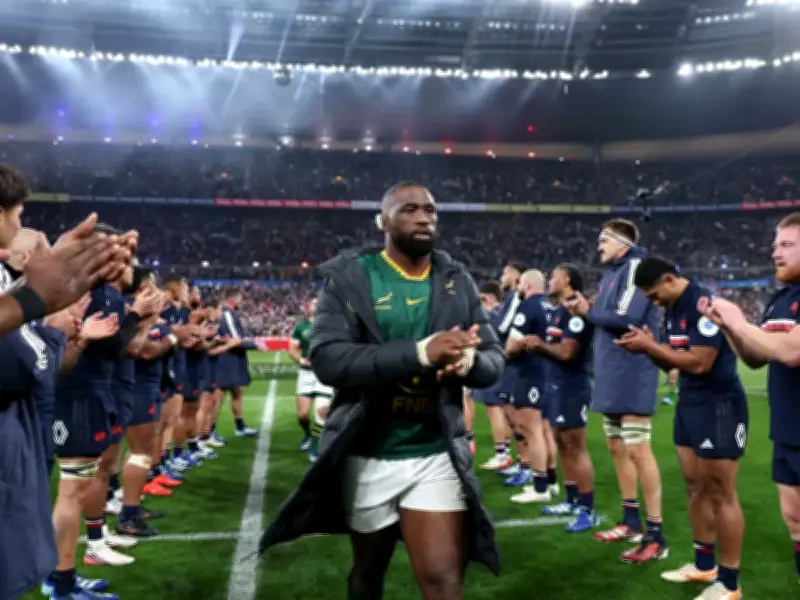
Erasmus was banned for six international matches following comments made after South Africa's narrow 21-19 defeat to France in Paris. The outspoken coach questioned why a number of dangerous tackles had gone unpunished during the Nations Championship encounter, claiming he had identified 17 potential knee-drop tackles and one hip-drop incident.
He also questioned whether the failure to act on the incidents amounted to manipulation of the game, asking whether it was effectively "match-fixing" if officials had seen the incidents but chosen not to intervene.
World Rugby subsequently imposed the six-match suspension under its Match Official Abuse Sanction Process, which was introduced in July. The new process allows an independent panel to impose an automatic suspension without the individual first having to attend a full misconduct hearing, although those sanctioned retain the right to request one afterwards.
Disciplinary controversies mount
SA Rugby initially indicated it would seek a full hearing into Erasmus' punishment but allowed the deadline to pass, with the governing body now seemingly keen to resolve the wider issues through discussions rather than prolong the public dispute.
The suspension has also proved a significant talking point because it prevents Erasmus from having any matchday involvement with the team, including entering the stadium, communicating with players or management and participating in media duties. It meant the Springboks were without their head coach for their final two Nations Championship matches, including the inaugural final against France at Twickenham.
But the dispute goes beyond Erasmus' comments and subsequent punishment. South Africa are understood to be particularly frustrated by changes to the communication protocols between coaches and match officials, which were introduced at the start of the international season.
Under the revised arrangements, coaches can only meet referees before a Test if both opposing coaches agree to attend together. The number of video clips teams can submit for post-match review has also been reduced from 12 to six. That has become a particular source of frustration for Erasmus and his coaching staff, who felt they had considerably more incidents to raise following the defeat to France than the revised limit allowed them to submit.
While SA Rugby reportedly understands why World Rugby felt compelled to act after Erasmus' match-fixing comments, there is a wider feeling that the existing channels for discussing contentious decisions are not working as effectively as they should.
The tension has also been fuelled by a series of disciplinary incidents involving the Springboks during the autumn. Their 20-17 defeat to Ireland in Dublin was particularly controversial, with a late incident involving Dan Sheehan and Marco van Staden resulting in both players having their yellow cards upgraded to red.
Ireland captain Sheehan was initially sin-binned for a dangerous croc-roll cleanout on Van Staden, who subsequently retaliated with a dangerous clearout on Tadhg Beirne. Both players were later sent off following disciplinary reviews, but the eventual punishments sparked further debate over consistency. Sheehan received a two-match suspension, while Van Staden was handed a three-match ban.
The difference in sanctions angered sections of the South African support, particularly given the belief that Sheehan's initial offence had triggered the sequence of events. Van Staden's punishment was also the latest disciplinary blow to hit the Springboks, following Jasper Wiese's four-week suspension for a dangerous ruck clearout.
Meanwhile, Ireland fly-half Sam Prendergast had also been at the centre of a separate controversy after being cited for a hip-drop tackle against Fiji, having escaped punishment during the match. He was later cleared to play after an appeal. The incident became another reference point in the debate over the consistency with which dangerous tackles were being identified and sanctioned.
For Erasmus, the accumulation of those incidents appeared to reinforce his belief that the laws were not being applied consistently enough, although World Rugby made clear that questioning the integrity of match officials was a separate matter from challenging individual decisions.
The governing body has repeatedly stressed that referees must be protected from abuse and intimidation, while insisting teams have established channels through which they can raise legitimate concerns. South Africa, meanwhile, hope the proposed discussions can prevent the situation from deteriorating further.