Fin Smith Must Avoid My Rookie Error, Says Ex-Wales Star Ahead of England's Italy Clash
Fin Smith Must Avoid My Rookie Error, Says Ex-Wales Star

When a young player steps into a significantly altered team environment, particularly in the prestigious fly-half position, the instinctive urge is to attempt something spectacular to justify selection. This is precisely the trap I fell into during my early career with Wales. In my initial matches, I felt compelled to measure up against established rivals like Stephen Jones.

A Cautionary Tale from Personal Experience

During a 2009 home fixture against Samoa, my debut began promisingly with a perfectly executed cross-kick to Leigh Halfpenny, resulting in a try. Contemporary BBC match reports even described my introduction as 'stunning'. However, that early success proved fleeting.

Instead of consolidating with solid fundamentals, I became fixated on replicating those dramatic moments. This led to forced plays and critical errors, including an intercepted pass by Seilala Mapusua. We ultimately secured a narrow, unconvincing 17-13 victory in a match characterised by nerves and scrappy play.

Advice for England's New Number Ten

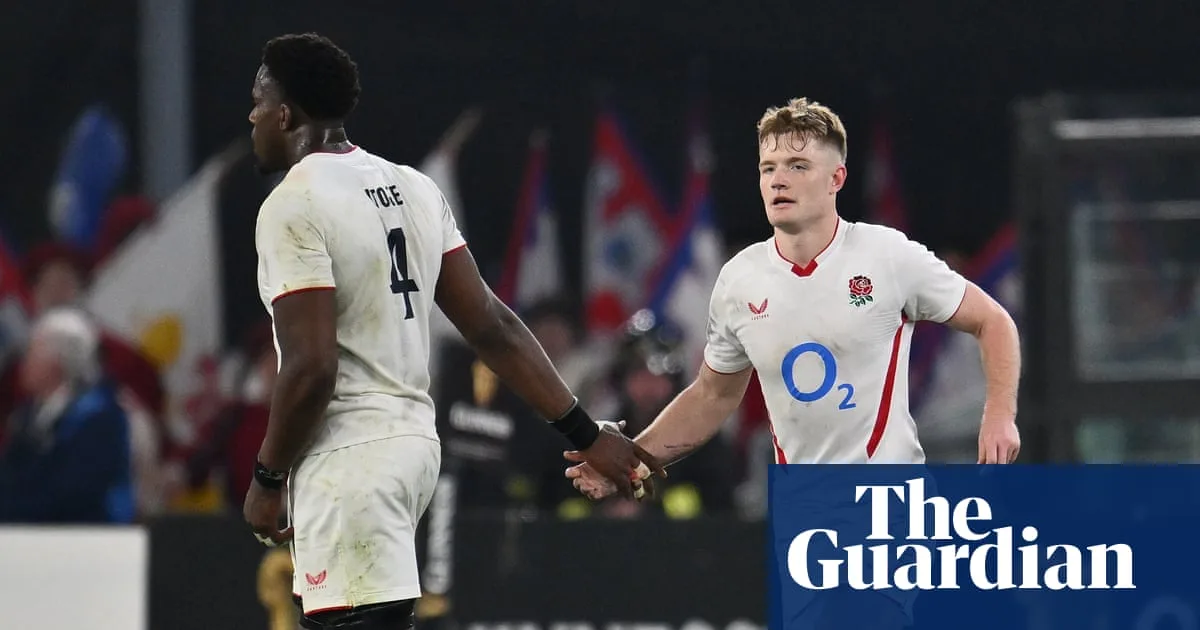
As Fin Smith prepares for his first England start against Italy this Saturday, I would strongly advise him to learn from my missteps. This is not to suggest he requires my guidance excessively; knowing Fin, he possesses a confident yet remarkably level-headed temperament.

Nevertheless, immense pressure rests on both his shoulders and the entire England squad this weekend. This is a fixture head coach Steve Borthwick simply cannot afford to lose. Smith's composed nature, however, suggests he can excel even amidst unfamiliar teammates.

Borthwick's Bold Selection Gambit

I must confess surprise at the scale of changes implemented by Borthwick. The selection features twelve alterations from the side defeated by Ireland, comprising nine personnel swaps and three positional adjustments. Smith has been entrusted with the pivotal fly-half role for England's trip to Rome.

The revamped back-line is particularly intriguing. In my Six Nations experience under Warren Gatland, such wholesale changes were reserved for autumn tests against so-called 'tier two' nations or World Cup pools, never for a major Championship encounter. This renders Borthwick's decision profoundly significant.

When a team undergoes mass rotation, an undeniable tension permeates the training environment. Players scarcely require explicit instruction; twelve changes communicate the coach's perspective unequivocally. This scenario risks fostering overexcitement, a pitfall England must avoid.

The Imperative of a Solid Start

England's sluggish beginnings against Scotland and Ireland proved costly. They cannot repeat this pattern, even if understandable rustiness emerges from new combinations. Here, Smith's role becomes absolutely critical.

Attempting to emulate George Ford's style would be misguided. A steady, six-or-seven-out-of-ten performance from Smith could very well secure an England victory. This may sound underwhelming, but excellence in execution of core tasks is paramount. Fin excels in this regard.

Smith's Distinctive Strengths

His primary asset is luring opposition defenders out of position, thereby creating space for the outside backs. He achieves this by posing a more pronounced running threat than Ford. This is no critique of Ford, but Smith consistently challenges the defensive line more aggressively.

By targeting the inside shoulder of defenders, he forces them to account for his running game, often drawing one or two defenders inward. This manipulation creates opportunities for others, and Smith is adept at exploiting them through precise short or long passing, or tactical kicking.

Furthermore, he is a considerably more robust defender than Ford. It is also crucial to remember Smith is no novice. He impressed during last year's Six Nations and subsequently toured Australia with the Lions, an experience that arguably hindered rather than helped his development. He has not erred to lose the England jersey.

Vital Support from Experienced Heads

Facing Italy, the presence of Ben Spencer and Elliot Daly alongside him will be invaluable. Spencer is arguably Europe's premier kicking scrum-half, while Daly offers vast experience and sharp tactical acumen. Both also provide left-footed kicking alternatives.

While Smith will undoubtedly need to kick, his primary focus should be optimising the talents of Seb Atkinson and Tommy Freeman outside him. If I were in his position, my initial objective would be an error-free opening twenty minutes. Achieving this would establish a platform England lacked in their previous two fixtures.

The Stakes Could Not Be Higher

Against Scotland and Ireland, England confronted desperate teams with points to prove. Now, the roles are reversed. England are cornered and must fight back. This mentality could suit them, though Borthwick's key challenge is accelerating cohesion among new partnerships.

Any lack of familiarity will breed mistakes, which Italy are poised to punish. The Azzurri present a stark contrast, fielding a side brimming with established combinations, epitomised by the seasoned centre pairing of Ignacio Brex and Tommaso Menoncello.

England's historic unbeaten record against Italy faces its sternest test. Selecting a combined XV from Saturday's players, a compelling case exists for six or seven Italians making the cut—a previously unthinkable scenario. Italy may never have a better opportunity for a historic victory.

This is a monumental contest for Borthwick, Smith, and England. Defeat could carry severe repercussions. However, provided Smith and his teammates resist the temptation to overplay—as I once did—England should narrowly return to winning ways. Perhaps part of that belief stems from an inability to contemplate the alternative outcome.